2012 Mayan Calendar Apocalypse

Overview
The 2012 phenomenon was, by any measure, the largest apocalyptic panic of the internet age. For years leading up to December 21, 2012, millions of people around the world believed — with varying degrees of conviction — that the ancient Maya had predicted the end of the world, or at the very least, a profound transformation of human civilization. The date generated hundreds of books, a Hollywood blockbuster that grossed nearly $800 million, survival product industries, spiritual tourism packages to Mesoamerican ruins, and genuine panic in multiple countries. And then December 21 arrived, and nothing happened.
What makes the 2012 phenomenon worth examining is not the failed prediction itself — doomsday predictions fail with monotonous regularity — but the mechanism of its construction. The ancient Maya did not predict the end of the world. No known Maya text describes an apocalypse on that date. The 2012 phenomenon was almost entirely a modern Western creation, assembled by New Age authors, psychedelic philosophers, and speculative writers who appropriated fragments of Mesoamerican archaeology, stripped them of context, and grafted them onto preexisting apocalyptic and transformational narratives that had nothing to do with Maya culture, astronomy, or belief systems.
The debunking was comprehensive: Mayanist scholars rejected the interpretation unanimously, NASA launched an unprecedented public information campaign addressing each specific doomsday scenario, and December 21 passed without geological, astronomical, or metaphysical incident. The 2012 episode remains a landmark case study in how internet ecosystems can amplify fringe beliefs into mainstream anxiety faster than expert correction can contain them.
Origins & History
The Maya Long Count Calendar
Understanding the 2012 phenomenon requires understanding what the Maya calendar actually is — and what it is not.
The Maya developed one of the most sophisticated calendrical systems in human history, using multiple interlocking cycles to track time at scales ranging from single days to millions of years. The relevant system for the 2012 phenomenon is the Long Count calendar, developed by Mesoamerican civilizations around the 5th century BCE.
The Long Count tracks time in nested cycles of increasing length:
- K’in — 1 day
- Winal — 20 days (20 k’in)
- Tun — 360 days (18 winal)
- K’atun — 7,200 days (20 tun, approximately 19.7 years)
- B’ak’tun — 144,000 days (20 k’atun, approximately 394.3 years)
Thirteen b’ak’tuns constitute a “Great Cycle” of approximately 5,125 solar years. Using the Goodman-Martinez-Thompson (GMT) correlation — the standard, widely accepted conversion between Maya and Gregorian calendars — scholars calculated that the current Great Cycle began on August 11, 3114 BCE and would complete on December 21, 2012 CE.
This is where the critical misunderstanding lies. The Maya Long Count is cyclical, not linear. The completion of a Great Cycle does not represent an endpoint — it represents a reset, the beginning of a new cycle, analogous to an odometer rolling over from 99,999 to 00,000. There is nothing in Maya calendrical mathematics or Maya inscriptions that assigns apocalyptic significance to this rollover. In the Maya conception, time continues indefinitely in both directions.
Michael Coe: The Academic Seed
The first Western author to attach potential apocalyptic significance to the 13th b’ak’tun completion was, ironically, a respected academic. Michael Coe, a Yale Mayanist and author of one of the most widely used introductory texts on Maya civilization, wrote in his 1966 book The Maya that at the end of the current Great Cycle, the Maya believed “Armageddon would overtake the degenerate peoples of the world and all creation.” Coe used dramatic, attention-grabbing language that went well beyond what the archaeological evidence supported.
In later editions of the book and in subsequent statements, Coe walked back this interpretation, acknowledging that the evidence for apocalyptic belief was slim. But the seed was planted. The 2012 date — with its specific, calendar-derived precision — was now attached to the word “Armageddon” in a text that thousands of students and popular readers would encounter.
Jose Arguelles and the Harmonic Convergence
The transformation of the 2012 date from academic curiosity to cultural phenomenon was primarily the work of one man: Jose Arguelles (1939-2011), a New Age artist, author, and self-styled “planetary visionary” with no formal training in Maya studies.
Arguelles’s 1987 book The Mayan Factor: Path Beyond Technology reinterpreted the Maya calendar not as a historical chronological tool but as a map of “galactic cycles of consciousness.” In Arguelles’s framework, the Maya were not simply tracking astronomical time — they were encoding information about the evolution of human awareness as part of a galactic-scale process. The completion of the 13th b’ak’tun in December 2012 would mark not destruction but transformation: a shift in planetary consciousness, a leap to a new level of spiritual awareness, the dawn of a new era.
Arguelles backed up his book with action. On August 16-17, 1987, he organized the Harmonic Convergence — a globally coordinated meditation event that he described as the beginning of a 25-year countdown to the 2012 transformation. The event drew tens of thousands of participants to sacred sites, mountain peaks, and spiritual centers around the world. Central Park in New York, Mount Shasta in California, Stonehenge in England, and Chichen Itza in Mexico’s Yucatan Peninsula all hosted gatherings. Major media covered the event, sometimes mockingly, but the coverage introduced the 2012 concept to millions of people who had never heard of the Maya Long Count.
The Harmonic Convergence established the 2012 date in mainstream New Age culture. From that point forward, it became a fixed reference point — a deadline — around which an entire ecosystem of theories, practices, and commercial enterprises would grow.
Terence McKenna and Timewave Zero
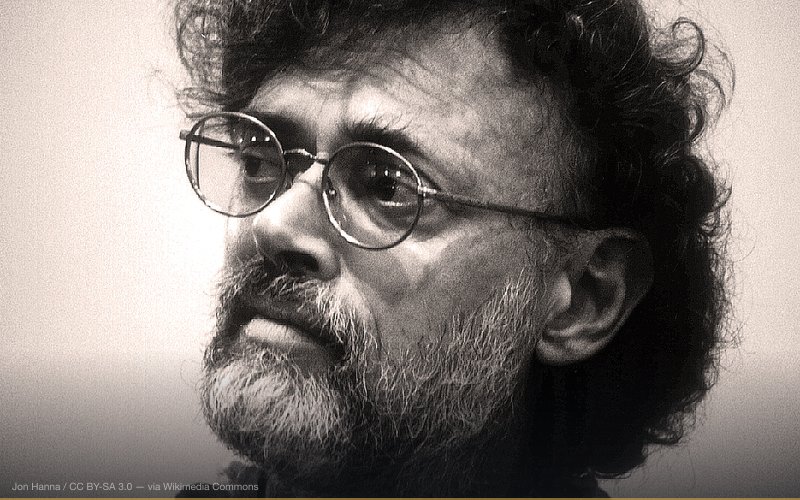
A parallel strand of 2012 mythology came from Terence McKenna (1946-2000), the psychedelic philosopher, ethnobotanist, and countercultural icon. McKenna’s contribution was “Timewave Zero,” a theory he developed in the early 1970s (while, by his own account, under the influence of psilocybin mushrooms in the Colombian Amazon) and published in The Invisible Landscape (1975), co-authored with his brother Dennis.
Timewave Zero posited that “novelty” — McKenna’s term for complexity, innovation, and significant events in the universe — followed a fractal pattern that could be mathematically modeled. The theory predicted that novelty would increase at an accelerating rate until reaching a point of infinite complexity at a specific future date: the “eschaton,” or the end of ordinary history.
McKenna originally calculated this endpoint as falling in November 2012 based on his mathematical model. He later adjusted the date to December 21, 2012, to align with the Maya calendar’s b’ak’tun completion — a revision that critics, including mathematician and Timewave Zero debunker John Baez, called reverse-engineering: adjusting the model’s parameters to produce a predetermined conclusion.
McKenna’s Timewave Zero theory was never published in a peer-reviewed journal, was not supported by any mathematical framework recognized by professional mathematicians, and was criticized for its reliance on arbitrary choices in the construction of the “timewave” function. But McKenna was an extraordinarily charismatic speaker, and his lectures — delivered with wit, erudition, and a showman’s instinct for the compelling phrase — reached millions through recordings, festivals, and eventually the internet. His endorsement of the 2012 date injected it into the psychedelic and counterculture communities that overlapped with but were distinct from the New Age audience Arguelles had reached.
The Snowball Effect: Nibiru, Solar Flares, and Galactic Alignment
Through the 1990s and 2000s, the 2012 concept accumulated additional apocalyptic scenarios like a snowball rolling downhill, each new layer making the whole thing larger and more heterogeneous.
Planet X/Nibiru: Author Zecharia Sitchin’s “Nibiru” — a hypothetical planet that Sitchin claimed was described in ancient Sumerian texts — was linked to the 2012 date by internet theorists, despite Sitchin himself never making this connection. The claim was that Nibiru would collide with or pass dangerously close to Earth on December 21, 2012, causing geological catastrophe. NASA astrophysicist David Morrison debunked the claim repeatedly, noting that a planet large enough to affect Earth would be easily visible to the naked eye months before arrival.
Galactic Alignment: The claim that the winter solstice sun would align precisely with the center of the Milky Way galaxy on December 21, 2012, triggering gravitational or energetic effects, was popularized by author John Major Jenkins in his 1998 book Maya Cosmogenesis 2012. While there is a rough alignment between the December solstice sun and the galactic equator (a gradual astronomical phenomenon that spans decades), it produces no measurable gravitational or energetic effects. The galactic center is approximately 26,000 light-years away; its gravitational influence on Earth is negligible.
Solar Maximum: Fears that the solar maximum of Solar Cycle 24 would produce lethal solar flares or coronal mass ejections were linked to 2012 by internet theorists. In reality, the solar maximum peaked in April 2014 (not December 2012) and was historically weak — the weakest solar maximum in a century.
Magnetic Pole Reversal: The claim that Earth’s magnetic poles would suddenly reverse on December 21, causing geological chaos, was contradicted by the geological record, which shows that pole reversals take thousands of years and are not associated with mass extinction events.
Yellowstone Supervolcano: The claim that the Yellowstone supervolcano would erupt on or near December 21, 2012, had no geological basis. The U.S. Geological Survey estimated the annual probability of a Yellowstone super-eruption at approximately 1 in 730,000.
The Entertainment-Industrial Amplification
The publishing and entertainment industries amplified the 2012 phenomenon enormously, creating a feedback loop between genuine anxiety and commercial opportunity.
Daniel Pinchbeck’s 2006 book 2012: The Return of Quetzalcoatl — which blended Maya archaeology, psychedelic experience, and New Age prophecy — became a bestseller and received respectful mainstream media coverage, lending the 2012 concept intellectual credibility it had previously lacked.
Roland Emmerich’s 2009 disaster film 2012 grossed over $790 million worldwide, making it one of the highest-grossing disaster films of all time. The film depicted global cataclysm triggered by neutrinos from a massive solar flare heating the Earth’s core (a scenario with no basis in physics). While clearly fiction, the film introduced the 2012 concept to a global audience of hundreds of millions and inspired a wave of companion documentaries, TV specials, and tie-in books.
By 2011, the 2012 phenomenon had generated hundreds of books (from New Age manifesto to survivalist manual to debunking guide), dozens of documentaries, subscription survival product lines, spiritual tourism packages to Chichen Itza and Tikal, and millions of web pages. It was simultaneously a spiritual movement, a commercial industry, and a public anxiety crisis.
December 21, 2012
December 21, 2012, arrived. It was the winter solstice in the Northern Hemisphere, as it is every year. Nothing happened. No planet appeared. No alignment produced measurable effects. No poles reversed. No volcano erupted. No consciousness shifted in any empirically detectable way.
The date passed with a collective global exhale that mixed relief, sheepishness, and — for those who had invested deeply — genuine disappointment.
Key Claims
- The Maya Long Count calendar’s completion of its 13th b’ak’tun on December 21, 2012, signaled a prophesied world-ending event or transformative shift
- A rogue planet called Nibiru (or Planet X) would collide with or pass dangerously close to Earth on this date, causing geological catastrophe
- A rare “galactic alignment” — the winter solstice sun aligning with the galactic equator — would trigger gravitational or energetic effects with catastrophic consequences
- Earth’s magnetic poles would rapidly reverse, causing geological and ecological chaos
- An unprecedented solar maximum would produce lethal solar flares or coronal mass ejections capable of destroying civilization
- The Yellowstone supervolcano would erupt on or near this date
- Rather than physical destruction, the date would mark a “consciousness shift” — a spiritual transformation of humanity into a higher dimensional state of awareness
- World governments and NASA were aware of the coming catastrophe but concealed information from the public to prevent panic
Evidence
Mayanist Scholars: Unanimous Rejection
The debunking of the 2012 apocalypse came from two directions: Maya scholars who rejected the apocalyptic interpretation of the calendar, and natural scientists who addressed each specific doomsday scenario.
Mayanist scholars were nearly unanimous in their rejection of the 2012 phenomenon’s premise. David Stuart, a MacArthur Fellow and one of the world’s foremost Maya epigraphers at the University of Texas at Austin, published The Order of Days: The Maya World and the Truth About 2012 in 2011. Stuart demonstrated that no Maya inscription predicts an apocalypse or even assigns particular significance to the 13th b’ak’tun completion as an ending.
Only one known Maya text — Tortuguero Monument 6, from a site in Tabasco, Mexico — references the 13th b’ak’tun completion date at all. The relevant passage is partially eroded, but what survives describes a ritual event involving the descent of a deity named Bolon Yokte’ K’uh. The text describes a ceremony, not a catastrophe. Mark Van Stone’s comprehensive 2010 study 2012: Science and Prophecy of the Ancient Maya reached identical conclusions through independent analysis.
Stuart and other scholars noted that the Maya themselves had inscriptions referencing dates far beyond 2012 — including dates millions of years in the future — demonstrating that the Maya calendar system was explicitly designed to continue indefinitely, not to end at the 13th b’ak’tun.
Contemporary Maya communities expressed frustration and anger at the appropriation of their calendar for Western apocalyptic narratives. Apolinario Chile Pixtun, a Maya elder from Guatemala, told the Associated Press in 2009 that he was “fed up” with being asked about the 2012 prophecy and that no Maya tradition predicted the end of the world.
NASA’s Scientific Campaign
NASA launched an unprecedented public information campaign in the years before December 2012. Astrophysicist David Morrison, director of the Carl Sagan Center for the Study of Life in the Universe at the SETI Institute and a senior scientist at NASA, personally answered over 5,000 public inquiries about 2012 doomsday claims through NASA’s “Ask an Astrobiologist” program.
NASA’s detailed rebuttals addressed each doomsday scenario individually:
- Nibiru/Planet X: No planet Nibiru had been detected by any observatory, amateur or professional. A planet large enough to threaten Earth would be visible to the naked eye months before arrival and would already be perturbing the orbits of Mars and Jupiter.
- Galactic alignment: The alignment was a gradual process spanning decades, not a single-day event. The gravitational force from the galactic center — 26,000 light-years away — is billions of times weaker than the Moon’s gravitational pull on Earth.
- Magnetic pole reversal: Reversals take thousands of years and are not associated with extinctions in the geological record.
- Solar maximum: Solar Cycle 24 peaked in April 2014, not December 2012, and was the weakest solar maximum since Solar Cycle 14 in 1906.
- Yellowstone eruption: No geological indicators suggested an imminent eruption.
Public Anxiety Data
The anxiety was real and measurable. A 2012 Reuters/Ipsos poll conducted across 21 countries found that approximately 10% of respondents expressed some anxiety about the world ending on December 21, with the highest rates in China (20%), Turkey (16%), and Russia (13%). Reports emerged of panicked behavior in several countries: runs on candles and emergency supplies in China and Russia, construction of survival bunkers in various countries, and desperate calls to emergency services and NASA from frightened individuals.
Morrison later noted that the most disturbing aspect of the phenomenon was not the adults who expressed curiosity but the children and teenagers who contacted NASA genuinely terrified that they were about to die. Some described contemplating suicide rather than experiencing the apocalypse — a grim indicator of the phenomenon’s real human cost.
Cultural Impact
Tourism and Commerce
The 2012 phenomenon generated a substantial commercial ecosystem. Mexico reported a record 52 million international visitors in 2012, with Maya archaeological sites in the Yucatan Peninsula — particularly Chichen Itza, Tulum, and Palenque — seeing dramatic visitor increases. The Mexican government organized “Mundo Maya 2012,” a tourism campaign across five Mexican states with Maya heritage, explicitly capitalizing on the global attention while hosting academic conferences that debunked the apocalyptic interpretation.
The survival products industry saw a significant spike, with companies selling everything from freeze-dried food supplies and water purification systems to underground bunkers and Faraday cages. Spiritual tourism packages offered guided meditation experiences at Maya ruins, promising participants the opportunity to experience the “consciousness shift” at sacred sites.
Science Communication Model
The 2012 episode spurred valuable innovation in public science communication. NASA’s engagement with 2012 fears — through dedicated web pages, YouTube videos, social media responses, and David Morrison’s tireless personal outreach — became a model for how scientific institutions could address viral misinformation. The campaign demonstrated that passive authority was insufficient; scientists needed to actively, specifically, and patiently address each claim on the platforms where the claims were spreading.
This lesson informed subsequent science communication efforts during the COVID-19 pandemic, climate change debates, and other episodes where viral misinformation outpaced expert correction.
Indigenous Knowledge Appropriation
For Mayanist scholars and for Maya communities themselves, the 2012 phenomenon was a painful case study in cultural appropriation. A living civilization’s intellectual heritage was stripped of context, distorted beyond recognition, and commercialized for Western consumption. The real achievements of Maya mathematics, astronomy, and calendrics — which are genuinely remarkable by any standard — were overshadowed by a fantasy that the Maya themselves found baffling and offensive.
The episode demonstrated a pattern with deep colonial roots: Western culture selectively appropriating elements of indigenous knowledge systems, investing them with meanings that the originating culture never intended, and then profiting from the appropriation while the originating culture bears the reputational consequences.
Template for Future Panics
The 2012 phenomenon served as a template for understanding subsequent viral doomsday claims and conspiracy movements. Researchers studying COVID-19 misinformation, QAnon, and other contemporary conspiracy ecosystems have pointed to 2012 as an early case study in how digital platforms create self-reinforcing belief communities resistant to expert correction. The mechanics were consistent: algorithmically amplified content, community validation loops, financial incentives for content creators, and the inability of institutional debunking to match the emotional resonance of apocalyptic narrative.
Key Figures
-
Jose Arguelles (1939-2011) — New Age author and organizer of the 1987 Harmonic Convergence whose book The Mayan Factor was the primary vehicle for introducing the 2012 date to mainstream New Age culture. Arguelles had no formal training in Maya studies.
-
Terence McKenna (1946-2000) — Psychedelic philosopher and ethnobotanist whose “Timewave Zero” theory, adjusted to align with the December 2012 date, added a countercultural strand to the phenomenon. McKenna died of brain cancer in 2000, twelve years before his predicted eschaton.
-
Michael Coe (1929-2019) — Yale Mayanist whose 1966 use of the word “Armageddon” in connection with the 13th b’ak’tun completion inadvertently planted the academic seed for the 2012 phenomenon. He later walked back the interpretation.
-
David Stuart — MacArthur Fellow and Maya epigrapher at the University of Texas at Austin who published the definitive scholarly debunking in The Order of Days (2011).
-
David Morrison — NASA astrophysicist who personally answered over 5,000 public inquiries about 2012 claims and became the public face of scientific rebuttal.
-
John Major Jenkins (1964-2017) — Author of Maya Cosmogenesis 2012 (1998), who popularized the “galactic alignment” theory. Jenkins positioned himself between New Age and academic communities but was rejected by Mayanist scholars.
-
Daniel Pinchbeck — Author of 2012: The Return of Quetzalcoatl (2006), which brought 2012 themes to a mainstream literary audience.
-
Roland Emmerich — Director of the 2009 disaster film 2012, which grossed $790 million and introduced the concept to a global audience of hundreds of millions.
Timeline
- 5th century BCE — Maya Long Count calendar system developed by Mesoamerican civilizations
- 1966 — Michael Coe’s The Maya uses “Armageddon” in connection with the 13th b’ak’tun completion
- 1975 — Terence and Dennis McKenna publish The Invisible Landscape, introducing Timewave Zero
- 1987 — Jose Arguelles publishes The Mayan Factor and organizes the Harmonic Convergence (August 16-17)
- 1998 — John Major Jenkins publishes Maya Cosmogenesis 2012, popularizing the galactic alignment theory
- 2006 — Daniel Pinchbeck publishes 2012: The Return of Quetzalcoatl; 2012 concept enters mainstream publishing
- 2009 — Roland Emmerich’s disaster film 2012 grosses $790 million worldwide
- 2010 — Mark Van Stone publishes 2012: Science and Prophecy of the Ancient Maya
- 2011 — David Stuart publishes The Order of Days, the definitive scholarly debunking
- 2011-2012 — NASA launches extensive public information campaign; David Morrison answers 5,000+ inquiries
- 2012 — Reuters/Ipsos poll finds approximately 10% of respondents across 21 countries express anxiety about December 21; Mexico records 52 million international visitors
- December 21, 2012 — Date passes without incident; winter solstice occurs as usual
- Post-2012 — Episode becomes reference point in studies of digital misinformation, science communication, and cultural appropriation
Sources & Further Reading
- Stuart, David. The Order of Days: The Maya World and the Truth About 2012. New York: Harmony Books, 2011.
- Van Stone, Mark. 2012: Science and Prophecy of the Ancient Maya. San Diego: Tlacaelel Press, 2010.
- Restall, Matthew, and Amara Solari. 2012 and the End of the World: The Western Roots of the Maya Apocalypse. Lanham, MD: Rowman & Littlefield, 2011.
- Arguelles, Jose. The Mayan Factor: Path Beyond Technology. Santa Fe: Bear & Company, 1987.
- Coe, Michael D. The Maya. New York: Thames & Hudson, 1966 (8th ed., 2011).
- Morrison, David. “Planetary Defense, Killer Asteroids, and 2012.” Skeptical Inquirer 36, no. 2 (2012).
- NASA. “Beyond 2012: Why the World Didn’t End.” nasa.gov, December 2012.
- Jenkins, John Major. Maya Cosmogenesis 2012. Santa Fe: Bear & Company, 1998.
- McKenna, Terence, and Dennis McKenna. The Invisible Landscape. Seabury Press, 1975.
- Pinchbeck, Daniel. 2012: The Return of Quetzalcoatl. Jeremy P. Tarcher, 2006.
Related Theories
Frequently Asked Questions
Did the Maya actually predict the end of the world in 2012?
What actually happened on December 21, 2012?
Where did the 2012 doomsday theory originate?
Infographic
Share this visual summary. Right-click to save.
