The 27 Club Curse

Overview
The cultural myth that an unusual number of influential musicians die at age 27, with explanations ranging from statistical coincidence to a devil’s bargain for talent — and more conspiratorially, Illuminati sacrifice to mark a transition of power in the music industry.
Origins & History
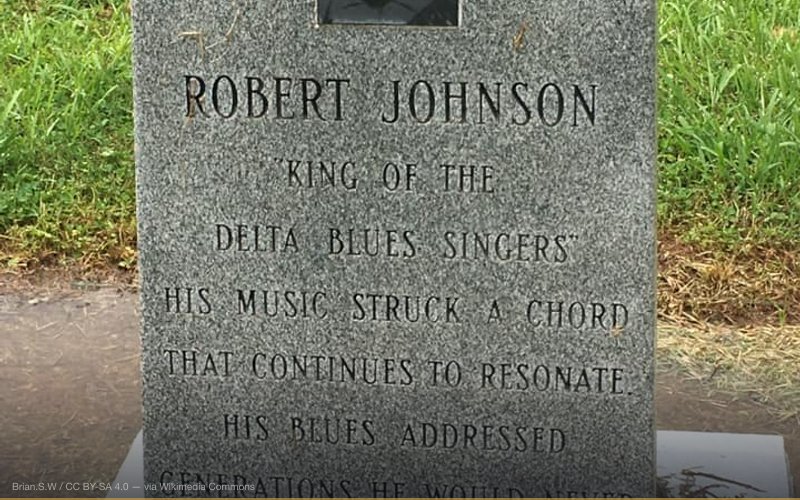
The roots of the 27 Club stretch back to the Mississippi Delta in 1938, when blues guitarist Robert Johnson died under mysterious circumstances at age 27. Johnson’s legend already carried a supernatural charge — the story that he had sold his soul to the devil at a crossroads in exchange for his extraordinary talent. His death, likely from strychnine poisoning, cemented the mythology. But the “club” itself would not take shape for another three decades.
Between July 1969 and July 1971, four towering figures in rock music died at age 27 in rapid succession. Brian Jones, founder of the Rolling Stones, drowned in his swimming pool at Cotchford Farm, Sussex, on July 3, 1969. The coroner ruled “death by misadventure,” but questions about foul play have persisted for decades. Jimi Hendrix died on September 18, 1970, in London, asphyxiating on his own vomit after taking barbiturates. Janis Joplin was found dead of a heroin overdose in a Hollywood hotel room on October 4, 1970 — just sixteen days later. Jim Morrison, lead singer of the Doors, died in a Paris bathtub on July 3, 1971, with the official cause listed as heart failure, though no autopsy was performed under French law.
Music journalists of the era were the first to draw the connection. The clustering was genuinely striking — four generational talents, all dead at 27, all within two years. Rolling Stone magazine and the underground rock press began treating the coincidence as something more than coincidence.
The concept lay somewhat dormant through the late 1970s and 1980s, occasionally referenced in music criticism. Then, on April 5, 1994, Kurt Cobain was found dead of a self-inflicted shotgun wound at his Seattle home. He was 27. Cobain’s mother, Wendy O’Connor, told reporters: “Now he’s gone and joined that stupid club.” The phrase “27 Club” entered mainstream vocabulary.
Amy Winehouse’s death on July 23, 2011, from accidental alcohol poisoning at age 27 reignited the mythology with full force. The pattern now spanned seven decades, and the internet era gave it a reach that earlier iterations never had. Lists proliferated online, adding lesser-known musicians — Richey Edwards of the Manic Street Preachers, D. Boon of the Minutemen, Kristen Pfaff of Hole — though some names were added retroactively or with disputed ages.
Conspiracy-minded interpretations emerged alongside the statistical ones. Some theorists claimed the deaths were Illuminati blood sacrifices, ritual killings timed to the musicians’ 27th year as part of occult industry practices. Others linked the pattern to Faustian bargains, arguing that the original Robert Johnson myth was literal — talent bought with a life that expires at 27.
Key Claims
- An unusually high number of famous musicians have died at age 27, beyond what random chance would predict
- The “founding” members — Johnson, Jones, Hendrix, Joplin, Morrison, Cobain, Winehouse — share common traits: extraordinary talent, countercultural influence, substance abuse, and early fame
- Some proponents claim the deaths are connected to Illuminati or music industry blood sacrifice rituals
- The Robert Johnson “crossroads deal” represents a literal Faustian bargain that established the pattern
- The deaths of Brian Jones and Kurt Cobain were actually murders disguised as accidental death and suicide, respectively
- The music industry profits from early deaths of iconic artists through posthumous sales, creating a financial motive
- The pattern reflects a “curse” tied to the unique psychological pressures of fame at a young age
Evidence
The statistical case for the 27 Club has been tested and found wanting. The most rigorous analysis came from a 2011 study by Adrian Barnett and colleagues, published in the British Medical Journal on December 20, 2011. The researchers examined 1,046 musicians who had number-one albums in the UK between 1956 and 2007. They found that musicians did indeed have a higher mortality rate than the general population — roughly two to three times higher during the 1970s and 1980s — but age 27 was not a statistically significant peak. The study concluded the 27 Club was a product of confirmation bias and the clustering illusion: people remember the famous deaths at 27 and ignore the many musicians who died at 25, 28, 32, or any other age.
A 2014 analysis by Kenny, Asbridge, and Lockyer, published in the journal Popular Music and Society, examined 11,054 musician deaths and similarly found no excess mortality at age 27. They did find elevated death rates among musicians between ages 20 and 40, driven primarily by substance abuse and the lifestyle risks associated with touring and fame.
Proponents of conspiracy interpretations point to circumstantial evidence. The suspicious circumstances surrounding Brian Jones’s death have been investigated multiple times; in 2009, Sussex Police reviewed the case after builder Frank Thorogood allegedly confessed to Jones’s murder on his own deathbed in 1993. The case was not reopened. The contested circumstances of Kurt Cobain’s death — including questions raised by private investigator Tom Grant, hired by Courtney Love — have fueled an entire subgenre of conspiracy literature, though the Seattle Police Department has maintained its ruling of suicide through multiple reviews, most recently in 2014.
The Illuminati sacrifice theory lacks any documentary or testimonial evidence. It relies on pattern recognition applied to a small, selectively curated sample. Cognitive scientists point to apophenia — the human tendency to perceive meaningful patterns in random data — as the primary engine behind the 27 Club mythology.
Cultural Impact
The 27 Club has become one of the most enduring myths in popular music. It shapes how audiences understand the relationship between genius, self-destruction, and early death. The concept has been referenced in hundreds of songs, films, and television episodes. The 2015 documentary Amy, which won the Academy Award for Best Documentary Feature, explicitly engaged with the mythology surrounding Winehouse’s death. The 2012 documentary The 27 Club and the 2007 book The 27s: The Greatest Myth of Rock & Roll by Gene Simeone helped codify the narrative.
The mythology has had measurable effects on public behavior. Research published in Crisis: The Journal of Crisis Intervention and Suicide Prevention in 2012 found evidence of a “Werther effect” — a spike in suicides among young people following the highly publicized deaths of Cobain and Winehouse. Mental health organizations, including the UK’s Samaritans, have issued media guidelines specifically addressing coverage of celebrity deaths at age 27 to prevent copycat behavior.
The 27 Club also functions as a Rorschach test for broader anxieties about the music industry. For those inclined toward structural critiques, it highlights the real toll that substance abuse, exploitative contracts, and relentless touring schedules take on young artists. For conspiracy theorists, it provides a framework — however unfounded — for expressing distrust of powerful industry figures. The mythology persists because it speaks to something real, even if the statistical pattern does not: famous musicians die young at alarming rates, and the industry that profits from their talent bears some responsibility.
Sources & Further Reading
- Barnett, Adrian G., et al. “Is 27 Really a Dangerous Age for Famous Musicians? Retrospective Cohort Study.” British Medical Journal 343 (2011): d7799.
- Kenny, Dianna T., Asbridge, Mark, and Lockyer, Bethany. “The Lives of the 27 Club: A Statistical Analysis.” Popular Music and Society 37, no. 5 (2014): 519-543.
- Cross, Charles R. Heavier Than Heaven: A Biography of Kurt Cobain. New York: Hyperion, 2001.
- Mick Brown. “The Mysterious Death of Brian Jones.” The Telegraph, July 2, 2009.
- Simeone, Gene. The 27s: The Greatest Myth of Rock & Roll. New York: Rare Bird Books, 2007.
- Kapeli, Aseem, dir. Amy. Documentary film. A24 Films, 2015.
- Stack, Steven. “Media Coverage as a Risk Factor in Suicide.” Journal of Epidemiology and Community Health 57, no. 4 (2003): 238-240.
Frequently Asked Questions
Is the 27 Club statistically real?
Who are the most famous members of the 27 Club?
Where did the idea of the 27 Club originate?
Infographic
Share this visual summary. Right-click to save.