Brandon Lee: The Crow Set Conspiracy
Overview
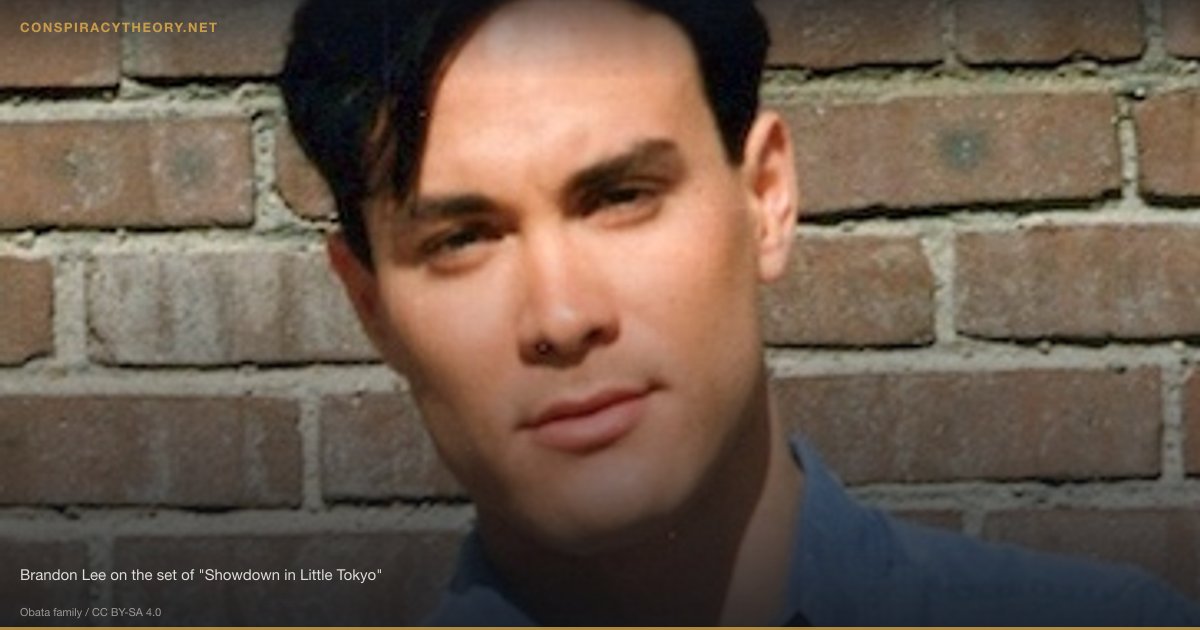
On March 31, 1993, actor Brandon Lee was fatally shot during the filming of The Crow at EUE Screen Gems Studios in Wilmington, North Carolina. He was 28 years old — the same film set where his character, Eric Draven, is murdered and returns from the dead to avenge his own death. The official investigation determined that the shooting was an accident caused by a series of negligent failures in firearms safety protocols on set: a bullet tip had become lodged in the barrel of a prop gun during a previous scene, and when a blank cartridge was later fired from the same gun, it propelled the lodged bullet with lethal force.
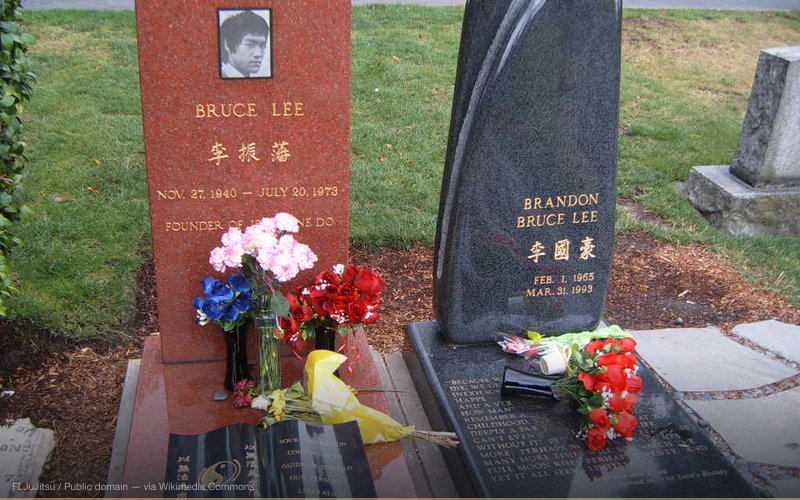
The death immediately generated conspiracy theories, amplified by several extraordinary circumstances: Brandon was the son of Bruce Lee, who had died under mysterious circumstances twenty years earlier at age 32; the production had been plagued by a series of unusual accidents; and the specific chain of events required multiple failures of standard safety procedures to align in a way that some found difficult to attribute to mere negligence.
Conspiracy theories about Brandon Lee’s death range from the relatively grounded (allegations that cost-cutting and negligence on set amounted to criminal recklessness rather than an accident) to the supernatural (the “Lee family curse”) to the extreme (deliberate murder disguised as an accident). The case is classified as “unresolved” not because the mechanism of death is in dispute — the ballistic evidence is clear — but because questions about whether the negligence was truly accidental or whether it constituted something more deliberate have never been conclusively answered, and the investigation was criticized for its limited scope.
Origins & History
Brandon Lee’s Career and The Crow Production
Brandon Bruce Lee was born on February 1, 1965 in Oakland, California, the son of martial arts legend Bruce Lee and Linda Lee Cadwell. Following his father’s death in 1973, Brandon grew up in the shadow of both his father’s legacy and the conspiracy theories surrounding Bruce Lee’s death.
Brandon pursued an acting career, appearing in several martial arts films including Legacy of Rage (1986), Laser Mission (1989), Showdown in Little Tokyo (1991), and Rapid Fire (1992). By 1993, he was on the verge of major stardom with The Crow, a dark, stylish adaptation of James O’Barr’s comic book about a musician who returns from the dead to avenge his own murder and that of his fiancee.
The production of The Crow was troubled from the start. The film was being made on a tight budget of approximately $15 million, with an aggressive 50-day shooting schedule. Director Alex Proyas was making his first major film. The production was based in Wilmington, North Carolina, far from the established infrastructure of Hollywood studios.
Pre-Death Incidents on Set
Before Brandon Lee’s death, the production of The Crow experienced a series of unusual accidents and incidents that, in retrospect, conspiracy theorists have cited as evidence of either a curse or deliberate sabotage:
- A carpenter suffered severe burns when his crane contacted power lines
- A crew member accidentally drove a screwdriver through his own hand
- A stuntman broke several ribs during a fight scene
- A grip truck caught fire, destroying equipment
- A construction worker fell through a roof on the set
- A disgruntled sculptor drove his car through the studio’s plaster shop
- Severe storms repeatedly damaged outdoor sets
- A crew member was injured by a malfunctioning special effect
While film productions routinely experience some accidents, the frequency and severity of incidents on The Crow set was remarked upon by crew members even before the fatal shooting.
The Fatal Incident (March 31, 1993)
The scene being filmed on the night of March 31 involved Brandon Lee’s character, Eric Draven, entering his apartment to discover his fiancee being attacked. The script called for the attackers to shoot Draven as he enters through the door. Actor Michael Massee was to fire a .44 caliber Smith & Wesson Model 629 revolver at Lee from a distance of approximately 12-15 feet.
The official investigation determined the following sequence of events:
Step 1 — The dummy rounds: In a previous scene filmed days earlier, the prop department needed close-up shots of the revolver’s cylinder loaded with cartridges. To make the shots look realistic, the crew created dummy rounds by removing the powder charges from real cartridges but leaving the bullets (projectiles) and primers in place. This was a significant departure from standard safety practice, which calls for commercially manufactured dummy rounds that are clearly distinguishable from live ammunition.
Step 2 — The lodged bullet: When one of these improperly made dummy rounds was loaded into the revolver for the close-up scene, the remaining primer was sufficient to propel the bullet tip partway into the barrel, where it became lodged. This was not noticed, and the gun was not inspected.
Step 3 — The blank round: When the scene requiring Massee to fire at Lee was set up, the dummy rounds were removed and replaced with blank cartridges — rounds with powder charges but no bullet. However, the bullet tip lodged in the barrel from the earlier scene remained.
Step 4 — The shot: When Massee pulled the trigger, the blank’s explosive charge propelled the lodged bullet tip out of the barrel with lethal force. The projectile struck Lee in the abdomen, penetrating his body and lodging near his spine.
Lee was rushed to New Hanover Regional Medical Center, where he underwent six hours of surgery. He was pronounced dead at 1:03 PM on March 31, 1993.
The Investigation
The Wilmington Police Department and the New Hanover County District Attorney’s Office investigated the death. Their findings:
- The shooting was accidental, caused by the improper creation of dummy rounds and failure to inspect the gun barrel between scenes
- No evidence of intentional foul play was found
- The production had not employed a licensed armorer or firearms safety expert (a prop assistant had been handling the weapons)
- Standard firearms safety protocols were not followed
- No criminal charges were filed
The North Carolina Occupational Safety and Health Administration (NC-OSHA) fined the production company, Crowvision Inc., $84,000 for safety violations.
The Lee family filed a wrongful death lawsuit against the production companies, which was settled out of court for an undisclosed amount.
The Film’s Completion and Release
In a decision that itself generated controversy, the producers of The Crow decided to complete the film using a combination of existing footage, a body double, and early digital face-replacement technology. The film was released on May 13, 1994 and became a critical and commercial success, earning over $94 million worldwide against its $23 million budget (which had increased due to the incident and completion costs). The film was dedicated to Brandon Lee and his fiancee Eliza Hutton, whom he had been planning to marry.
Key Claims
Conspiracy theories about Brandon Lee’s death fall into several categories:
Negligence-as-Criminal-Recklessness Claims
- The production’s failure to employ a licensed armorer constituted criminal negligence rather than a simple accident
- Cost-cutting measures created foreseeable dangers that the producers accepted to maintain the shooting schedule
- The decision not to file criminal charges was influenced by the entertainment industry’s political connections
- The production should have been shut down after the series of earlier accidents
Deliberate Sabotage Claims
- Someone intentionally placed the bullet tip in the barrel, knowing it would be lethal when a blank was fired
- The specific sequence of events required too many coincidental failures to be accidental
- Financial interests — including insurance policies and the film’s potential commercial value as a controversy — may have motivated deliberate harm
- Personal grudges on the troubled set may have led to sabotage
The Lee Family Curse
- Brandon’s death at 28 and Bruce’s death at 32, both under unusual circumstances, are evidence of a curse on the Lee family
- Various versions of the curse theory attribute it to Chinese triads, Japanese martial artists, or supernatural forces
- The curse was allegedly placed on the Lee family because Bruce Lee revealed secret martial arts techniques to Western audiences
- The fact that both father and son died during or near the production of their most commercially important projects is cited as evidence of supernatural intervention
Insurance and Financial Claims
- The film was heavily insured, and Brandon’s death — while tragic — may have served financial interests by creating massive publicity
- The decision to complete the film using a body double and digital effects, rather than abandoning it, suggests that commercial interests were prioritized
- The film’s commercial success (earning over $94 million on a $23 million budget) raises questions about who benefited from the tragedy
Evidence
Evidence Supporting the Accident Explanation
Ballistic evidence: The physical evidence is consistent with the officially described sequence of events. A bullet tip lodged in a barrel will behave as described when a blank is fired behind it. This phenomenon has been documented in other incidents and is a known risk in firearms handling.
No motive established: Despite extensive investigation and speculation, no clear motive for murdering Brandon Lee has been established. The production, while troubled, was not embroiled in the kind of personal or financial disputes that typically accompany deliberate violence.
Michael Massee’s trauma: Actor Michael Massee, who fired the gun, was profoundly traumatized by the incident. He did not act for a year afterward and spoke publicly about his devastation. His behavior is consistent with an innocent person involved in a terrible accident, not a knowing participant in a murder.
Pattern of negligence: The series of accidents on set is consistent with a rushed, understaffed, cost-cutting production rather than with deliberate sabotage. The same corner-cutting that led to the fatal incident also produced the earlier, non-fatal accidents.
Evidence Fueling Conspiracy Claims
No licensed armorer: The production’s failure to employ a licensed firearms expert is a significant irregularity. Standard industry practice requires a trained armorer to handle all firearms on set, inspect weapons before and after every scene, and maintain a chain of custody for all ammunition. The use of a prop assistant instead of an armorer represents a deviation from standard practice that conspiracy theorists find suspicious.
Improvised dummy rounds: The decision to create dummy rounds from real cartridges rather than using commercially manufactured dummy rounds (which are specifically designed to be inert) was a critical safety failure. Commercially manufactured dummy rounds have no primer and no powder; the homemade rounds used on The Crow set retained the primer, creating the conditions for the bullet tip to enter the barrel. This decision was so far outside standard practice that some have found it difficult to attribute to mere ignorance.
Failure to inspect the barrel: After the dummy rounds were used and before the blanks were loaded, the barrel should have been inspected for obstructions. This is a basic firearms safety step that was not performed. The failure to perform such a fundamental check has been cited as suspicious by conspiracy theorists, though it is also consistent with an understaffed and poorly supervised production.
The series of prior accidents: The unusual number of accidents on set — while consistent with a troubled production — has been cited by conspiracy theorists as evidence of either a curse or a pattern of deliberate sabotage.
Limited investigation scope: The investigation did not extensively explore the possibility of deliberate action. Critics have argued that the conclusion of “accident” was reached too quickly and without sufficient investigation of alternative explanations.
Debunking / Verification
This case is classified as unresolved with the following assessment:
The official explanation is physically plausible: The accidental sequence of events described by investigators is consistent with the ballistic evidence and represents a known mechanism by which blank rounds can become lethal.
No evidence of foul play has been established: Despite decades of speculation, no witness testimony, physical evidence, or documentary evidence has emerged supporting the theory that someone deliberately placed the bullet in the barrel or otherwise engineered the fatal incident.
The negligence is documented: The production’s safety failures are well-documented and were cited by NC-OSHA. These failures are consistent with a low-budget production cutting corners rather than with deliberate action, but they also represent a level of recklessness that some argue should have resulted in criminal prosecution.
The investigation’s scope is debatable: Whether the investigation was sufficiently thorough to rule out foul play is a matter of opinion. The physical evidence is consistent with an accident, but the question of whether more should have been done to investigate deliberate action remains open.
The “curse” claims are not falsifiable: Supernatural explanations by definition cannot be evaluated using empirical evidence. The deaths of Bruce and Brandon Lee, while striking in their parallels, are separate events with entirely different mechanisms (medical event vs. firearms accident), and no causal connection has been established.
Cultural Impact
Film Industry Safety Reform
Brandon Lee’s death was a catalyst for improved firearms safety protocols in the entertainment industry. In the aftermath, studios and production companies adopted stricter requirements for licensed armorers, ammunition inspection, and weapons handling on set. However, as the 2021 death of cinematographer Halyna Hutchins on the set of Rust demonstrated, firearms safety on film sets remained an ongoing concern nearly three decades later.
The Rust incident, in which actor Alec Baldwin fired a gun that contained a live round, killing Hutchins, reignited discussion of Brandon Lee’s death and the industry’s persistent failures in firearms safety. The parallels between the two cases — inadequate supervision, cost-cutting, and a failure of basic inspection protocols — were widely noted.
The Crow as Cultural Phenomenon
The Crow became a cult classic, its commercial and critical success inextricably linked to the tragedy of its production. The film launched a franchise including sequels, a television series, and a 2024 reboot. Brandon Lee’s performance, completed through digital and practical effects after his death, became iconic — and the circumstances of his death added a layer of morbid resonance to a film about a murdered man who returns from the grave.
Celebrity Death Conspiracy Culture
Brandon Lee’s death became part of a broader pattern of celebrity death conspiracy theories in which the deaths of young, talented individuals are attributed to hidden forces rather than accident, illness, or circumstance. The connection to Bruce Lee’s death created a multigenerational narrative that proved particularly compelling to conspiracy theorists.
In Popular Culture
- The Crow (1994) — The film itself, completed after Lee’s death, became a lasting cultural artifact
- Dragon: The Bruce Lee Story (1993) — Released the same year as Brandon’s death, this biopic of Bruce Lee concludes with a scene depicting a demon pursuing the Lee family, a sequence that took on additional significance after Brandon’s death
- The story has been referenced in numerous documentaries about on-set accidents, celebrity deaths, and Hollywood conspiracies
- The Crow: Stairway to Heaven (1998-1999) — Television series starring Mark Dacascos, extending the franchise created by the film
- Multiple true crime podcasts and documentary series have examined the case
Key Figures
- Brandon Lee (1965-1993) — Actor killed during the filming of The Crow
- Bruce Lee (1940-1973) — Brandon’s father, martial arts legend whose own death generated conspiracy theories
- Michael Massee (1952-2016) — Actor who fired the gun that killed Lee; deeply traumatized by the incident and never charged with any crime
- Alex Proyas — Director of The Crow who completed the film after Lee’s death
- Ed Pressman — Producer of The Crow
- Daniel Lee — Brandon’s half-brother (child of Bruce Lee and his wife Linda)
- Linda Lee Cadwell — Brandon’s mother, who filed the wrongful death lawsuit
- Eliza Hutton — Brandon’s fiancee, whom he was planning to marry two weeks after the shooting
Timeline
- July 20, 1973 — Bruce Lee dies at age 32 in Hong Kong
- February 1, 1993 — Production of The Crow begins at EUE Screen Gems Studios in Wilmington, NC
- February-March 1993 — Series of accidents plague the production, injuring multiple crew members
- March 31, 1993 — Brandon Lee fatally shot during filming of a scene; dies after six hours of surgery
- April 1993 — Wilmington Police and DA investigate; determine death was accidental
- 1993 — NC-OSHA fines Crowvision Inc. $84,000 for safety violations
- 1993-1994 — Film completed using body double and digital face replacement
- May 13, 1994 — The Crow released theatrically; earns over $94 million worldwide
- 1994 — Lee family wrongful death lawsuit filed; settled out of court
- 2016 — Michael Massee dies of natural causes at age 64
- October 21, 2021 — Cinematographer Halyna Hutchins killed by live round on Rust set, reigniting discussion of Brandon Lee’s death
- 2024 — The Crow reboot released, bringing renewed attention to the original film and Brandon Lee’s death
Sources & Further Reading
- Barker, Bridget. The Crow: The Story Behind the Film. Kitchen Sink Press, 1994.
- O’Barr, James. The Crow. Kitchen Sink Press, 1989 (original comic series).
- Thomas, Bruce. Bruce Lee: Fighting Spirit. Frog Books, 1994.
- North Carolina Occupational Safety and Health Administration. Crowvision Inc. inspection records, 1993.
- Various reporting from the Wilmington Star-News, Los Angeles Times, and Entertainment Weekly on the investigation and aftermath.
- Polly, Matthew. Bruce Lee: A Life. Simon & Schuster, 2018. (Context on Bruce Lee’s death and the “Lee family curse” narrative.)
Related Theories
- Bruce Lee Murder — Conspiracy theories surrounding the death of Bruce Lee, Brandon’s father
- Hollywood Sacrifice Conspiracy — The broader theory that celebrity deaths are ritualistic sacrifices by entertainment industry elites
Frequently Asked Questions
How did Brandon Lee die?
Was Brandon Lee's death connected to his father Bruce Lee's death?
Could Brandon Lee's death have been intentional?
Was anyone held responsible for Brandon Lee's death?

Infographic
Share this visual summary. Right-click to save.
