Celebrity Cloning Conspiracy
Overview
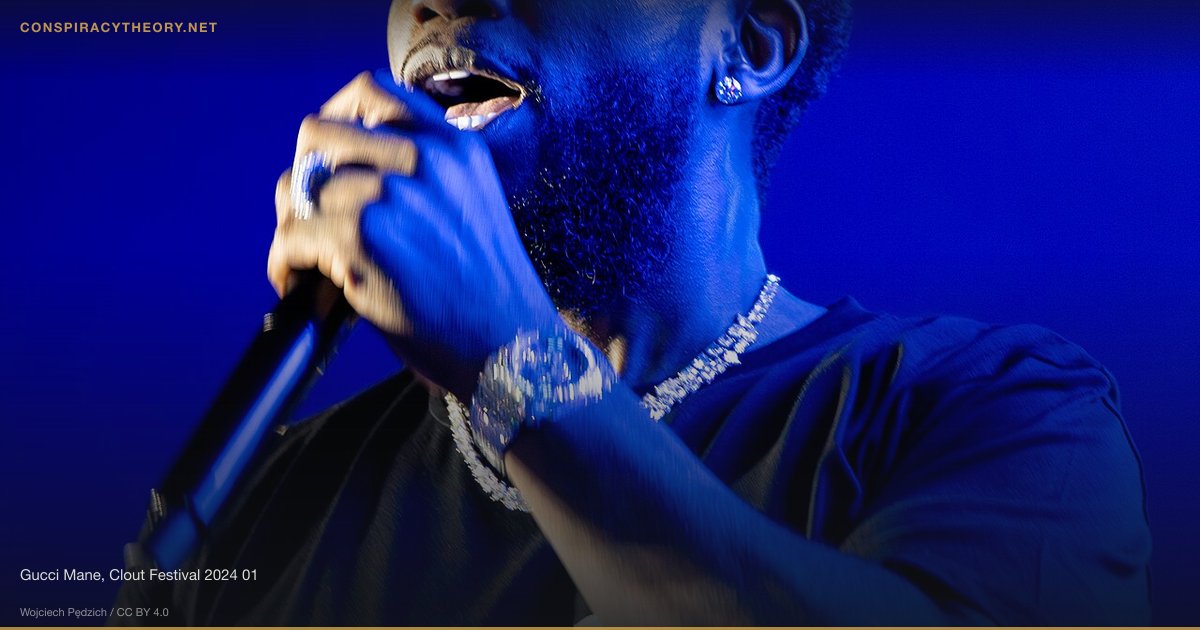
In 2016, the rapper Gucci Mane walked out of an Indiana federal prison after serving roughly two years on firearms charges. He was, by any objective measure, a different-looking person than the one who had gone in. He had lost significant weight. His skin was clearer. His eyes were brighter. He seemed — and this is where things get interesting — happier, more focused, more articulate. Within weeks of his release, a theory began circulating on Black Twitter and hip-hop forums that was delivered with varying degrees of seriousness: this was not the same Gucci Mane. The real Gucci had been killed in prison, the theory went, and replaced with a government clone.
The Gucci Mane clone theory was, for many people, the entry point into one of the internet’s most persistently weird conspiracy subgenres: the idea that major celebrities have been secretly killed and replaced by cloned or synthetically manufactured duplicates. The theory has been applied to Eminem (supposedly replaced sometime in the mid-2000s), Beyonce (multiple alleged swap-outs), Dave Chappelle (replaced after his abrupt departure to South Africa in 2005), Kanye West, Britney Spears, and dozens of others. It is the logical grandchild of the Paul is Dead theory from the 1960s, updated for an era of HD photography, face-comparison apps, and a culture that treats celebrity transformation as inherently suspicious.
What makes the celebrity clone theory fascinating is its ambiguous relationship to sincerity. Some proponents clearly believe it literally. Others deploy it as a kind of ironic commentary on the artificiality of celebrity culture — a way of saying “this person seems so different that they might as well be a clone” without necessarily claiming that cloning facilities exist beneath the Denver Airport. The theory exists in a gray zone between genuine paranoia and participatory internet folklore, and that ambiguity is part of what makes it so resilient.
Origins & History
The genealogy of celebrity replacement theories stretches back further than most people realize. The archetype is the Paul is Dead conspiracy, which emerged in 1969 (though it referenced an alleged event from 1966). According to the theory, Paul McCartney died in a car accident in November 1966 and was replaced by a look-alike named William Campbell (or, in some versions, Billy Shears). The surviving Beatles, consumed by guilt, supposedly embedded clues about Paul’s death in their album art and song lyrics — played backward, naturally. The theory was debunked almost immediately, and McCartney himself has cheerfully played along with it for decades, but it established a durable template: a celebrity looks or acts different, therefore they have been replaced.
The cloning variant specifically gained traction after 1996, when scientists at the Roslin Institute in Scotland successfully cloned Dolly the sheep. The creation of Dolly captured enormous public attention and seeded the idea that cloning technology was more advanced than officials would admit. Conspiracy theorists extrapolated from Dolly to an assumption that human cloning had already been achieved in secret — possibly decades earlier — and that the technology was being used by governments and powerful organizations to replace key public figures.
The theory found its most fertile ground in hip-hop culture. The genre’s long history of engagement with conspiracy thinking — from the Five Percenters’ influence on 1990s rap to widespread awareness of COINTELPRO and government surveillance of Black leaders — created a cultural context in which replacement theories resonated. When Eminem’s musical style and appearance shifted noticeably in the late 2000s (his voice sounded different, his face appeared altered, and his lyrical approach changed), clone theories proliferated on forums and early social media. Proponents compiled side-by-side photo comparisons highlighting changes in his jaw structure, eye shape, and ear lobes — features that, in reality, change naturally with aging and weight fluctuation.
The Gucci Mane case in 2016 brought the theory into the mainstream because the transformation was so dramatic. Before prison, Gucci Mane had been overweight, visibly unhealthy, and erratic — he had a history of lean abuse and legal troubles. After prison, he was fit, clear-eyed, and prolific. He published a bestselling memoir, married, and launched a fashion line. The contrast was so stark that even people who didn’t believe in cloning found the “clone Gucci” meme entertaining. Gucci himself leaned into it, tweeting “Gucci been cloned” and titling his 2016 album Everybody Looking — a nod to the scrutiny.
Dave Chappelle’s case followed a similar pattern. When Chappelle returned to public life after his famous departure from Chappelle’s Show in 2005 — walking away from a reported $50 million contract — he appeared notably more muscular and his voice seemed deeper. Clone theorists seized on before-and-after photos. The actual explanation — a man in his 40s who had spent years exercising, aging, and living in rural Ohio — was less compelling than the conspiracy.
Key Claims
Proponents of celebrity cloning theories typically argue:
-
Secret government cloning programs exist and have been operational for decades, far beyond what has been publicly acknowledged. Some theorists claim these programs operate under the umbrella of MKUltra successor projects or within deep underground military bases (DUMBs).
-
Celebrities are replaced when they become non-compliant. The theory posits that the entertainment industry is controlled by Illuminati figures who demand obedience. When a celebrity resists — by trying to speak out, leave the industry, or refuse orders — they are eliminated and replaced with a more controllable clone.
-
Physical differences prove replacement. Proponents compile before-and-after photos highlighting changes in facial structure, ear shape, hairline, skin tone, body proportions, and other features. These comparisons are presented as forensic evidence of a physical swap.
-
Behavioral and artistic changes confirm the theory. When a musician’s style evolves, an actor’s personality shifts, or a public figure’s political views change, these natural developments are reinterpreted as evidence that a different person is now inhabiting the celebrity’s identity.
-
“Glitches” reveal the truth. Some versions of the theory incorporate elements of the simulation hypothesis, claiming that clones sometimes “malfunction” — freezing mid-sentence, exhibiting strange facial movements, or behaving robotically in interviews. Viral videos of celebrities appearing to “glitch” are cited as evidence.
-
Cloning centers exist in specific locations. The most elaborate versions of the theory, promoted by figures like the pseudonymous Canadian conspiracy theorist “Donald Marshall,” describe vast underground cloning facilities where celebrities are manufactured and programmed.
Debunking
The celebrity cloning theory fails on multiple scientific and logical grounds:
Human cloning has not been achieved. As of 2026, no verified case of human reproductive cloning has ever been documented. While animal cloning exists, it is an extremely difficult, failure-prone process even in well-funded laboratories. The success rate for animal cloning remains low — Dolly the sheep was the only success from 277 attempts. The idea that a secret program has perfected human cloning while mainstream science struggles with animal cloning defies everything known about the pace of biological research.
Clones would not be instant adults. Even if human cloning were possible, a clone would begin life as a newborn infant and develop at a normal human rate. There is no known or theoretically plausible technology for “rapid aging” a clone to match an adult’s appearance. A clone of a 35-year-old celebrity would need 35 years to grow to match them — rendering the theory’s timeline impossible.
Clones would not have the same memories, skills, or personality. Even a physically identical clone would not possess the original person’s memories, musical abilities, acting skills, or personality traits, which are shaped by a lifetime of experiences. A cloned Eminem would not know how to rap. A cloned Beyonce would not know the choreography to “Single Ladies.”
Appearance changes have mundane explanations. Weight loss, weight gain, aging, cosmetic surgery, dental work, changes in grooming and styling, lighting differences in photographs, and the natural effects of time all produce the kinds of physical changes that theorists cite as evidence. Gucci Mane’s transformation is consistent with sobriety, regular exercise, and access to healthcare — resources readily available to a wealthy person in a structured environment.
The theory requires impossible secrecy. Replacing a celebrity would require the silence of their family, friends, collaborators, staff, medical professionals, and the cloning facility employees. No whistleblower has ever emerged from any alleged cloning program.
Cultural Impact
The celebrity clone theory is fascinating less for its factual claims — which are straightforwardly absurd — than for what it reveals about the culture that produces it.
At one level, the theory reflects genuine discomfort with the manufactured nature of celebrity. Modern celebrities are products — shaped by publicists, stylists, trainers, surgeons, vocal coaches, and image consultants. When a celebrity undergoes a dramatic transformation, the clone theory is, in a sense, a hyperliteral expression of the observation that this person seems artificial. Saying “Gucci Mane is a clone” is, for many people, a more entertaining way of saying “celebrity reinvention is so managed and total that it feels inhuman.”
The theory also intersects with real anxieties about biotechnology. As gene-editing technologies like CRISPR advance, as AI-generated deepfakes become more convincing, and as the line between “natural” and “synthetic” blurs across multiple domains, the clone theory channels a legitimate unease about what technology makes possible. It is wrong in its specifics but not entirely irrational in its underlying concerns.
In Black internet culture specifically, the clone theory has functioned as both entertainment and social commentary. The theory’s frequent application to Black celebrities — Gucci Mane, Dave Chappelle, Kanye West, Beyonce — occurs within a historical context where the U.S. government has, in fact, targeted Black public figures for surveillance, disruption, and assassination (see COINTELPRO, the assassination of Fred Hampton, the Tuskegee experiment). The clone theory channels a real and historically justified distrust of institutional power through an absurdist lens.
The theory has also become a significant element of internet meme culture. “Clone” accusations are now a standard response to any celebrity who undergoes noticeable physical or behavioral change. The format — before-and-after photos with captions like “That’s not the real [name]” — has become a template that can be applied to virtually anyone, from politicians to athletes to acquaintances. Like many conspiracy theories that begin at the fringes, it has been partially absorbed into mainstream internet humor, where its literal claims are less important than its function as a comedic framework.
Timeline
- 1966 — Paul McCartney allegedly dies and is replaced, according to the “Paul is Dead” theory that emerges in 1969 — establishing the template for celebrity replacement conspiracies.
- 1996 — Dolly the sheep is cloned at the Roslin Institute in Scotland, introducing cloning technology into public consciousness.
- 2003-2006 — Clone theories begin appearing on early internet forums, often targeting Eminem after noticeable changes in his appearance and musical style.
- 2005 — Dave Chappelle abruptly leaves Chappelle’s Show and travels to South Africa, triggering replacement theories.
- 2006 — Conspiracy theorist Donald Marshall begins posting elaborate accounts of celebrity cloning centers, which gain traction in fringe communities.
- 2008-2010 — Eminem clone theories proliferate following his comeback after a period of absence and visible physical changes.
- 2013 — Avril Lavigne replacement theory goes viral, claiming she was replaced by a look-alike named Melissa.
- May 2016 — Gucci Mane is released from federal prison. His dramatic physical transformation sparks viral clone memes.
- 2016-2017 — “Clone Gucci” becomes a mainstream meme. Gucci Mane leans into the joke, referencing it in music and social media.
- 2017-2020 — Clone theories expand to include Beyonce, Kanye West, Britney Spears, and numerous others.
- 2020s — The rise of deepfake technology adds a new layer to the theory, with some proponents arguing that AI-generated doubles are being used alongside or instead of biological clones.
Sources & Further Reading
- Barkun, Michael. A Culture of Conspiracy: Apocalyptic Visions in Contemporary America. University of California Press, 2013.
- Brotherton, Rob. Suspicious Minds: Why We Believe Conspiracy Theories. Bloomsbury, 2015.
- Reed, Alexander. “Replacement Fantasies: Celebrity Doubles from Paul McCartney to Gucci Mane.” Journal of Popular Music Studies, 2019.
- Tait, Amelia. “The bizarre world of celebrity clone conspiracy theories.” New Statesman, 2017.
- National Academies of Sciences, Engineering, and Medicine. Human Reproductive Cloning: An Overview of the Science, Ethics, and Public Policy. 2002.
- Phillips, Whitney, and Ryan Milner. You Are Here: A Field Guide for Navigating Polarized Speech, Conspiracy Theories, and Our Polluted Media Landscape. MIT Press, 2021.
Related Theories
- Paul is Dead — The original celebrity replacement theory
- Avril Lavigne Replacement — One of the most viral specific celebrity replacement claims
- Celebrity Replacement — The broader category of theories about replaced public figures
- Celebrity MKUltra & Monarch Mind Control — Related theories about celebrity manipulation
- Illuminati Celebrity Blood Sacrifice — Connected theories about Illuminati control of celebrities
![Eminem rapping at the Anger Management Tour in 2003. [EXPLORE #247] — related to Celebrity Cloning Conspiracy](/images/theories/celebrity-clone-theory/body.jpg)
Frequently Asked Questions
Which celebrities are most commonly claimed to be clones?
Is it scientifically possible to clone a human being?
Why do people believe celebrities have been replaced by clones?
What is the connection between celebrity cloning theories and the 'Paul is Dead' conspiracy?

Infographic
Share this visual summary. Right-click to save.
