JFK Assassination Files — What Is the CIA Hiding?
Overview
On November 22, 1963, President John F. Kennedy was assassinated in Dallas, Texas. More than sixty years later, the United States government has still not released all of its files on the killing.
Let that sit for a moment. The most consequential political murder of the twentieth century, investigated by a presidential commission, a congressional committee, and countless journalists and researchers, and the intelligence agencies of the world’s most powerful democracy are still, after six decades, redacting documents related to it. The CIA has spent more time keeping JFK assassination records secret than the Soviet Union existed as a state.
This article is not about who killed Kennedy. It is about what the CIA is hiding and why — a narrower but in some ways more important question, because while the identity of Kennedy’s killer(s) may never be established to universal satisfaction, the documented pattern of CIA obstruction, deception, and secrecy surrounding the assassination investigation is itself a confirmed fact that requires explanation.
The JFK files story has three components. First, the CIA demonstrably withheld information from the Warren Commission, the official 1964 investigation. Second, when Congress reinvestigated in the late 1970s, the CIA assigned as its liaison the very officer who had been running a Cuban exile group connected to Oswald — a conflict of interest that was not disclosed. Third, when Congress mandated full release of all assassination records by 2017, the intelligence community successfully lobbied multiple presidents to maintain redactions on an unspecified number of documents.
The question “what is the CIA hiding?” is classified as unresolved not because we lack evidence of concealment — the concealment is documented — but because the content of what remains hidden, and whether it would change our understanding of the assassination, cannot be determined without seeing the documents themselves.
Origins & History
The Warren Commission and What It Wasn’t Told
The Warren Commission, established by President Lyndon Johnson in November 1963 under Chief Justice Earl Warren, concluded in September 1964 that Lee Harvey Oswald, acting alone, assassinated President Kennedy. The commission’s report was a massive document — 888 pages with 26 volumes of supporting testimony and evidence — and its conclusion became the official account of the assassination.
What the commission did not know — and what subsequent investigations would reveal — was that the CIA had withheld significant information from it.
The most consequential withholding concerned the CIA’s assassination plots against Fidel Castro. At the very time Kennedy was killed, the CIA was actively attempting to assassinate Castro using a variety of methods, including collaboration with the American Mafia. The Castro plots were directly relevant to the Warren Commission’s investigation for several reasons:
- If Castro learned of the plots (and Cuban intelligence was likely aware), he might have ordered or facilitated retaliation against Kennedy — the “blowback” theory.
- The CIA-Mafia alliance involved organized crime figures who had independent reasons to want Kennedy dead (Attorney General Robert Kennedy was aggressively prosecuting the Mafia).
- The anti-Castro Cuban exile community, in which Oswald was entangled in New Orleans, was deeply connected to CIA operations.
CIA Director Allen Dulles, who served as a Warren Commission member (a staggering conflict of interest — he had been fired by Kennedy after the Bay of Pigs disaster), did not inform the commission of the Castro assassination plots. Richard Helms, the CIA’s Deputy Director for Plans, later testified that he had not disclosed the plots because he had not been asked. This response — which became infamous as an example of intelligence community evasion — illustrated the CIA’s approach to the investigation: provide what is specifically requested, volunteer nothing.
Oswald in Mexico City
Perhaps the most significant cluster of unreleased or heavily redacted documents concerns Lee Harvey Oswald’s trip to Mexico City in late September and early October 1963, approximately seven weeks before the assassination.
Oswald visited both the Soviet Embassy and the Cuban Consulate in Mexico City during this trip. He was seeking a visa to travel to Cuba and potentially to the Soviet Union. The CIA’s Mexico City station, which conducted extensive surveillance of both diplomatic facilities, monitored Oswald’s visits. The station photographed visitors to the embassies, tapped their phone lines, and maintained informants.
What the CIA knew about Oswald’s Mexico City activities — and when it knew it — has been the subject of intense scrutiny. Declassified documents have revealed:
- The CIA tracked Oswald’s contacts with Soviet and Cuban diplomatic officials in real time.
- CIA cables about Oswald’s Mexico City visit contained significant errors about his physical description, leading to speculation about whether the agency was tracking the real Oswald or an impersonator.
- Internal CIA communications after the assassination show awareness that the Mexico City information was sensitive and potentially damaging.
- The CIA’s Mexico City station chief, Win Scott, wrote a memoir before his death in 1971 that reportedly contained information about Oswald’s visit. After Scott’s death, CIA counterintelligence chief James Angleton personally traveled to Mexico City to retrieve the manuscript and other materials from Scott’s home. The manuscript has never been fully released.
The Mexico City episode remains one of the most heavily contested aspects of the assassination story because it sits at the intersection of several explosive elements: Oswald’s contacts with Soviet and Cuban intelligence, the CIA’s own surveillance operations, and the question of whether the CIA had prior knowledge that Oswald posed a threat.
The House Select Committee on Assassinations (1976-1979)
Congress reopened the JFK investigation in 1976, establishing the House Select Committee on Assassinations (HSCA). The committee’s mandate was to reinvestigate both the Kennedy assassination and the assassination of Martin Luther King Jr., in light of the Church Committee’s revelations about CIA and FBI misconduct.
The HSCA’s final report, issued in 1979, concluded that Kennedy was “probably assassinated as a result of a conspiracy” — a direct contradiction of the Warren Commission’s lone-gunman finding. The committee based this conclusion partly on acoustic evidence from a Dallas police dictabelt recording that appeared to show four shots fired (implying a second gunman), though this evidence was later challenged by the National Academy of Sciences.
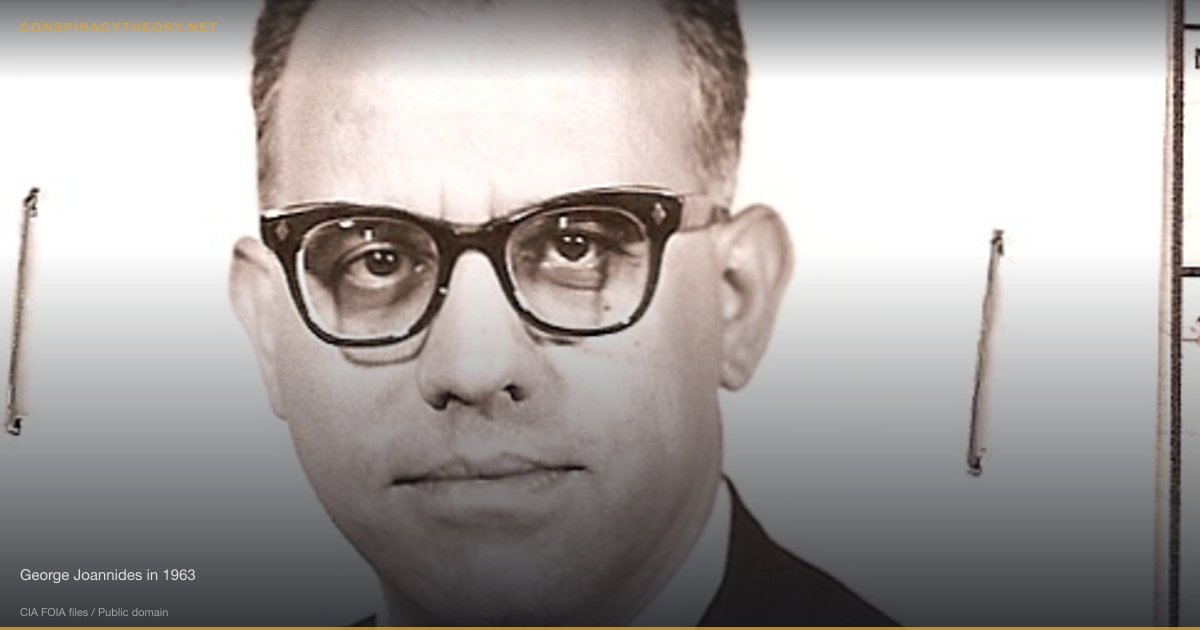
More significant for the files story was the HSCA’s interaction with the CIA. When the committee requested CIA cooperation, the agency assigned George Joannides as its liaison officer.
George Joannides: The CIA’s Man
George Joannides is the single most important figure in the CIA files story, and his role remains one of the most troubling documented facts in the entire Kennedy assassination record.
In 1963, Joannides was the CIA case officer for the Directorio Revolucionario Estudiantil (DRE), a Cuban exile organization funded and directed by the CIA. The DRE was based in New Orleans. In August 1963 — three months before the assassination — DRE members had a documented public encounter with Lee Harvey Oswald on the streets of New Orleans. Oswald was distributing pro-Castro leaflets; DRE members confronted him; the incident generated press coverage and a radio debate.
The significance: the CIA was running the very organization that had the most documented contact with Oswald in the months before the assassination.
When the HSCA requested a liaison from the CIA in 1978, the agency assigned Joannides to the role. The committee was not informed that Joannides had been the DRE’s handler. This meant that the CIA placed the officer most directly connected to an Oswald-related operation in a position to control what information the congressional investigators received. Joannides, by multiple accounts, was obstructive — slow to produce documents, resistant to requests, and unhelpful.
The HSCA never discovered the conflict of interest. It was not revealed until after Joannides’s death in 1990, when journalist Jefferson Morley — pursuing a Freedom of Information Act lawsuit against the CIA — uncovered Joannides’s role as DRE handler and reported it in 2001.
Morley’s discovery triggered a decade-long legal battle with the CIA, which fought the release of Joannides’s personnel records. As of 2026, significant portions of Joannides’s CIA file remain classified or heavily redacted. The CIA has never explained why it assigned Joannides to the HSCA or whether his assignment was intended to obstruct the investigation.
The JFK Records Act (1992)
Public outrage following Oliver Stone’s 1991 film JFK — which dramatized New Orleans District Attorney Jim Garrison’s conspiracy theories about the assassination — led to the passage of the President John F. Kennedy Assassination Records Collection Act of 1992 (the JFK Records Act).
The Act created the Assassination Records Review Board (ARRB), an independent agency tasked with identifying, collecting, and ensuring the release of all records related to the assassination. The ARRB operated from 1994 to 1998 and transferred approximately five million pages of documents to the National Archives. It was the most comprehensive declassification effort in U.S. history related to a single event.
Critically, the Act mandated that all remaining classified assassination records be released by October 26, 2017 — 25 years after the Act’s passage — unless the President personally certified that continued withholding was necessary to protect national security.
The 2017 Deadline and Its Aftermath
October 2017 should have been the end of the JFK files story. It was not.
President Donald Trump initially promised to release all remaining files, tweeting enthusiastically about transparency. But when the deadline arrived, he issued a memo permitting the CIA, FBI, and other agencies to continue withholding certain documents pending a further review. Approximately 2,800 documents were withheld in full, and thousands more were released with redactions.
The intelligence community’s argument for continued secrecy — that the documents contained information about intelligence sources and methods that, if revealed, could damage national security — was met with deep skepticism. Critics pointed out that any intelligence sources from 1963 would almost certainly be dead after more than five decades, and any methods from that era would be long obsolete.
President Biden continued the pattern. In 2021, he issued an executive order extending the deadline for full release. In December 2022, he authorized the release of approximately 13,000 additional documents, and his administration stated that 97 percent of the records in the JFK collection had been released in full. However, “97 percent” still left thousands of pages either withheld or redacted.
In 2023, Trump — now campaigning for a second term — again promised to release all remaining files. The status of the remaining documents continues to evolve.
Key Claims
-
The CIA withheld critical information from the Warren Commission. The Castro assassination plots, Oswald’s Mexico City activities, and the DRE connection were not fully disclosed. Status: Confirmed. This is documented in Church Committee and HSCA findings.
-
The CIA deliberately obstructed the HSCA investigation by assigning George Joannides. The agency placed the DRE handler in a position to control information flow to congressional investigators. Status: Confirmed. The conflict of interest is documented, though the CIA’s intent has not been officially acknowledged.
-
The remaining classified documents contain evidence of CIA involvement in the assassination. The continued withholding of documents is evidence that they contain damaging information. Status: Unresolved. The existence of withheld documents is confirmed, but their content is unknown.
-
The intelligence community has successfully defied a congressional mandate for full disclosure. Despite the JFK Records Act’s 2017 deadline, significant materials remain classified. Status: Confirmed. Multiple presidents have granted exceptions to the Act’s requirements.
-
The Mexico City surveillance materials would reveal what the CIA knew about Oswald. The heavily redacted Mexico City station files would show that the CIA tracked Oswald more closely than officially acknowledged. Status: Partially confirmed. Released documents show the CIA monitored Oswald’s Mexico City contacts. The significance of the remaining redactions is unknown.
Evidence
Documented CIA Concealment
The following instances of CIA concealment or obstruction are matters of historical record:
Failure to disclose Castro assassination plots. The CIA did not inform the Warren Commission of its ongoing attempts to assassinate Fidel Castro, despite the direct relevance of these operations to the question of motive and possible retaliation.
The Joannides assignment. The CIA assigned its DRE handler as liaison to the HSCA without disclosing the conflict of interest. This has been characterized by HSCA staff counsel G. Robert Blakey as a deliberate obstruction of a congressional investigation.
Win Scott’s memoir. CIA counterintelligence chief James Angleton personally retrieved the Mexico City station chief’s memoir and materials after his death, ensuring they remained under CIA control.
Destruction of records. CIA officer E. Howard Hunt’s personnel file was partially destroyed after the assassination, according to testimony before the ARRB. The circumstances of this destruction have never been fully explained.
The Oswald 201 file. The CIA maintained a “201” (personality) file on Oswald that was opened in December 1960 — well before the assassination. The handling of this file, and why certain information about Oswald was or was not disseminated to other agencies, remains a subject of dispute.
Released Documents of Note
The documents released since 1992 have provided significant new information:
- CIA cables showing real-time tracking of Oswald’s Mexico City activities
- Internal CIA discussions about the political sensitivity of the Mexico City information
- Evidence of CIA surveillance programs in New Orleans where Oswald was active
- Details of the CIA’s relationship with anti-Castro Cuban exile organizations
- Communications between CIA headquarters and field stations about Oswald in the weeks before the assassination
- FBI documents showing that the Bureau had Oswald under surveillance and considered him a potential security risk
None of the released documents constitute a “smoking gun” proving CIA involvement in the assassination. However, they have substantiated the claim that the CIA was far more aware of Oswald’s activities before the assassination than it disclosed to the Warren Commission, and that the agency’s relationship to the anti-Castro exile community in which Oswald moved was far more extensive than previously acknowledged.
Debunking / Verification
The JFK files case is classified as unresolved because:
- CIA concealment of information from investigators is confirmed
- Significant documents remain classified or redacted
- The content and significance of the remaining materials cannot be assessed without seeing them
- The CIA’s stated reasons for continued withholding (protection of sources and methods) are plausible but unverifiable
It is important to distinguish between two separate questions:
- Did the CIA conceal information about the assassination? Yes. This is confirmed.
- Does the concealed information prove CIA involvement in the assassination? Unknown. The concealment could reflect involvement, or it could reflect the agency’s desire to hide embarrassing but unrelated activities (Castro assassination plots, domestic surveillance, incompetence in tracking a known defector).
The strongest argument that the remaining files contain damaging information is the intensity with which the intelligence community has fought to keep them secret. If the documents merely showed routine intelligence activities, the cost-benefit analysis of continued secrecy — which generates endless conspiracy theories and erodes public trust — would favor release.
The strongest argument against a conspiracy cover-up is that the millions of pages already released have not produced evidence of CIA involvement in the killing itself, and the pattern of concealment is consistent with institutional self-protection (hiding embarrassing activities) rather than murder cover-up.
Cultural Impact
The JFK files issue has had a profound impact on American political culture and public trust in government institutions.
Institutional distrust. Polls consistently show that a majority of Americans believe the Kennedy assassination involved a conspiracy. The CIA’s documented pattern of concealment and obstruction has been the single largest factor in sustaining this belief. Even Americans who have no interest in the specifics of the assassination evidence understand that the government is still hiding something, and that understanding shapes their broader relationship with government institutions.
Legislative legacy. The JFK Records Act of 1992 established important precedents for government transparency. The ARRB’s work demonstrated that systematic declassification of intelligence records was possible without catastrophic consequences. The Act has been cited as a model for other declassification efforts.
Oliver Stone’s JFK. The 1991 film, while widely criticized for its historical inaccuracies, was directly responsible for the political pressure that produced the JFK Records Act. The film demonstrated the power of popular culture to drive legislative action.
The “trust deficit.” The JFK files story is frequently cited as evidence of a broader pattern of government secrecy and deception that includes Watergate, Iran-Contra, the Iraq WMD intelligence failure, and the Snowden revelations. Each successive episode reinforces the credibility of JFK conspiracy theories by demonstrating that the government is capable of sustained deception.
Conspiracy theory culture. The JFK assassination is the foundational event of modern American conspiracy theory culture. The files issue keeps the assassination in the news cycle, with each new release or non-release generating fresh speculation and analysis.
Timeline
- November 22, 1963 — President Kennedy assassinated in Dallas, Texas
- November 29, 1963 — Warren Commission established by President Johnson
- September 1964 — Warren Commission Report published; concludes Oswald acted alone
- 1975-1976 — Church Committee reveals CIA assassination plots against Castro and other covert activities
- 1976-1979 — House Select Committee on Assassinations reinvestigates; concludes “probable conspiracy”
- 1978 — CIA assigns George Joannides as HSCA liaison without disclosing conflict of interest
- 1990 — Joannides dies; his role as DRE handler is later uncovered
- 1991 — Oliver Stone’s JFK generates public demand for document release
- 1992 — JFK Records Act signed by President George H.W. Bush; mandates full release by October 2017
- 1994-1998 — Assassination Records Review Board operates; transfers approximately 5 million pages to National Archives
- 2001 — Jefferson Morley reports Joannides’s conflict of interest; begins FOIA lawsuit against CIA
- October 26, 2017 — Statutory deadline for full release; President Trump permits continued withholding of approximately 2,800 documents
- 2018-2021 — Gradual release of additional documents with continued redactions
- December 2022 — President Biden authorizes release of approximately 13,000 additional documents
- 2023 — National Archives releases further materials; some redactions remain
- 2024-2025 — Continued releases and ongoing debate about remaining classified materials
- 2026 — Some materials remain redacted more than 60 years after the assassination
Sources & Further Reading
- Morley, Jefferson. Our Man in Mexico: Winston Scott and the Hidden History of the CIA. University Press of Kansas, 2008.
- Morley, Jefferson. “What Jane Roman Said.” History Matters, 2001.
- Shenon, Philip. A Cruel and Shocking Act: The Secret History of the Kennedy Assassination. Henry Holt, 2013.
- Assassination Records Review Board. Final Report. U.S. Government Printing Office, 1998.
- Talbot, David. The Devil’s Chessboard: Allen Dulles, the CIA, and the Rise of America’s Secret Government. Harper, 2015.
- U.S. Senate Select Committee to Study Governmental Operations with Respect to Intelligence Activities (Church Committee). Reports, 1975-1976.
- House Select Committee on Assassinations. Final Report. U.S. Government Printing Office, 1979.
- National Archives. “JFK Assassination Records.” www.archives.gov/research/jfk.
- Bugliosi, Vincent. Reclaiming History: The Assassination of President John F. Kennedy. W.W. Norton, 2007.
Related Theories
- JFK Assassination — The broader set of conspiracy theories about who killed Kennedy and why
- CIA Assassination Attempts on Castro — The confirmed CIA plots against Castro, which were concealed from the Warren Commission
- Deep State — The theory that unelected intelligence officials exercise hidden power over government
- CIA Kennedy Plot — The specific theory that the CIA was involved in the assassination itself

Frequently Asked Questions
Are there still classified JFK assassination files?
Who was George Joannides and why does he matter?
What has been found in the released JFK files?
Why would the CIA still be hiding JFK assassination documents more than 60 years later?
Infographic
Share this visual summary. Right-click to save.
