Climate Scientists Paid for Alarmism
Overview
It is one of the most persistent claims in the climate debate: the thousands of scientists around the world who study climate change are not following the evidence — they are following the money. The theory goes like this: climate researchers have discovered that predicting catastrophe is the surest path to grant funding, tenure, and career advancement. Institutions reward alarmism. Journals publish scary scenarios. And so an entire field has organized itself around a profitable lie, systematically exaggerating the threat of global warming to keep the research dollars flowing.
The accusation has a surface plausibility that makes it sticky. Scientists do depend on grants. Funding agencies do prioritize urgent-sounding research. Media coverage does favor dramatic predictions over incremental findings. But the theory collapses under scrutiny — not because scientists are saints, but because the accusation gets the incentive structure exactly backward, ignores the way science actually works, and projects onto researchers the very behavior that has been documented in the fossil fuel industry.
To put it bluntly: there is a conspiracy involving money and climate science. But the money flows in the opposite direction from what the theory claims.
Origins & History
Skepticism about climate science is as old as climate science itself. When scientists first raised concerns about greenhouse gas accumulation in the 1970s and 1980s, the response from parts of the business community was immediate and strategic. Internal documents from major fossil fuel companies — most notably Exxon — reveal that their own scientists understood and accurately modeled the warming effect of CO2 emissions as early as 1977. But publicly, the industry chose a different path.
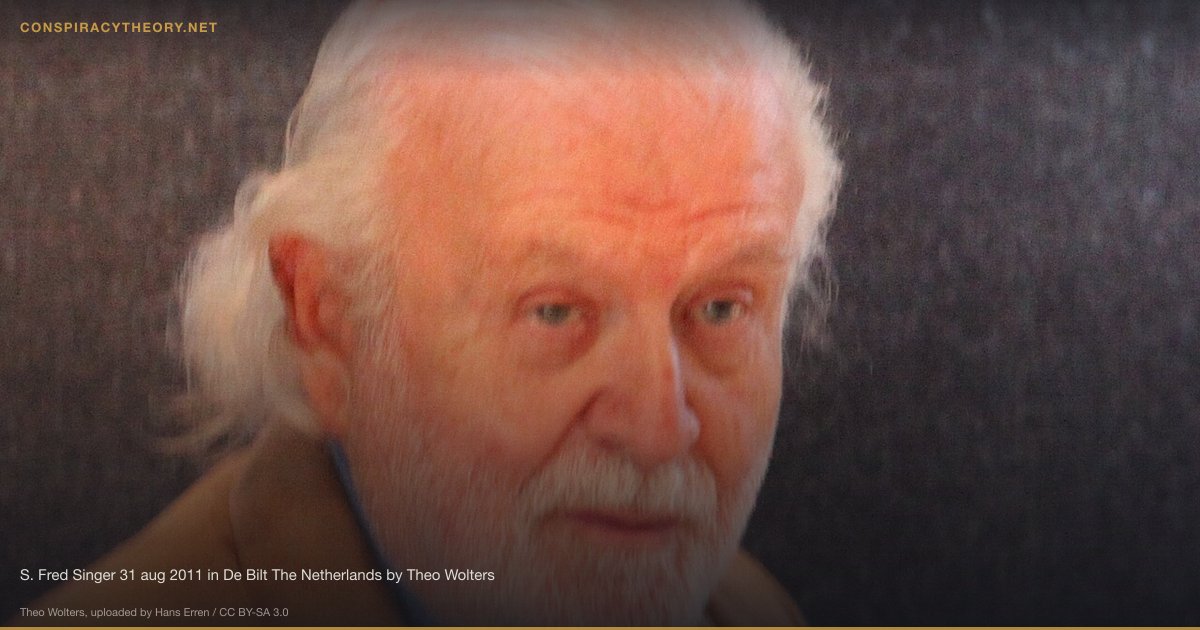
The organized effort to cast doubt on climate science drew directly from the tobacco industry’s playbook. Some of the same consultants, think tanks, and public relations strategies that had been used to deny the link between smoking and cancer were repurposed for climate denial. The physicist Fred Singer, who had previously questioned the health effects of secondhand smoke, became one of the most prominent voices challenging the climate consensus. Organizations like the George C. Marshall Institute, the Heartland Institute, and the Global Climate Coalition — funded substantially by fossil fuel interests — produced reports, hosted conferences, and cultivated sympathetic media coverage designed to manufacture the appearance of scientific debate where little existed.
The “scientists are bribed” narrative emerged as a key component of this strategy. If the public could be convinced that climate researchers had a financial motive to exaggerate, then the overwhelming scientific consensus could be dismissed as the product of corruption rather than evidence. The argument was popularized by figures like Senator James Inhofe of Oklahoma, who called climate change “the greatest hoax ever perpetrated on the American people” in a 2003 Senate floor speech, and Marc Morano, a political operative who ran the Climate Depot website and specialized in attacking individual scientists.
The 2009 “Climategate” affair gave the narrative its most powerful fuel. Hackers (widely suspected to be Russian-linked, though never conclusively identified) stole thousands of emails from the Climatic Research Unit (CRU) at the University of East Anglia and released them online just weeks before the Copenhagen climate summit. Climate skeptics seized on phrases like “hide the decline” and “Mike’s Nature trick” as evidence of deliberate data manipulation.
The fallout was intense. Nine separate investigations were conducted — by the British House of Commons, Penn State University, the U.S. Environmental Protection Agency, the National Science Foundation, and others. Every single one cleared the scientists of scientific fraud, finding that the emails reflected normal scientific discussion and shorthand taken out of context. “Hide the decline” referred to a well-known divergence between tree-ring proxy data and instrumental temperature records after 1960 — a statistical issue that had been publicly discussed in the scientific literature — not to hiding actual temperature decline.
But the investigations mattered less than the narrative. In public perception, the damage was done. Polls showed a measurable drop in public trust in climate science following Climategate, and the “scientists are corrupt” talking point gained permanent traction in certain media ecosystems.
Key Claims
- Climate scientists exaggerate findings to secure funding. Researchers supposedly know that dramatic predictions attract grants, while findings of mild or manageable warming do not. This creates a systemic bias toward alarmism.
- The grant system creates a feedback loop. Government agencies fund alarming research, which produces alarming findings, which justify more alarming research funding. Scientists who question the consensus are denied funding and marginalized.
- Peer review is a gatekeeping mechanism. Rather than quality control, peer review supposedly functions as ideological enforcement, preventing dissenting views from being published.
- Climategate proved the conspiracy. The CRU emails revealed scientists colluding to manipulate data, suppress dissenting papers, and present a misleading picture of warming to the public.
- The IPCC is a political body, not a scientific one. The Intergovernmental Panel on Climate Change supposedly starts with political conclusions and works backward to find supporting science, pressuring lead authors to align with predetermined narratives.
- “97% consensus” is manufactured. The oft-cited figure that 97% of climate scientists agree on human-caused warming is allegedly based on flawed methodology designed to overstate agreement.
Evidence
What the Theory Gets Wrong About Funding
The “follow the money” argument contains a fundamental misunderstanding of how scientific funding works. Government research grants are awarded based on the quality and originality of proposed methodology, not on the conclusions researchers promise to reach. A proposal to study climate change need not predict catastrophe — it needs to propose a rigorous investigation of a significant question.
More importantly, the incentive structure in science rewards novelty and contrarianism, not conformity. A scientist who produced robust evidence that warming was minimal or primarily natural would become one of the most cited researchers in the field overnight. Such a finding would be career-making, not career-ending. The very persistence of the consensus — maintained across decades, thousands of researchers, multiple independent lines of evidence, and every major scientific organization on Earth — is itself evidence against the corruption theory. Conspiracies of this scale do not maintain coherence across disciplines, nations, and generations.
The actual dollar figures also undermine the narrative. Total U.S. federal spending on climate research is approximately $2.5-3 billion annually — a significant sum but modest compared to the revenues of the fossil fuel industry, which exceed $2 trillion annually for the top five companies alone. If “following the money” explains scientific conclusions, the fossil fuel industry has enormously more money to follow.
What Has Actually Been Documented About Money and Climate Science
Fossil fuel funding of denial: Investigative journalism and leaked internal documents have revealed extensive fossil fuel industry funding of climate skepticism. ExxonMobil alone contributed at least $30 million to think tanks and organizations promoting climate denial between 1998 and 2014, according to an analysis by the Union of Concerned Scientists. The company’s own internal research, beginning in the late 1970s, accurately predicted warming trends — research that was suppressed while the company publicly cast doubt on the science.
Willie Soon’s undisclosed funding: Harvard-Smithsonian astrophysicist Willie Soon, one of the most prominent scientific voices questioning the climate consensus, received more than $1.2 million from fossil fuel companies including ExxonMobil, the Charles G. Koch Charitable Foundation, and the Southern Company between 2001 and 2012. Documents obtained through Freedom of Information requests revealed that Soon described his research papers as “deliverables” in correspondence with funders — a transactional framing more typical of consulting than independent research. Soon did not consistently disclose these funding sources in his published papers, violating standard scientific practice.
The Global Climate Coalition: This industry group, active from 1989 to 2002, included major oil, coal, and automobile companies. Internal documents revealed that its own scientific advisory panel acknowledged the reality of human-caused warming even as the organization publicly promoted skepticism.
Climategate in Context
The nine independent investigations of the CRU emails are worth examining in detail because they represent one of the most thorough reviews of scientific conduct ever undertaken:
- House of Commons Science and Technology Committee (March 2010): Found no evidence that CRU had tampered with data or peer review.
- Independent Climate Change Emails Review (Muir Russell) (July 2010): Found “no evidence of…subversion of the peer review or editorial process.”
- International Science Assessment Panel (Oxburgh) (April 2010): Found no evidence of deliberate scientific malpractice.
- Penn State University (February and July 2010): Cleared Michael Mann of research misconduct.
- U.S. Environmental Protection Agency (2010): Found no evidence undermining the scientific basis of its endangerment finding.
- U.S. Department of Commerce Inspector General (2011): Found no evidence of data manipulation.
- National Science Foundation (August 2011): Found no evidence of research misconduct.
The consistent finding across all investigations: the emails reflected the messy, argumentative, sometimes petty reality of scientific work, not evidence of fraud.
Debunking / Verification
Multiple independent lines of evidence confirm warming. The climate consensus does not rest on any single data set, model, or research group. Surface temperature records from NASA, NOAA, the UK Met Office, and the Japanese Meteorological Agency — maintained independently by different teams in different countries — all show consistent warming. Satellite data, ocean heat content measurements, ice core records, glacier retreat observations, sea level rise measurements, and phenological data (timing of biological events like flowering and migration) all converge on the same conclusion.
The consensus is real and has been verified repeatedly. Multiple studies using different methodologies — including Cook et al. (2013), Doran and Zimmerman (2009), and Anderegg et al. (2010) — have found that 97% or more of actively publishing climate scientists agree that human activities are causing warming. A 2021 study by Lynas et al. examining nearly 90,000 climate papers found consensus above 99%.
Predictions have proven accurate. James Hansen’s 1988 Congressional testimony projections, the IPCC’s successive assessment reports, and individual model runs from the 1990s and 2000s have tracked observed warming with remarkable accuracy — exactly what you would not expect from a field supposedly manufacturing results.
Cultural Impact
The “paid for alarmism” narrative has had outsized influence on climate policy, particularly in the United States. By creating the impression of scientific uncertainty where little exists, it has provided political cover for inaction on emissions reduction. Politicians who oppose climate regulation routinely invoke the “scientists are biased” argument, and polling consistently shows that a significant minority of the American public believes climate change is exaggerated for financial reasons.
The narrative has also created a hostile environment for climate scientists. Researchers have reported receiving death threats, having their emails subpoenaed by hostile state attorneys general, being subjected to organized harassment campaigns, and experiencing professional intimidation. Michael Mann, a central figure in the Climategate controversy, was the target of a decade-long defamation lawsuit by conservative commentators (resolved in his favor in 2024).
Ironically, the “follow the money” framing has ultimately been more damaging to the fossil fuel industry than to climate science. The same logic that climate skeptics used against researchers has been turned against the industry itself, as investigative journalists and prosecutors have documented the decades-long campaign to manufacture doubt. Multiple U.S. states and cities have filed lawsuits against fossil fuel companies for knowingly misleading the public about climate risks.
In Popular Culture
- An Inconvenient Truth (2006) — Al Gore’s documentary brought climate science to mainstream audiences; climate skeptics responded by questioning Gore’s motivations and the scientists he cited.
- The Great Global Warming Swindle (2007) — A British Channel 4 documentary that promoted the “scientists are biased” narrative; Ofcom upheld complaints about its misrepresentation of one scientist’s views.
- Merchants of Doubt by Naomi Oreskes and Erik Conway (2010) — The definitive account of how industrial interests manufactured scientific uncertainty on climate, tobacco, and other issues.
- Don’t Look Up (2021) — Adam McKay’s satirical film about societal denial of an existential threat, widely interpreted as a climate change allegory.
Key Figures
| Figure | Role |
|---|---|
| James Inhofe | U.S. Senator who called climate change “the greatest hoax” and promoted the bribery narrative |
| Marc Morano | Political operative behind Climate Depot; specialist in attacking individual climate scientists |
| Fred Singer | Physicist who questioned both secondhand smoke and climate science; founded the Science & Environmental Policy Project |
| Willie Soon | Astrophysicist whose undisclosed fossil fuel funding illustrated the actual direction of financial conflicts |
| Michael Mann | Climate scientist targeted by skeptics after Climategate; creator of the “hockey stick” temperature reconstruction |
| Naomi Oreskes | Historian of science who documented the organized manufacture of climate doubt |
Timeline
| Date | Event |
|---|---|
| 1977 | Exxon’s own scientists begin internal research confirming CO2-driven warming |
| 1988 | James Hansen testifies to Congress about global warming |
| 1989 | Global Climate Coalition formed by fossil fuel and auto industry to promote climate skepticism |
| 1990s | Organized climate denial campaign draws on tobacco industry playbook |
| 1998 | American Petroleum Institute memo outlines strategy to create public doubt about climate science |
| 2003 | Senator Inhofe calls climate change “the greatest hoax” on the Senate floor |
| 2009 | Climategate: CRU emails hacked and released; nine investigations clear scientists |
| 2010 | Multiple investigations conclude no scientific fraud in CRU emails |
| 2012 | Heartland Institute documents leaked, revealing climate denial funding strategy |
| 2015 | Inside Climate News and Los Angeles Times publish investigations of ExxonMobil’s internal climate research |
| 2015 | Willie Soon’s fossil fuel funding disclosed through Freedom of Information requests |
| 2024 | Michael Mann wins defamation lawsuit against commentators who accused him of fraud |
Sources & Further Reading
- Oreskes, Naomi, and Erik M. Conway. Merchants of Doubt: How a Handful of Scientists Obscured the Truth on Issues from Tobacco Smoke to Global Warming. Bloomsbury Press, 2010.
- Cook, John, et al. “Quantifying the Consensus on Anthropogenic Global Warming in the Scientific Literature.” Environmental Research Letters 8, no. 2 (2013): 024024.
- Supran, Geoffrey, and Naomi Oreskes. “Assessing ExxonMobil’s Climate Change Communications (1977-2014).” Environmental Research Letters 12, no. 8 (2017): 084019.
- Lynas, Mark, Benjamin Z. Houlton, and Simon Perry. “Greater Than 99% Consensus on Human Caused Climate Change in the Peer-Reviewed Scientific Literature.” Environmental Research Letters 16, no. 11 (2021): 114005.
- Muir Russell, Sir. The Independent Climate Change E-mails Review. University of East Anglia, 2010.
- Union of Concerned Scientists. “ExxonMobil’s Tobacco-Like Disinformation Campaign on Global Warming.” 2007.
Related Theories
- Climate Change Hoax — The broader conspiracy theory that global warming is entirely fabricated
- IPCC Corruption — Claims that the Intergovernmental Panel on Climate Change is a political rather than scientific body
- Climategate — The 2009 email hack that temporarily fueled claims of scientific fraud
Frequently Asked Questions
Are climate scientists paid to exaggerate global warming?
Do scientists get more funding by predicting catastrophe?
What was Climategate?
Who actually gets paid to promote a position on climate change?
Infographic
Share this visual summary. Right-click to save.