Election Manipulation Conspiracy Theories
Overview
Election manipulation conspiracy theories encompass a broad and historically deep category of claims alleging that electoral outcomes are determined not by the legitimate will of voters but by deliberate interference from political machines, government officials, foreign actors, or private corporations. These theories range from well-documented historical fraud — the ballot stuffing operations of Tammany Hall, the contested vote counts of the 1960 presidential election — to modern allegations involving electronic voting machine vulnerabilities and claims of systematic, nationwide fraud that lack substantiation.
What makes this category distinctive among conspiracy theories is its mixed evidentiary status. Elections have, in documented fact, been manipulated at various points in American history. Political machines in the 19th and early 20th centuries operated openly corrupt systems of voter coercion, ballot destruction, and count manipulation. More recently, security researchers have demonstrated real vulnerabilities in electronic voting infrastructure. At the same time, claims of large-scale, coordinated fraud in modern presidential elections have been investigated extensively and have not been substantiated by courts, election officials, or independent auditors. The challenge lies in distinguishing documented vulnerabilities and historical precedents from unfounded extrapolation into grand conspiracy.
The political salience of election fraud allegations has intensified dramatically in the 21st century. Concerns about electronic voting machines dominated left-leaning discourse after the 2000 and 2004 presidential elections, while claims of systematic voter fraud and rigged vote counting became central to right-leaning politics after 2020. The underlying anxiety — that the fundamental mechanism of democratic governance can be subverted — transcends partisan boundaries, even as the specific allegations shift with the political landscape.
Origins & History
The Era of Machine Politics (1800s-1930s)
Conspiracy theories about election manipulation did not emerge from paranoia. They emerged from experience. In 19th-century American cities, election fraud was not a theory but a documented, sometimes celebrated, practice.
Tammany Hall, the Democratic Party political machine that dominated New York City politics from the 1830s through the 1930s, operated one of the most systematic election fraud operations in American history. Under figures such as William “Boss” Tweed, the organization employed a comprehensive toolkit of electoral manipulation: repeat voting (known as “colonizing”), voter impersonation, ballot box stuffing, intimidation of opposition voters, and bribery of election officials. Tweed himself reportedly remarked that the ballot was “made of paper, and would always be paper,” suggesting its inherent vulnerability to manipulation. The Tweed Ring’s operations were not secret — they were documented by contemporary journalists, most famously by Thomas Nast’s political cartoons in Harper’s Weekly, and eventually led to Tweed’s prosecution in 1873.
Tammany Hall was far from unique. Political machines in Chicago, Philadelphia, Kansas City, Memphis, and other major cities operated parallel systems. The phrase “vote early and vote often,” commonly attributed to various machine politicians, captured the brazenness of an era when election fraud was a routine cost of doing political business. These documented practices created a lasting template in American political memory — a justified suspicion that those in power will manipulate elections if given the opportunity.
The 1960 Presidential Election
The 1960 contest between John F. Kennedy and Richard Nixon produced what remains one of the most contested election outcomes in American history and a foundational moment in modern election fraud discourse. Kennedy won the national popular vote by approximately 112,000 votes out of nearly 69 million cast, and his Electoral College victory depended on razor-thin margins in Illinois and Texas.
In Illinois, Kennedy carried the state by fewer than 9,000 votes, with his margin concentrated in Cook County (Chicago), controlled by Mayor Richard J. Daley’s powerful Democratic machine. Republicans alleged that the Daley machine had manufactured votes, pointing to precincts that reported implausible turnout numbers and to a pattern of late-reporting Chicago wards that conveniently offset Republican leads from downstate. A partial recount and grand jury investigation in Cook County did identify irregularities, including instances of voter fraud, but did not find evidence sufficient to overturn Kennedy’s statewide margin. Nixon, for his part, declined to formally challenge the results, a decision later cited as an act of statesmanship — though some historians note that Nixon’s own party engaged in irregularities in southern Illinois that complicated any clean narrative of one-sided fraud.
In Texas, Kennedy’s margin of approximately 46,000 votes was also contested, with allegations centered on Lyndon Johnson’s political operation in South Texas. Historian Robert Caro’s research documented a long pattern of election manipulation in the region, most notably in Johnson’s own 1948 Senate primary victory, where 202 suspiciously late-arriving votes from Precinct 13 in Jim Wells County — many in alphabetical order and in the same handwriting — gave Johnson an 87-vote margin that earned him the nickname “Landslide Lyndon.”
Whether the irregularities in 1960 were sufficient to alter the presidential outcome remains genuinely debated among historians. What is not debated is that the episode embedded a persistent template in American political consciousness: the idea that a presidential election could be stolen through targeted manipulation in key jurisdictions.
The Rise of Electronic Voting (1990s-2000s)
The transition from mechanical lever machines and paper ballots to electronic voting systems introduced an entirely new category of election manipulation concerns. Direct Recording Electronic (DRE) voting machines, which record votes digitally without producing a paper trail, began widespread deployment in the 1990s. The 2000 presidential election in Florida, decided by 537 votes amid controversies over punch-card ballot design and counting standards, accelerated the push toward electronic systems when Congress passed the Help America Vote Act (HAVA) in 2002, allocating $3.9 billion to modernize election infrastructure.
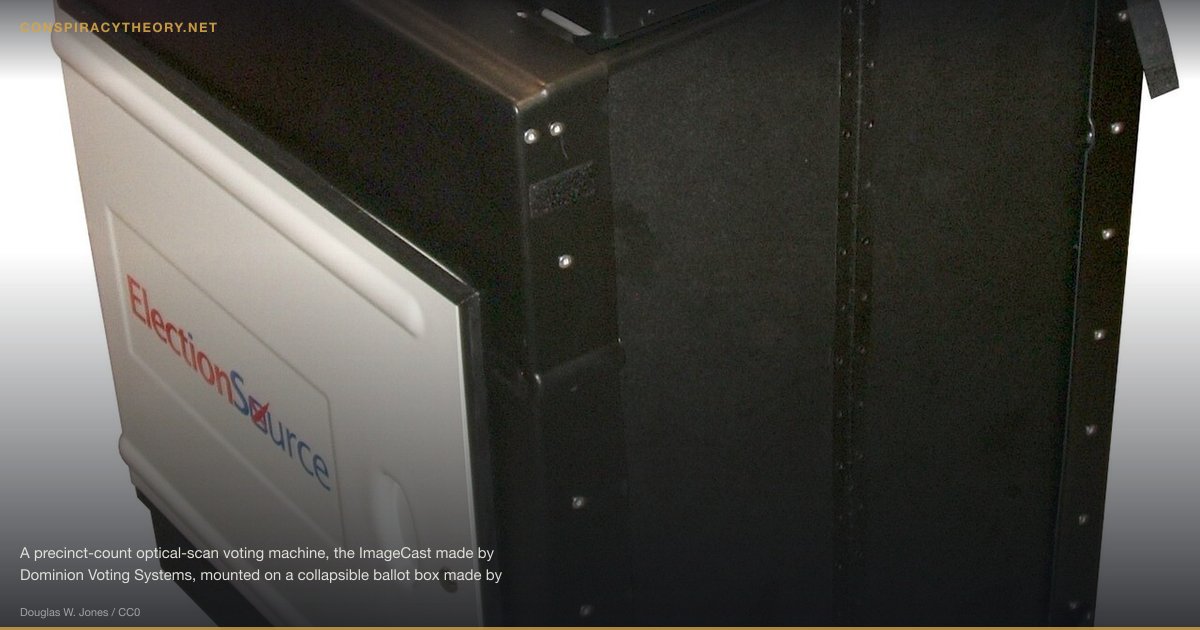
The company at the center of early electronic voting concerns was Diebold Election Systems (later renamed Premier Election Solutions). Diebold’s AccuVote-TS touchscreen machines were deployed across numerous states, and the company became a lightning rod for suspicion due to several factors. In 2003, Diebold CEO Walden O’Dell, a prominent Republican fundraiser, wrote in a fundraising letter that he was “committed to helping Ohio deliver its electoral votes to the president” in 2004 — a statement that, while likely referring to get-out-the-vote efforts, created an enduring perception of partisan bias at the company manufacturing vote-counting equipment.
That same year, activist and author Bev Harris published Black Box Voting: Ballot Tampering in the 21st Century, which documented what she described as systemic security failures in electronic voting systems. Harris’s research included the discovery of Diebold’s unprotected FTP server containing the company’s voting system source code, which she made available for independent analysis. The code revealed that the system used a Microsoft Access database with no encryption and minimal access controls — findings that were subsequently confirmed by academic researchers.
Academic Security Research (2000s-2010s)
The security concerns raised by activists like Harris were amplified and formalized by academic computer scientists. In 2006, a team led by Princeton University professor Edward Felten conducted a landmark study of the Diebold AccuVote-TS. The researchers demonstrated that they could install vote-altering malware on the machine in under a minute using a memory card, that the malware could spread from machine to machine during normal election preparation procedures, and that the attack would leave no visible evidence of tampering. The study, published as a peer-reviewed paper, was one of the first rigorous academic demonstrations of electronic voting machine vulnerabilities.
Subsequent research expanded the scope of documented vulnerabilities. Studies by researchers at Johns Hopkins University, the University of California, and other institutions identified security flaws in voting systems manufactured by multiple vendors, not just Diebold. In 2007, California Secretary of State Debra Bowen commissioned a “top-to-bottom review” of all electronic voting systems certified for use in the state. The review, conducted by independent security experts, found critical vulnerabilities in every system tested, leading to the decertification of several systems.
The DEF CON security conference began hosting its “Voting Village” in 2017, where security researchers were given access to voting machines and election infrastructure for hands-on testing. At the first event, researchers reported finding vulnerabilities in every machine tested, with some machines compromised in under 90 minutes. Subsequent Voting Village events have continued to document security weaknesses, producing annual reports detailing their findings.
ACORN and Voter Registration Fraud (2008-2010)
The Association of Community Organizations for Reform Now (ACORN) became a focal point of election fraud allegations during the 2008 presidential election. ACORN, a community organizing network that conducted voter registration drives in low-income communities, was accused of submitting fraudulent voter registration forms. Investigations in multiple states confirmed that some ACORN employees had submitted fabricated registration forms — including, in one notable case, registering the starting lineup of the Dallas Cowboys.
The distinction between voter registration fraud and actual voter fraud proved crucial but was often lost in political discourse. The fraudulent registrations were typically the product of low-paid canvassers who fabricated forms to meet quotas rather than any attempt to cast illegitimate votes. No evidence emerged that the fraudulent registrations led to fraudulent votes being cast. Nevertheless, the ACORN controversy became a powerful narrative device, cited as evidence of systematic Democratic Party efforts to manipulate elections. ACORN dissolved in 2010 following the controversies and a loss of federal funding, though subsequent investigations, including one by the Government Accountability Office, did not find evidence of a coordinated voter fraud scheme.
The 2020 Election and Its Aftermath
The 2020 presidential election produced the most extensive and politically consequential set of election fraud allegations in modern American history. Following President Donald Trump’s defeat by Joseph Biden, Trump and his allies advanced claims of systematic fraud across multiple states, focusing on mail-in ballot procedures, vote counting irregularities, and the integrity of electronic voting systems — particularly those manufactured by Dominion Voting Systems and Smartmatic.
The specific claims were numerous: that Dominion machines had been designed to flip votes, that dead people had voted in large numbers, that mail-in ballots had been manufactured and injected into the count, that foreign actors had manipulated vote totals through internet-connected machines, and that statistical anomalies in vote counting proved fraud had occurred. These claims were advanced in over 60 lawsuits filed in state and federal courts. Judges — including Trump appointees — dismissed nearly all of them, citing a lack of evidence. Trump’s own Attorney General, William Barr, stated publicly that the Department of Justice had not found evidence of fraud on a scale sufficient to alter the election outcome.
Independent audits reinforced these findings. Georgia conducted a full hand recount of approximately five million ballots, confirming Biden’s victory with minor discrepancies attributable to normal human counting error. The widely publicized “Cyber Ninjas” audit of Maricopa County, Arizona, commissioned by Republican state senators and conducted by a firm with no prior election auditing experience, ultimately confirmed Biden’s margin of victory in the county, finding slightly more votes for Biden than the official count had recorded.
Dominion Voting Systems and Smartmatic filed defamation lawsuits against media outlets and individuals who had promoted fraud claims involving their products. In April 2023, Fox News settled Dominion’s defamation lawsuit for $787.5 million — one of the largest media defamation settlements in American history — without admitting wrongdoing but implicitly acknowledging the lack of factual basis for the claims aired on its network.
Key Claims
Election manipulation conspiracy theories encompass a wide range of claims, which can be grouped into several categories:
- Machine tampering: Voting machines are programmed or can be remotely accessed to alter vote totals. Specific allegations have targeted Diebold, ES&S, Dominion Voting Systems, and Smartmatic at various points.
- Ballot stuffing and manufacturing: Fraudulent ballots are created and injected into the counting process, particularly through mail-in voting systems.
- Dead voter rolls: Deceased individuals remain on voter rolls and their identities are used to cast fraudulent ballots.
- Non-citizen voting: Undocumented immigrants or non-citizens vote in significant numbers, particularly in states without strict voter ID requirements.
- Voter suppression as manipulation: Deliberate efforts to reduce turnout among targeted demographic groups through restrictive ID laws, polling place closures, voter roll purges, and intimidation constitute a form of election rigging.
- Foreign interference: Foreign governments manipulate election outcomes through cyberattacks, disinformation campaigns, or direct vote count manipulation.
- Statistical impossibility claims: Observed patterns in vote counting — such as large batches of mail-in ballots favoring one candidate — are cited as statistically impossible without fraud.
Evidence
Documented Cases of Election Fraud
Historical evidence confirms that election fraud has occurred in American elections, particularly at the local and state level:
- Tammany Hall and urban political machines engaged in systematic ballot manipulation throughout the 19th and early 20th centuries.
- The 1948 Texas Senate primary included documented ballot fabrication in Jim Wells County.
- Isolated cases of voter fraud — individuals voting twice, felons voting illegally, non-citizens casting ballots — are periodically prosecuted, though studies consistently find such cases are extremely rare relative to total votes cast.
- The Heritage Foundation’s Election Fraud Database, maintained by an organization that advocates for stricter election security, has documented approximately 1,500 proven cases of election fraud since 1979 — out of billions of ballots cast during that period.
Documented Voting System Vulnerabilities
The security research community has produced extensive evidence that electronic voting systems contain exploitable vulnerabilities:
- The 2006 Princeton study demonstrated practical vote-altering attacks on Diebold AccuVote-TS machines.
- California’s 2007 top-to-bottom review found critical vulnerabilities in all tested systems.
- DEF CON Voting Village events (2017-present) have consistently identified security flaws in voting machines from multiple manufacturers.
- A 2019 report by the Brennan Center for Justice found that many jurisdictions continued to use voting equipment with known security vulnerabilities and no paper audit trail.
What Has Not Been Substantiated
- No court, audit, or investigation has confirmed large-scale, systematic fraud sufficient to alter the outcome of a modern presidential election.
- Claims that Dominion or Smartmatic machines were programmed to flip votes have been rejected by courts, independent auditors, and the companies’ own defamation lawsuits have resulted in substantial settlements or judgments.
- Statistical analyses cited as proof of fraud have been reviewed by independent statisticians and found to reflect normal patterns of vote counting rather than evidence of manipulation.
- Claims of mass non-citizen voting have not been substantiated by studies. A 2017 Brennan Center analysis of 23.5 million votes in 42 jurisdictions found approximately 30 incidents of suspected non-citizen voting.
Debunking / Verification
The mixed status of election manipulation theories reflects a genuine tension in the evidence. On one hand, elections have been demonstrably manipulated at various points in American history, and voting systems contain documented security vulnerabilities. On the other hand, the specific claims that have dominated recent political discourse — particularly the allegations of systematic fraud in the 2020 election — have been extensively investigated and not substantiated.
Several structural factors make large-scale fraud in modern American elections difficult to execute undetected. Elections are administered at the county level by thousands of separate jurisdictions, typically overseen by officials from both parties. Post-election audits, canvass processes, and risk-limiting audits provide multiple checkpoints. Paper ballot records, used in approximately 95% of jurisdictions as of 2024, create a verifiable trail independent of electronic tallies. Poll watchers from both parties observe counting processes. Altering an outcome would require coordinated fraud across multiple independent jurisdictions without detection by any of these overlapping systems.
The distinction between vulnerability and exploitation is critical. That a system can theoretically be compromised does not mean it has been compromised. Security researchers have demonstrated that voting machines can be hacked under laboratory conditions, but demonstrating that such attacks have occurred in actual elections is a fundamentally different evidentiary challenge — one that has not been met.
Cultural Impact
Election manipulation theories have had profound effects on American democratic culture and institutions. Public confidence in election integrity has declined significantly along partisan lines, with polls consistently showing that substantial percentages of the losing party’s supporters question the legitimacy of presidential election outcomes. This pattern has intensified over time: Democrats questioned the legitimacy of the 2000 and 2004 results, and Republicans questioned 2020 at far higher rates.
The 2020 election aftermath produced direct consequences for democratic governance. The January 6, 2021, breach of the U.S. Capitol was motivated in significant part by belief in election fraud claims. Subsequent legislative efforts in multiple states to change election procedures — restricting mail-in voting, adding voter ID requirements, changing the role of election officials — were driven by fraud concerns. Election workers in numerous states reported threats and harassment, leading to an exodus of experienced officials from election administration.
The cultural impact extends to the election security community itself. Advocates who raised legitimate concerns about electronic voting machine vulnerabilities in the 2000s and 2010s have found their work co-opted and distorted by political actors making far broader claims than the research supports. Computer scientist J. Alex Halderman, whose research demonstrated voting machine vulnerabilities, has publicly stated that his findings do not support claims that the 2020 election was stolen, even as his research has been cited by those making such claims.
Election manipulation narratives have also become a significant element of international politics. Claims of rigged elections have been used to justify authoritarian consolidation of power in countries including Venezuela, Belarus, Myanmar, and others. The American experience after 2020 has been cited by authoritarian leaders as evidence that even the world’s oldest democracy cannot maintain faith in its own electoral processes.
Key Figures
- William “Boss” Tweed (1823-1878) — Leader of New York’s Tammany Hall political machine, convicted of election fraud and other crimes in 1873.
- Richard J. Daley (1902-1976) — Mayor of Chicago whose political machine was accused of manufacturing votes in the 1960 presidential election.
- Bev Harris — Activist and author of Black Box Voting (2004), who exposed security flaws in Diebold voting systems and founded BlackBoxVoting.org.
- Edward Felten — Princeton computer science professor whose 2006 study demonstrated practical attacks on Diebold AccuVote-TS machines.
- Walden O’Dell — CEO of Diebold whose 2003 Republican fundraising letter created a lasting perception of partisan bias in voting machine manufacturing.
- J. Alex Halderman — University of Michigan computer scientist whose research has documented electronic voting machine vulnerabilities across multiple vendors.
- Sidney Powell — Attorney who promoted claims of Dominion voting machine fraud after the 2020 election; subsequently sanctioned by courts and found liable for defamation.
- Rudy Giuliani — Former New York City mayor who served as a leading spokesperson for 2020 election fraud claims; disbarred in New York and Washington, D.C.
- ACORN — Community organizing network accused of voter registration fraud; dissolved in 2010 following controversies, though investigations did not find coordinated voter fraud.
- Dominion Voting Systems — Voting technology company that became the subject of conspiracy theories after 2020 and successfully pursued defamation litigation against media outlets that promoted fraud claims.
Timeline
- 1830s-1930s — Tammany Hall and urban political machines operate systematic election fraud operations across American cities
- 1873 — Boss Tweed convicted of fraud and corruption related to New York City’s political machine
- 1948 — Lyndon Johnson wins Texas Senate primary by 87 votes amid documented ballot fabrication in Jim Wells County
- 1960 — Kennedy-Nixon presidential election produces allegations of fraud in Illinois and Texas that remain historically debated
- 2000 — Bush-Gore Florida recount controversy exposes vulnerabilities in punch-card ballot systems; decided by 537 votes and a Supreme Court ruling
- 2002 — Help America Vote Act allocates $3.9 billion to modernize election infrastructure, accelerating adoption of electronic voting machines
- 2003 — Diebold CEO Walden O’Dell writes fundraising letter pledging to help Ohio deliver electoral votes to President Bush; Bev Harris discovers Diebold source code on an unprotected server
- 2004 — Bev Harris publishes Black Box Voting; allegations of electronic voting irregularities surface in Ohio following Bush’s reelection
- 2006 — Princeton researchers publish landmark study demonstrating vote-altering malware attacks on Diebold AccuVote-TS machines
- 2007 — California Secretary of State orders top-to-bottom review of all electronic voting systems; critical vulnerabilities found in every system tested
- 2008-2010 — ACORN voter registration fraud controversy; organization dissolves in 2010
- 2016 — U.S. intelligence agencies conclude Russia interfered in the presidential election through hacking and disinformation; no evidence of vote count manipulation found
- 2017 — DEF CON Voting Village launches, providing hands-on security testing of voting machines; vulnerabilities found in every machine tested
- 2019 — Brennan Center reports many jurisdictions still use voting equipment with known vulnerabilities and no paper trail
- 2020 — Post-election fraud claims following Biden’s defeat of Trump lead to over 60 lawsuits, nearly all dismissed for lack of evidence
- 2021 — January 6 Capitol breach motivated in part by election fraud beliefs; “Cyber Ninjas” audit of Maricopa County, Arizona, confirms Biden’s victory
- 2023 — Fox News settles Dominion Voting Systems defamation lawsuit for $787.5 million
- 2024 — Election integrity and fraud prevention become central themes in the presidential campaign cycle
Sources & Further Reading
- Harris, Bev. Black Box Voting: Ballot Tampering in the 21st Century. Talion Publishing, 2004
- Feldman, Ariel J., J. Alex Halderman, and Edward W. Felten. “Security Analysis of the Diebold AccuVote-TS Voting Machine.” Princeton University Center for Information Technology Policy, September 2006
- Caro, Robert A. Means of Ascent: The Years of Lyndon Johnson, Volume 2. Alfred A. Knopf, 1990
- Minnite, Lorraine C. The Myth of Voter Fraud. Cornell University Press, 2010
- Alvarez, R. Michael, and Thad E. Hall. Electronic Elections: The Perils and Promises of Digital Democracy. Princeton University Press, 2008
- Brennan Center for Justice. “The Truth About Voter Fraud.” 2007; updated reports through 2024
- National Academies of Sciences, Engineering, and Medicine. Securing the Vote: Protecting American Democracy. The National Academies Press, 2018
- Ackerman, Kenneth D. Boss Tweed: The Rise and Fall of the Corrupt Pol Who Conceived the Soul of Modern New York. Carroll & Graf Publishers, 2005
- Heritage Foundation. “Election Fraud Cases Database.” Available at heritage.org/voterfraud
- DEF CON Voting Village. Annual Reports, 2017-2025. Available at votingvillage.org
- California Secretary of State. “Top-to-Bottom Review of Voting Systems.” 2007
- U.S. Senate Select Committee on Intelligence. “Russian Active Measures Campaigns and Interference in the 2016 U.S. Election.” 5 volumes, 2019-2020
- Eggers, Andrew C., et al. “On the Contribution of Chicago to Kennedy’s Victory in Illinois.” American Journal of Political Science 59, no. 1 (2015): 160-173
Frequently Asked Questions
Have US elections ever been rigged?
Are electronic voting machines hackable?
What is the difference between voter fraud and election fraud?
Infographic
Share this visual summary. Right-click to save.
