False Flag Operations — Confirmed & Alleged

Overview
A false flag operation is a covert action carried out by one entity but designed to appear as though another entity is responsible. The term originates from the age of sail, when warships flew the flags of enemy nations to approach targets before revealing their true identity and attacking. In modern usage, false flags refer to government or intelligence operations that create provocations attributed to adversaries, typically to justify war, legislation, or political repression.
False flag operations occupy a unique position in conspiracy culture because some are confirmed historical facts while others are baseless allegations. The Mukden Incident (1931), the Gleiwitz Incident (1939), the Lavon Affair (1954), and aspects of the Gulf of Tonkin incident (1964) are documented cases of governments staging provocations. Operation Northwoods (1962), while never executed, proved that the highest levels of the US military were willing to propose attacks on American citizens for strategic purposes. Operation Gladio, the NATO stay-behind network active across Western Europe during the Cold War, has been linked to terrorist attacks designed to be blamed on leftist groups and thereby shift public opinion rightward.
This documented historical record gives the false flag concept a credibility that most conspiracy theories lack. However, the term has been vastly overextended in modern conspiracy culture to label virtually any mass casualty event as staged by the government — often without evidence and at the expense of real victims and their families. This overextension, particularly through the “crisis actor” narrative that emerged after 2012, has caused measurable real-world harm including harassment campaigns, death threats against grieving families, and the erosion of shared factual reality around tragic events.
This topic is classified as mixed because the concept is grounded in confirmed historical precedent, but the vast majority of modern false flag allegations — especially those involving domestic mass casualty events — remain unsupported by credible evidence.
Origins & History
The Naval Origin
The practice of flying false flags in naval warfare dates to at least the 16th century. Pirate ships routinely flew merchant or naval flags to approach targets before raising the Jolly Roger. During wartime, naval vessels employed false flags as legitimate ruses de guerre, though international law required ships to fly their true colors before opening fire. The Hague Conventions of 1899 and 1907 formalized rules around the deceptive use of flags and insignia, recognizing the practice as a longstanding element of military strategy. This military deception tactic provides the metaphorical foundation for the modern concept.
Beyond naval warfare, the logic of false flag deception — staging a provocation and blaming it on an adversary — has roots stretching back to antiquity. The Roman historian Livy recorded instances of armies staging attacks on their own positions to justify retaliatory campaigns. Throughout the medieval and early modern periods, monarchs and political factions planted evidence, forged documents, and staged incidents to justify wars, persecutions, and power grabs. The modern false flag, however, is distinguished by its institutional character: it is planned and executed by state intelligence or military apparatus rather than individual actors.
From Military Tactic to Political Tool
The transition of false flag operations from battlefield tactics to instruments of political manipulation accelerated in the 20th century. The rise of mass media meant that a staged provocation could be broadcast to millions of people within hours, shaping public opinion before any investigation could occur. The rise of intelligence agencies — the Abwehr, the NKVD, the OSS, MI6, the CIA, Mossad — created institutional infrastructure capable of planning and executing sophisticated deception operations with plausible deniability. The combination of mass media and professionalized intelligence created the conditions for the modern false flag as a tool of statecraft.
Confirmed False Flags
The following operations are supported by declassified documents, official government admissions, court or tribunal testimony, or other hard evidence. They represent the factual foundation upon which the broader false flag concept rests.
USS Maine (1898)
On February 15, 1898, the USS Maine exploded and sank in Havana Harbor, Cuba, killing 266 American sailors. The American press — particularly the newspapers of William Randolph Hearst and Joseph Pulitzer — immediately blamed Spain, with headlines declaring “Remember the Maine!” The incident became the primary casus belli for the Spanish-American War. A US Naval Court of Inquiry in 1898 concluded that an external mine caused the explosion, implicitly pointing to Spain.
However, subsequent investigations have cast serious doubt on Spanish responsibility. A 1976 investigation led by Admiral Hyman Rickover concluded that the explosion was most likely caused by spontaneous combustion of coal in a bunker adjacent to ammunition magazines — an internal accident, not an external attack. A 1998 National Geographic investigation using computer modeling supported the mine theory but could not determine who planted it. Whether the Maine was a deliberate false flag, a genuine accident exploited for political purposes, or a mine planted by Cuban rebels seeking to draw the US into war remains debated. What is not debated is that the incident was aggressively used — with substantial help from yellow journalism — to manufacture consent for a war that the McKinley administration and expansionist factions in Congress had already been seeking.
Mukden Incident (1931)
One of the earliest confirmed modern false flags was the Mukden Incident of September 18, 1931. Lieutenant Colonel Kanji Ishiwara and Colonel Seishiro Itagaki of the Japanese Kwantung Army orchestrated the detonation of a small quantity of dynamite near a Japanese-owned section of the South Manchuria Railway near Mukden (now Shenyang), Manchuria. The explosion was so minor that a train passed over the site minutes later without interruption. Nevertheless, the Japanese military blamed the sabotage on Chinese dissidents and used it as the pretext for the full-scale invasion and occupation of Manchuria, establishing the puppet state of Manchukuo.
The Japanese government in Tokyo was not fully complicit — the operation was largely a rogue action by field officers — but the civilian government proved unable or unwilling to restrain the military. The Lytton Commission, dispatched by the League of Nations, concluded in 1932 that Japan’s military actions were not justified by the incident, leading Japan to withdraw from the League. The deception was definitively exposed after World War II during the International Military Tribunal for the Far East (1946-1948), where the planning of the Mukden Incident was documented through testimony and captured records.
Reichstag Fire (1933)
On February 27, 1933, the German parliament building (Reichstag) was set ablaze. Marinus van der Lubbe, a Dutch Communist and unemployed bricklayer, was arrested at the scene and confessed to setting the fire. The Nazi government, which had been in power for less than a month, immediately blamed the fire on a broader Communist conspiracy. The following day, Hitler persuaded President Hindenburg to sign the Reichstag Fire Decree (Verordnung des Reichspräsidenten zum Schutz von Volk und Staat), which suspended most civil liberties guaranteed by the Weimar Constitution, including freedom of speech, freedom of the press, the right of assembly, and the privacy of postal and telephone communications. The decree enabled the mass arrest of Communist and Social Democratic politicians and effectively ended democratic governance in Germany.
Whether the fire was a Nazi-orchestrated false flag or genuinely set by van der Lubbe acting alone remains one of the most debated questions in modern European history. Historian Fritz Tobias argued in 1962 that van der Lubbe acted alone, a conclusion supported by subsequent research by Hans Mommsen. However, other historians — including William Shirer, Alexander Bahar, and Wilfried Kugel — have argued that the fire was too large and spread too quickly to be the work of one man without accelerants and that SA or SS personnel entered the building through an underground tunnel connecting the Reichstag to the residence of Reichstag president Hermann Göring.
Regardless of the fire’s true origin, the exploitation of the event as a pretext for authoritarian measures is beyond dispute. The Reichstag Fire Decree, issued the day after the blaze, became the legal foundation for the Nazi dictatorship and remained in effect until 1945. Whether the Nazis started the fire or simply exploited an arsonist’s act of opportunity, the political response was premeditated and devastating to German democracy.
Gleiwitz Incident (1939)
On August 31, 1939, a team of SS operatives under the command of SS-Sturmbannführer Alfred Naujocks staged an attack on the German radio station at Gleiwitz (now Gliwice, Poland) as part of a broader operation codenamed Operation Himmler. The operatives, wearing Polish military uniforms, seized the station and broadcast a short anti-German message in Polish. To add verisimilitude, the SS left behind the bodies of concentration camp prisoners — referred to in planning documents by the codename “canned goods” (Konserve) — dressed in Polish uniforms at the scene.
The staged attack was one of several fabricated border incidents that evening, all designed to create the appearance of Polish aggression against Germany. The following day, September 1, 1939, Hitler cited these “Polish attacks” as justification for the invasion of Poland, which began World War II in Europe. The Gleiwitz Incident was confirmed through the Nuremberg Trials testimony of Alfred Naujocks, who provided a detailed sworn affidavit describing his role in the operation. It remains one of the most clear-cut and well-documented false flag operations in history.
Lavon Affair (1954)
In the summer of 1954, Israeli Military Intelligence Unit 131 recruited a network of Egyptian Jews to carry out Operation Susannah, a covert bombing campaign targeting American and British-owned civilian targets in Egypt, including cinemas, libraries, and post offices. The goal was to make the attacks appear to be the work of Egyptian Muslim Brotherhood members or Communist sympathizers, thereby damaging Egypt’s relationships with the United States and Britain and undermining negotiations over British withdrawal from the Suez Canal Zone.
The operation collapsed when one of the agents’ incendiary devices detonated prematurely outside a cinema in Alexandria on July 23, 1954, leading to his arrest and the rapid unraveling of the entire network. Two agents were executed by Egypt, several were imprisoned, and the affair triggered a major political crisis in Israel known as the “Esek Bish” (the “ugly affair” or “unfortunate affair”). Defense Minister Pinhas Lavon was forced to resign, though he denied authorizing the operation and blamed Military Intelligence chief Colonel Binyamin Gibli, who in turn insisted Lavon had given the order. The resulting political scandal — the “Lavon Affair” — destabilized Israeli politics for years.
Israel officially denied involvement for decades. It was not until 2005 that President Moshe Katsav formally honored the surviving agents, constituting an official acknowledgment of the operation. The Lavon Affair is significant in the study of false flag operations because it demonstrates that even close allies of the United States have conducted covert operations against American interests under false pretenses.
Operation Northwoods (Proposed, 1962)
In March 1962, the US Joint Chiefs of Staff, chaired by General Lyman Lemnitzer, unanimously approved a proposal called Operation Northwoods and presented it to Secretary of Defense Robert McNamara. The document, titled “Justification for US Military Intervention in Cuba,” outlined a comprehensive series of false flag operations designed to create a pretext for a US military invasion of Cuba by manufacturing the appearance of Cuban aggression against the United States and other Western Hemisphere nations.
The proposed operations were remarkably detailed and included: staging bombings in Miami, Washington, D.C., and other American cities and blaming them on Cuban agents; sinking a US Navy ship in Guantánamo Bay and blaming Cuba; developing a fake “Communist Cuban terror campaign” in the Miami area and in other Florida cities and even in Washington; blowing up a US ship in Guantánamo Bay and blaming Cuba; staging a “Remember the Maine” incident by blowing up a drone ship in Cuban waters; fabricating evidence connecting Cuba to attacks on neighboring Caribbean nations; destroying a drone aircraft over Cuba and filing a complaint with the International Civil Aviation Organization against Cuba for shooting down a civilian aircraft carrying college students on a charter flight; and manufacturing evidence of Cuban attacks on US military aircraft.
President John F. Kennedy rejected the proposal. General Lemnitzer was subsequently denied a second term as Chairman of the Joint Chiefs and was reassigned to serve as Supreme Allied Commander of NATO. The Operation Northwoods documents remained classified for 35 years until they were released in 1997 through the JFK Assassination Records Review Board and first reported by journalist James Bamford in his 2001 book Body of Secrets.
The significance of Operation Northwoods cannot be overstated in conspiracy culture. It provides documented, declassified proof that the highest levels of the American military establishment were willing to plan terrorist attacks against American citizens and military assets, fabricate evidence, and manipulate the press — all to justify a preordained military objective. It is the single most frequently cited document by conspiracy theorists arguing that the US government is capable of orchestrating attacks on its own people.
Gulf of Tonkin (1964)
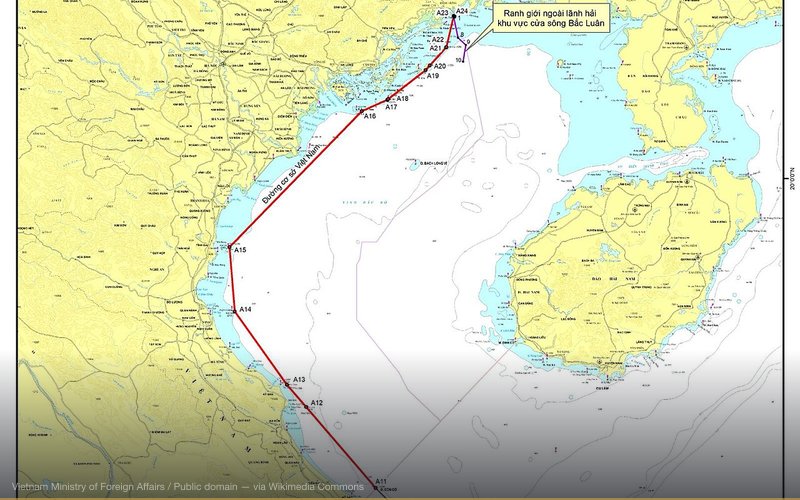
The Gulf of Tonkin incident comprises two events. On August 2, 1964, the USS Maddox, conducting signals intelligence patrols in the Gulf of Tonkin, was engaged by three North Vietnamese Navy torpedo boats. This engagement was real — the Maddox was fired upon and returned fire, sinking one torpedo boat and damaging two others. However, the context was omitted from public accounts: the Maddox had been supporting South Vietnamese commando raids (OPLAN 34-Alpha) against North Vietnamese coastal installations, and the North Vietnamese attack was likely a response to those covert operations.
On August 4, 1964, the Maddox and the USS Turner Joy reported a second attack by North Vietnamese torpedo boats. The ships fired on radar contacts for over two hours. However, Captain John Herrick, commanding the task group, sent a cable within hours expressing doubt: “Review of action makes many reported contacts and torpedoes fired appear doubtful… Freak weather effects on radar and overeager sonarmen may have accounted for many reports.” Despite this uncertainty, President Lyndon Johnson ordered retaliatory airstrikes against North Vietnam that same evening and went before Congress to secure the Gulf of Tonkin Resolution, which passed nearly unanimously (88-2 in the Senate, 416-0 in the House) and granted the president authority to escalate military involvement in Vietnam without a formal declaration of war.
Declassified NSA documents, released in 2005 and analyzed by NSA historian Robert J. Hanyok, revealed that signals intelligence had been deliberately skewed to support the narrative of a second attack. Hanyok’s study, originally completed in 2001 but suppressed by NSA leadership, concluded that intelligence officials had “icherry-picked” intercepts and altered translations to make it appear that a second attack had occurred. Secretary of Defense Robert McNamara later admitted in the documentary The Fog of War (2003) that the August 4 attack did not happen.
The Gulf of Tonkin incident is arguably the most consequential false flag or fabricated casus belli of the 20th century. The resulting escalation led to the deployment of over 500,000 American troops, the deaths of approximately 58,000 Americans and millions of Vietnamese, Cambodians, and Laotians, and the expenditure of hundreds of billions of dollars.
Operation Gladio (NATO Stay-Behind Networks)
Operation Gladio refers to the NATO-coordinated network of clandestine stay-behind armies established across Western Europe during the Cold War. Originally created to serve as guerrilla resistance forces in the event of a Soviet invasion, these networks — which existed in virtually every Western European NATO member state — became instruments of political manipulation in several countries, most notoriously in Italy.
The existence of Gladio was publicly confirmed on October 24, 1990, when Italian Prime Minister Giulio Andreotti acknowledged the network’s existence before the Italian Parliament. Subsequent investigations by the Italian Senate, the European Parliament, and journalists revealed that elements of the stay-behind network had been involved in a “strategy of tension” (strategia della tensione) — a campaign of terrorist attacks carried out by right-wing extremists but designed to be blamed on leftist groups, the Communist Party, and the Red Brigades. The purpose was to create public fear and revulsion that would prevent left-wing parties from gaining power in Western European democracies.
Events linked to the strategy of tension include the Piazza Fontana bombing in Milan (1969, 17 killed), the Peteano car bombing (1972, 3 killed), the Italicus Express train bombing (1974, 12 killed), and the Bologna railway station massacre (1980, 85 killed). In the Peteano case, Vincenzo Vinciguerra, a member of the far-right group Ordine Nuovo, confessed to the bombing and testified that he had been protected by Italian military intelligence (SID/SISMI) and that the attack was part of a broader Gladio-linked strategy.
The European Parliament passed a resolution on November 22, 1990, condemning the existence of the stay-behind networks and calling for full investigations by each member state. Some countries, such as Belgium and Switzerland, launched parliamentary investigations that confirmed the existence of their national networks. Others, including the United Kingdom and the United States, declined to comment.
Operation Gladio remains the most extensive confirmed example of a state-sponsored false flag infrastructure in the post-World War II era. Its significance lies not just in the individual attacks linked to it but in the demonstration that NATO member states maintained covert networks capable of conducting terrorism against their own civilian populations for political purposes over a period of decades.
Alleged False Flags
The following events have been described as false flag operations by conspiracy theorists but lack the documentary evidence, official admissions, or tribunal testimony that support the confirmed cases listed above. Inclusion in this section does not constitute endorsement of these claims; it reflects the fact that these allegations are widely circulated and form a significant part of the false flag discourse.
September 11, 2001 (9/11)
The September 11 attacks are the most widely discussed alleged false flag in modern history. Conspiracy theories range from the claim that the US government had advance knowledge of the attacks and deliberately allowed them to proceed (“LIHOP” — Let It Happen On Purpose) to the claim that the attacks were entirely planned and executed by elements within the US government (“MIHOP” — Made It Happen On Purpose). Specific claims include controlled demolition of the World Trade Center towers (including Building 7), a missile rather than a plane striking the Pentagon, and the shoot-down rather than passenger revolt of Flight 93.
Multiple official investigations — the 9/11 Commission Report (2004), the NIST investigation into the World Trade Center collapses (2005, 2008), and the Pentagon Building Performance Report — concluded that the attacks were carried out by 19 al-Qaeda hijackers. Independent engineering analyses, peer-reviewed studies, and journalistic investigations have consistently supported these conclusions. Proponents of the false flag theory point to perceived anomalies in the building collapses, questions about the air defense response, and the geopolitical benefits the attacks provided to advocates of Middle Eastern military intervention. For a detailed examination of these claims, see 9/11 Inside Job.
July 7, 2005 London Bombings (7/7)
The coordinated suicide bombings on the London Underground and a double-decker bus on July 7, 2005, killed 52 civilians and the four bombers. Conspiracy theorists have alleged that the attacks were orchestrated or facilitated by British intelligence services (MI5/MI6), citing the coincidence that a private security firm was running a terrorism response exercise simulating attacks on the same Underground stations on the same morning. Other claims include allegations that the bombers were intelligence assets or patsies, that the explosive used (reportedly TATP) was too sophisticated for the bombers to have manufactured independently, and that the timing of the attacks — during the G8 summit at Gleneagles, Scotland — was too convenient.
The official account, documented in the Intelligence and Security Committee’s report (2006) and the coroner’s inquest (2010-2011), concluded that four British-born Islamist extremists independently planned and carried out the attacks. The exercise coincidence, while striking, involved a generic scenario rather than the specific stations attacked and is consistent with the reality that London’s counter-terrorism planners regularly modeled attacks on the Underground. For more detail, see London 7/7 Bombings Conspiracy.
Oklahoma City Bombing (1995)
The truck bombing of the Alfred P. Murrah Federal Building on April 19, 1995, killed 168 people, including 19 children. Timothy McVeigh was convicted and executed, and co-conspirator Terry Nichols received a life sentence. However, conspiracy theorists have long alleged additional perpetrators or government foreknowledge. Claims include allegations that ATF agents were warned not to come to work that day, that additional unexploded devices were found inside the building (suggesting pre-planted charges), that the ANFO (ammonium nitrate/fuel oil) truck bomb alone could not have caused the observed damage pattern, and that McVeigh had links to government informants or intelligence operatives.
Some of these allegations have a factual basis that complicates the picture without confirming a false flag. There were initial news reports of additional devices, though these were later attributed to the chaotic initial response. Questions about the extent of McVeigh’s connections — particularly to white supremacist groups and possible foreign contacts in the Philippines — were not fully resolved at trial. The question of whether McVeigh and Nichols had undiscovered co-conspirators is separate from the false flag allegation that the government itself orchestrated the bombing. For more detail, see Oklahoma City Bombing Conspiracy.
Boston Marathon Bombing (2013)
The bombing at the finish line of the Boston Marathon on April 15, 2013, killed three people and injured hundreds. Brothers Dzhokhar and Tamerlan Tsarnaev were identified as the perpetrators. False flag theorists alleged that the bombing was staged, citing images of what they claimed were actors at the scene, the presence of private military contractors (later identified as members of the National Guard’s civil support teams) near the finish line, and perceived anomalies in photographs of the aftermath. These claims were amplified by conspiracy media figures and websites.
The claims were thoroughly debunked by the criminal investigation, the trial of Dzhokhar Tsarnaev, and independent analysis. The victims were real, their injuries were documented by hundreds of medical professionals across multiple hospitals, and the Tsarnaevs’ guilt was established through extensive physical evidence, surveillance footage, and Dzhokhar’s own confession written inside the boat where he was captured.
Sandy Hook Elementary School Shooting (2012)
The mass shooting at Sandy Hook Elementary School in Newtown, Connecticut, on December 14, 2012, killed 20 children and 6 staff members. It subsequently became the most aggressively contested mass casualty event in American history by conspiracy theorists, most prominently Alex Jones of Infowars, who claimed for years that the shooting was entirely staged using crisis actors and that no children actually died.
Claims included allegations that the school had been closed before the shooting, that parents showed insufficient grief in interviews (a particularly cruel claim), that the same “actors” appeared at multiple disaster scenes, and that the shooting was orchestrated to build support for gun control legislation. Every one of these claims has been comprehensively debunked. The shooting was investigated by the Connecticut State Police, the Connecticut State’s Attorney, the FBI, and the Office of the Child Advocate. The victims’ identities, death certificates, autopsy reports, and funeral records are documented.
The Sandy Hook conspiracy theory is notable not only for its complete lack of evidentiary support but for the extraordinary harm it caused. Parents of murdered children were subjected to years of death threats, stalking, and harassment. Some were forced to move multiple times. Lenny Pozner, father of six-year-old Noah Pozner, founded the HONR Network to combat conspiracy-driven harassment. In 2022, Alex Jones was found liable for defamation in multiple lawsuits brought by Sandy Hook families and was ordered to pay nearly $1.5 billion in damages. For more detail, see Sandy Hook Conspiracy and Crisis Actors.
Other Mass Shooting Claims
Since Sandy Hook, virtually every high-profile mass shooting in the United States has generated false flag allegations from some segment of conspiracy culture. The Pulse nightclub shooting (2016), the Las Vegas shooting (2017), the Parkland school shooting (2018), the El Paso Walmart shooting (2019), and the Uvalde school shooting (2022) have all been labeled false flags by various conspiracy figures and communities. In most cases, the claims follow a predictable template: perceived anomalies in media coverage are identified, “crisis actors” are alleged, and a political motive (typically gun control) is attributed to the government.
These claims share the common characteristic of lacking any affirmative evidence. They rely entirely on perceived inconsistencies, pattern-matching between unrelated individuals, and the unfalsifiable assumption that any government policy response to a mass casualty event proves the government orchestrated the event.
How False Flags Work
The Mechanism of State-Sponsored Deception
Confirmed false flag operations share a common operational logic. The sponsoring government identifies a political objective — typically a war, military intervention, or expansion of domestic authority — that lacks sufficient public support. An incident is then staged, provoked, or fabricated to create the appearance of aggression by the designated enemy. This manufactured provocation shifts public opinion, provides legal justification for the desired action, and neutralizes domestic and international opposition.
The operational requirements of a false flag vary dramatically with its scale. Small-scale provocations — planting a bomb on a railway line (Mukden), seizing a radio station (Gleiwitz), or fabricating a naval engagement report (Gulf of Tonkin) — can be executed by a handful of operatives with minimal coordination. These are the types of false flags that have actually been confirmed. Large-scale operations — such as those alleged by 9/11 conspiracy theorists, involving controlled demolition of multiple skyscrapers, coordination across dozens of agencies, and the silence of thousands of participants — would require a level of organizational complexity, secrecy, and reliability that has no precedent in the documented history of covert operations.
The Problem-Reaction-Solution Framework
Conspiracy theorists frequently describe false flags using the “problem-reaction-solution” framework, sometimes attributed to David Icke. In this model, the government (1) creates or allows a problem (a terrorist attack, a mass shooting, an economic crisis), (2) manages the public reaction through media coverage that amplifies fear and outrage, and (3) presents a pre-planned solution (war, surveillance legislation, gun control, expanded police powers) that the public would not have accepted without the manufactured crisis.
This framework has descriptive power when applied to confirmed cases. The Reichstag Fire followed this pattern precisely: the fire (problem) generated public fear of Communist revolution (reaction), and the Reichstag Fire Decree suspended civil liberties (solution). The Gulf of Tonkin followed the same logic: the fabricated second attack (problem) generated public outrage (reaction), and the Gulf of Tonkin Resolution authorized military escalation (solution).
However, the framework becomes conspiratorial when applied reflexively — when every crisis is assumed to be manufactured simply because a policy response follows. Policy responses to genuine crises are normal functions of government. The existence of a government response to a tragedy does not constitute evidence that the government caused the tragedy.
The Crisis Actors Debate
The concept of “crisis actors” has become central to modern false flag allegations, particularly regarding mass shootings. The term has a legitimate origin: crisis actors are real professionals hired by emergency management agencies, hospitals, and military installations to role-play victims during disaster preparedness drills. Companies such as Crisis Cast and Visionbox provide these services openly.
The conspiracy theory appropriates this legitimate practice and extends it to allege that real mass casualty events use paid actors to simulate victims, witnesses, and grieving family members. Proponents cite perceived anomalies in witness behavior (smiling at “inappropriate” times, appearing “insufficiently” emotional), claims that the same individuals appear at multiple disaster scenes (typically based on superficial physical resemblance between different people), and the existence of the crisis actor industry itself as proof that the practice extends to real events.
These claims reflect a fundamental misunderstanding of how people respond to trauma (reactions vary enormously and do not conform to expectations shaped by fictional portrayals), how facial recognition works (humans are poor at distinguishing unfamiliar faces across different contexts and image qualities), and the scale of conspiracy that would be required to recruit, deploy, and permanently silence hundreds of actors across multiple events. For a detailed examination, see Crisis Actors.
Media Management and Information Control
Confirmed false flag operations relied heavily on media management. The Gleiwitz Incident was broadcast on radio. The Gulf of Tonkin fabrication was transmitted through official military communications and government press conferences. In each case, the perpetrating government controlled the initial narrative and exploited the time lag between the event and any independent investigation.
Modern false flag theorists argue that the same media management occurs today but at a more sophisticated level. They point to the rapid emergence of official narratives, coordinated messaging across news outlets, and the marginalizing of skeptical voices as evidence of media complicity. Mainstream media scholars counter that rapid consensus reporting reflects the actual facts converging, that wire services and shared sources produce similar coverage without coordination, and that independent journalists and investigators have broken numerous stories contradicting official narratives — something that would not happen if media were truly controlled.
Historical Pattern: Governments and False Pretexts for War
The documented history of governments using fabricated or exaggerated pretexts to justify military action extends well beyond operations that meet the strict definition of a false flag. While the following examples are not all false flags in the technical sense (covert operations attributed to another party), they form part of a broader pattern of manufactured consent for war that informs the false flag worldview.
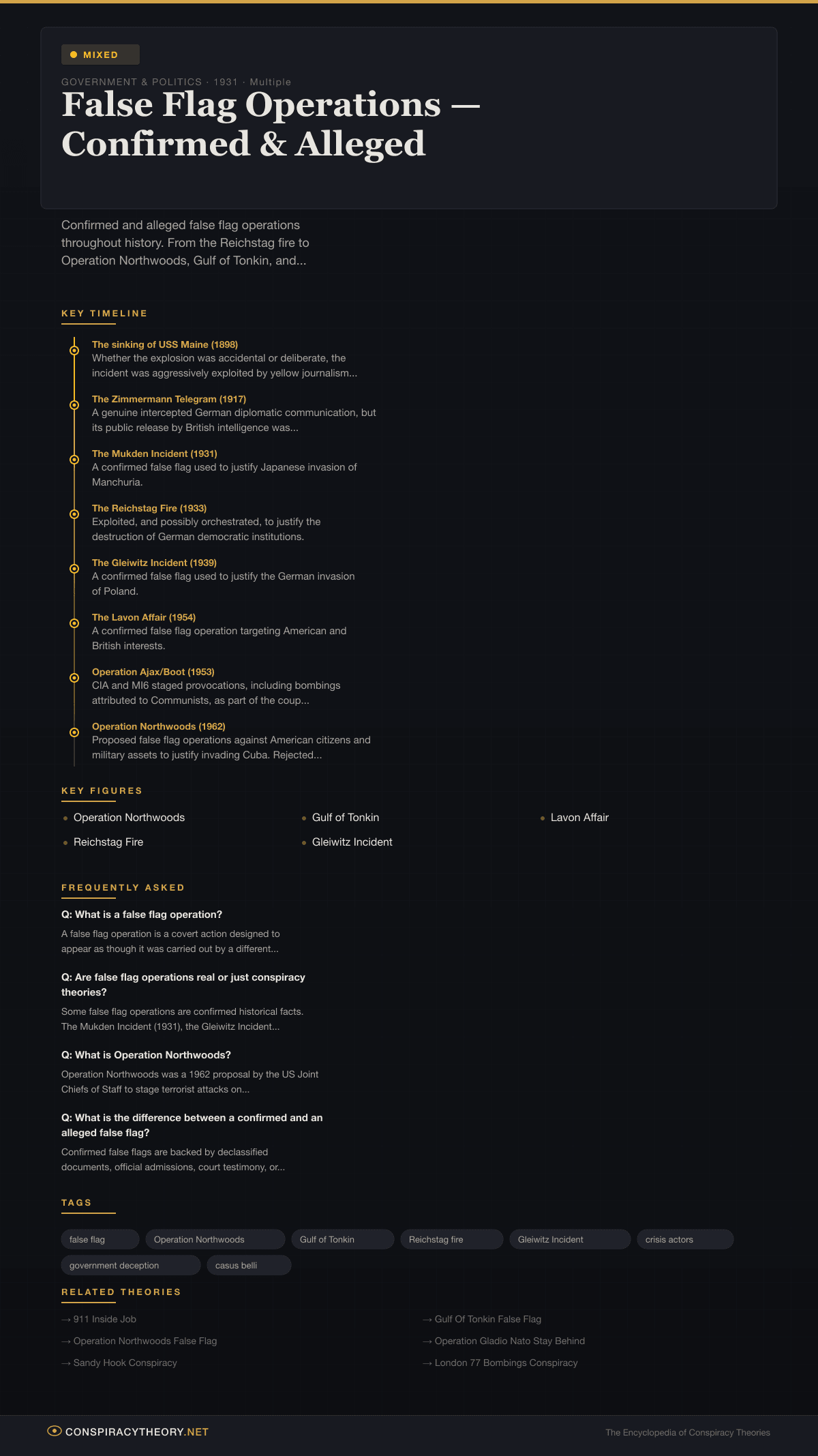
- The sinking of USS Maine (1898) — Whether the explosion was accidental or deliberate, the incident was aggressively exploited by yellow journalism and expansionist politicians to manufacture public support for the Spanish-American War.
- The Zimmermann Telegram (1917) — A genuine intercepted German diplomatic communication, but its public release by British intelligence was carefully timed to push the United States toward entering World War I. Not a false flag, but an example of intelligence manipulation of public opinion.
- The Mukden Incident (1931) — A confirmed false flag used to justify Japanese invasion of Manchuria.
- The Reichstag Fire (1933) — Exploited, and possibly orchestrated, to justify the destruction of German democratic institutions.
- The Gleiwitz Incident (1939) — A confirmed false flag used to justify the German invasion of Poland.
- The Lavon Affair (1954) — A confirmed false flag operation targeting American and British interests.
- Operation Ajax/Boot (1953) — CIA and MI6 staged provocations, including bombings attributed to Communists, as part of the coup against Iranian Prime Minister Mohammad Mosaddegh.
- Operation Northwoods (1962) — Proposed false flag operations against American citizens and military assets to justify invading Cuba. Rejected by President Kennedy.
- Gulf of Tonkin (1964) — Fabricated second attack used to justify escalation of the Vietnam War.
- The Nayirah Testimony (1990) — A fifteen-year-old Kuwaiti girl, later revealed to be the daughter of the Kuwaiti ambassador to the United States, testified before Congress that she had witnessed Iraqi soldiers taking babies out of incubators in a Kuwaiti hospital. The testimony was organized by the public relations firm Hill & Knowlton and was later found to be fabricated. While not a false flag, it represents manufactured atrocity propaganda used to build public support for the Gulf War.
- Iraq WMD Claims (2002-2003) — The Bush administration’s claims that Iraq possessed weapons of mass destruction, including Secretary of State Colin Powell’s February 2003 presentation to the United Nations, were used to justify the invasion of Iraq. The claims were later found to be based on flawed or fabricated intelligence, including information from the discredited source known as “Curveball.” Again, not a classic false flag but part of the broader pattern of manufactured casus belli.
This historical record demonstrates that governments — including democratic governments — have repeatedly used deception to justify military action. This is not a conspiracy theory; it is documented history. The analytical challenge lies in distinguishing between this proven pattern and the speculative extension of that pattern to events that lack comparable evidence.
Evidence & Analysis
Why Confirmed Examples Matter
The confirmed historical record of false flag operations is what gives the broader conspiracy theory its power. When confronted with claims that a government would never attack its own people, proponents can point to Operation Northwoods, the Lavon Affair, and Operation Gladio as proof that governments have planned, proposed, or executed exactly such operations. This historical grounding distinguishes false flag theory from purely speculative conspiracies.
The rhetorical force of confirmed false flags is difficult to counter because the underlying argument is valid: governments have demonstrably lied to their citizens to justify wars, intelligence agencies have conducted operations that harmed civilians, and official narratives have been exposed as fabrications. The dispute is not about whether false flags have occurred — they have — but about whether any given modern event is one.
Patterns in Confirmed False Flags
Analysis of the confirmed cases reveals several common characteristics that researchers use to evaluate new claims:
-
Scale — Confirmed false flags were typically small-scale provocations: a railway explosion, a radio station seizure, a fabricated naval engagement report, a handful of small bombs. None involved the destruction of major buildings, the killing of thousands, or the participation of hundreds of conspirators.
-
Speed of exposure — Confirmed false flags were exposed within years or decades, not centuries. The Mukden Incident was investigated within a year by the Lytton Commission. The Gulf of Tonkin doubts were circulating within months. Operation Northwoods was declassified within 35 years.
-
Documentary evidence — Every confirmed false flag eventually produced hard evidence: declassified documents, sworn testimony, official admissions, or captured records. None rests solely on circumstantial analysis of publicly available information.
-
Limited circle of knowledge — Confirmed false flags involved small numbers of people who knew the full picture. The Gleiwitz operation involved a handful of SS officers. The Gulf of Tonkin fabrication was managed by a small group of intelligence officials. Operations requiring the complicity of thousands of people across multiple agencies have no historical precedent.
-
Institutional motive — Confirmed false flags served clear institutional objectives (justify an invasion, secure congressional authorization, damage a rival’s diplomatic relationships) that were already being pursued through other means. The false flag was a catalyst, not an end in itself.
The Scale Problem
The most significant analytical challenge for modern false flag allegations is the problem of scale. The false flag operations that have been confirmed — Gleiwitz, Mukden, the Lavon Affair, Gulf of Tonkin — involved small teams of operatives, limited objectives, and relatively simple deceptions. Even so, most of them were exposed within a relatively short time.
The false flag operations alleged by modern conspiracy theorists — particularly the claim that 9/11 was an inside job — would require organizational complexity orders of magnitude greater than anything in the confirmed historical record. The controlled demolition of three World Trade Center buildings would require weeks of covert preparation in occupied office buildings, the participation of hundreds of demolition experts, the complicity of thousands of building occupants who would have noticed the work, the silence of every participant in perpetuity, and coordination across multiple federal agencies. No confirmed covert operation in history approaches this level of complexity while maintaining total secrecy.
This does not constitute proof that such operations are impossible, but it does mean that the evidentiary bar must be correspondingly higher. Extraordinary claims require extraordinary evidence, and the evidence offered for large-scale modern false flag claims — largely consisting of perceived anomalies in media footage and engineering arguments disputed by mainstream experts — does not meet that standard.
The Cui Bono Fallacy
False flag theorists frequently employ the argument of “cui bono” — who benefits? — as a primary method of analysis. If a particular event benefits a government (by justifying a war, enabling surveillance legislation, or building support for gun control), the argument runs, that government must have orchestrated the event.
The cui bono argument has some validity as an investigative starting point. In confirmed false flag cases, the perpetrating government did indeed benefit from the provocation. Japan benefited from the Mukden Incident. Nazi Germany benefited from the Gleiwitz Incident. The Johnson administration benefited from the Gulf of Tonkin.
However, cui bono alone is not evidence. Governments routinely benefit from genuine crises. The passage of the USA PATRIOT Act after 9/11 does not prove 9/11 was an inside job any more than the creation of FEMA after natural disasters proves the government manufactures hurricanes. Benefiting from an event and causing an event are logically distinct, and conflating them is a fundamental analytical error.
Distinguishing Real from Alleged False Flags
A Methodology for Evaluation
Given that some false flag operations are confirmed historical facts and others are baseless allegations, how should a responsible analyst evaluate a new false flag claim? The following methodology draws on the characteristics of confirmed cases and the principles of historical and intelligence analysis.
1. Demand affirmative evidence, not anomaly-hunting. Confirmed false flags were exposed through documents, testimony, and admissions — not through the identification of perceived inconsistencies in media coverage. If the primary evidence for a false flag claim consists of “things that don’t add up” in photographs, news reports, or official statements, the claim is almost certainly unfounded. Real events are messy, media coverage contains errors, and official statements are often incomplete or contradictory for reasons having nothing to do with conspiracy.
2. Assess the required scale of complicity. How many people would need to be involved in the alleged conspiracy? How many would need to maintain permanent silence? If the alleged operation requires hundreds or thousands of silent participants, it lacks historical precedent among confirmed covert operations.
3. Evaluate the source of the claim. Is the false flag allegation coming from credible investigative journalists, intelligence community insiders, or academic researchers? Or is it originating from conspiracy media figures with a track record of making false flag claims about every major event? Source credibility does not determine truth, but it should influence the level of scrutiny applied.
4. Check for the unfalsifiability problem. Can the false flag claim be disproven? If every piece of contradictory evidence is dismissed as “part of the cover-up,” the claim has become unfalsifiable and is functioning as an article of faith rather than a testable hypothesis.
5. Apply Occam’s Razor. Does the false flag explanation require more assumptions than the conventional explanation? If the conventional explanation (a terrorist group attacked, a mentally ill individual committed a shooting) requires fewer assumptions and is consistent with the available evidence, it should be preferred unless and until contradictory evidence of equivalent quality emerges.
6. Wait for the historical record. Confirmed false flags were not identified in real time by independent analysts parsing media coverage. They were exposed through the slow, grinding processes of investigation, declassification, and official admission. The insistence on declaring an event a false flag within hours or days of its occurrence — before any investigation has been completed — is itself a red flag for unreliable analysis.
The Danger of Overextension
The most significant damage that false flag overextension has caused is to the credibility of legitimate concerns about government deception. The documented history of operations like Northwoods, Gladio, and the Gulf of Tonkin represents an important check on government power — proof that even democratic governments are capable of extraordinary deception. When the false flag concept is applied indiscriminately to every mass shooting, every terrorist attack, and every unexpected event, it dilutes the power of the confirmed cases and makes it easier for genuine government deception to be dismissed alongside the noise of baseless accusations.
Cultural Impact
Political Discourse
The term “false flag” has entered mainstream political vocabulary, particularly since the declassification of Operation Northwoods in 1997. It is used by both left-wing and right-wing critics of government to question official narratives surrounding violent events. The concept has been weaponized in partisan politics, with each side accusing the other of staging provocations. After the January 6, 2021, attack on the US Capitol, some right-wing commentators immediately labeled the event a “false flag” carried out by antifa or FBI agents — despite overwhelming evidence that the participants were Trump supporters.
The mainstreaming of false flag rhetoric has had measurable effects on public trust. Polling consistently shows that significant minorities of the American and European publics believe their governments have staged or permitted terrorist attacks. This skepticism, while partly rooted in the legitimate historical record of government deception, has been amplified by social media ecosystems that reward conspiratorial content with engagement and by political figures who deploy false flag rhetoric instrumentally.
Harm to Victims
The most damaging consequence of false flag allegations has been the harassment of victims and their families. Parents of children killed at Sandy Hook Elementary School were subjected to years of death threats, stalking, and harassment by conspiracy theorists who insisted their children never existed. Survivors of the Parkland shooting, the Boston Marathon bombing, and the Las Vegas shooting have reported similar experiences. The Alex Jones defamation trials (2022) resulted in nearly $1.5 billion in damages and brought unprecedented public attention to the human cost of false flag accusations.
The harm extends beyond individual victims. When false flag allegations become widespread, they erode the community’s ability to process tragedy collectively. First responders, medical professionals, law enforcement officers, and journalists who participated in the response to genuine events find their professional integrity and personal experiences denied by strangers on the internet. The social fabric of affected communities is damaged in ways that compound the original trauma.
Intelligence Studies
Within academic intelligence studies, the confirmed examples of false flag operations are studied as case studies in covert action, deception, and the manipulation of casus belli. They have informed international law regarding prohibited military deceptions and have influenced how intelligence oversight committees evaluate proposed covert operations.
The academic study of false flags also engages with the question of why democratic governments engage in deception. Political scientists have identified several structural factors: the need to manufacture public consent for policies that would otherwise be unpopular, the institutional incentives within intelligence agencies to demonstrate their relevance through covert action, and the political insulation that secrecy provides against democratic accountability.
Media and Popular Culture
False flag operations are a staple of popular culture, appearing in films, television series, novels, and video games. Films such as Wag the Dog (1997), V for Vendetta (2005), and Captain America: The Winter Soldier (2014) feature false flag scenarios. Television series including 24, Homeland, and The X-Files have explored false flag plotlines. Video games such as the Call of Duty and Metal Gear Solid franchises regularly incorporate false flag operations into their narratives.
This pervasive cultural representation both reflects and reinforces public awareness of the concept. The familiarity of the false flag narrative in fiction makes it more readily applicable as an explanatory framework for real events, even when the evidence does not support it.
In Popular Culture
- Wag the Dog (1997) — Film depicting a fabricated war used to distract from a presidential scandal
- V for Vendetta (2005) — Film in which a fascist government stages a bioterrorism attack to seize power
- Loose Change (2005-2009) — Documentary series alleging 9/11 was an inside job; widely viewed online
- Captain America: The Winter Soldier (2014) — Marvel film featuring a false flag operation within a government agency
- Operation Gladio (1992) — BBC Timewatch documentary investigating NATO stay-behind networks
- The Fog of War (2003) — Documentary featuring Robert McNamara’s admission regarding the Gulf of Tonkin
- Body of Secrets (2001) — James Bamford’s book exposing Operation Northwoods documents
- NATO’s Secret Armies (2005) — Daniele Ganser’s academic study of Operation Gladio
- Conspiracy Theory with Jesse Ventura (2009-2012) — Television series exploring various conspiracy theories including false flags
Key Figures
- Alfred Naujocks — SS officer who led the Gleiwitz Incident and later testified about it at Nuremberg
- Kanji Ishiwara — Japanese officer who orchestrated the Mukden Incident
- Lyman Lemnitzer — Chairman of the Joint Chiefs of Staff who championed Operation Northwoods
- Robert McNamara — Secretary of Defense during the Gulf of Tonkin incident; later admitted the second attack did not occur
- Giulio Andreotti — Italian Prime Minister who publicly confirmed the existence of Operation Gladio in 1990
- Vincenzo Vinciguerra — Italian far-right terrorist who confessed to the Peteano bombing and testified about Gladio’s strategy of tension
- James Bamford — Journalist who first reported on Operation Northwoods documents in Body of Secrets (2001)
- Daniele Ganser — Swiss historian whose research on Operation Gladio produced the definitive academic study
- Alex Jones — Conspiracy media figure who promoted Sandy Hook and other false flag claims; found liable for $1.5 billion in defamation damages
- Lenny Pozner — Father of Sandy Hook victim Noah Pozner; founded the HONR Network to combat conspiracy harassment
Timeline
- 1898 — USS Maine explodes in Havana Harbor; “Remember the Maine!” drives US into Spanish-American War
- 1931 — Mukden Incident: Japanese officers stage railway bombing to justify invasion of Manchuria
- 1932 — Lytton Commission concludes Japan’s invasion of Manchuria was unjustified by the incident
- 1933 — Reichstag Fire: Used to justify Nazi consolidation of power; Reichstag Fire Decree suspends civil liberties (origin of fire debated)
- 1939 — Gleiwitz Incident: Nazi SS stages Polish attack as pretext for invasion of Poland, beginning World War II
- 1946-1948 — International Military Tribunal for the Far East exposes Mukden Incident as fabricated
- 1953 — CIA and MI6 stage provocations during Iranian coup (Operation Ajax/Boot)
- 1954 — Lavon Affair: Israeli agents plant bombs at Western targets in Egypt; operation exposed when device detonates prematurely
- 1962 — Operation Northwoods proposed by Joint Chiefs of Staff; rejected by President Kennedy
- 1964 — Gulf of Tonkin: Real first attack (August 2) and fabricated second attack (August 4) used to secure congressional authorization for Vietnam War escalation
- 1969 — Piazza Fontana bombing in Milan kills 17; later linked to Gladio-connected strategy of tension
- 1972 — Peteano car bombing in Italy kills 3; Vincenzo Vinciguerra later confesses and implicates Gladio
- 1974 — Italicus Express train bombing kills 12; linked to strategy of tension
- 1976 — Admiral Rickover investigation concludes USS Maine explosion was likely internal, not caused by a mine
- 1980 — Bologna railway station massacre kills 85; largest attack linked to Gladio strategy of tension
- 1990 — Italian PM Giulio Andreotti confirms existence of Operation Gladio before Parliament; European Parliament passes resolution condemning stay-behind networks
- 1990 — Nayirah testimony before Congress fabricates Iraqi atrocities to build support for Gulf War
- 1995 — Oklahoma City bombing kills 168; false flag allegations emerge regarding government foreknowledge
- 1997 — Operation Northwoods documents declassified through JFK Assassination Records Review Board
- 2001 — September 11 attacks generate most widespread false flag allegations in modern history
- 2003 — Robert McNamara admits in The Fog of War that the August 4 Gulf of Tonkin attack did not happen
- 2003 — US invasion of Iraq based on WMD claims later found to be fabricated or based on flawed intelligence
- 2005 — Israel officially acknowledges the Lavon Affair; President Katsav honors surviving agents
- 2005 — Declassified NSA documents reveal Gulf of Tonkin intelligence was deliberately skewed
- 2005 — London 7/7 bombings generate false flag allegations
- 2012 — Sandy Hook Elementary School shooting triggers “crisis actor” conspiracy movement
- 2013 — Boston Marathon bombing generates false flag allegations
- 2017 — Las Vegas shooting generates false flag allegations
- 2018 — Parkland school shooting generates false flag allegations
- 2022 — Alex Jones found liable for Sandy Hook defamation; ordered to pay nearly $1.5 billion in damages
Sources & Further Reading
- Ganser, Daniele. NATO’s Secret Armies: Operation Gladio and Terrorism in Western Europe. Frank Cass, 2005.
- Bamford, James. Body of Secrets. Doubleday, 2001. (Includes Operation Northwoods documents)
- Hanyok, Robert J. “Skunks, Bogies, Silent Hounds, and the Flying Fish.” Cryptologic Quarterly, NSA, 2001. (Gulf of Tonkin analysis)
- Joint Chiefs of Staff. “Justification for US Military Intervention in Cuba.” 1962. (Operation Northwoods, declassified 1997)
- Williamson, Samuel R. “The Origins of World War I.” Journal of Interdisciplinary History, 1988.
- Pozner, Lenny. An Absence of Evidence Is Not Evidence of Absence. HONR Network. (Sandy Hook parent response)
- International Military Tribunal for the Far East. Proceedings, 1946-1948. (Mukden Incident testimony)
- Tobias, Fritz. The Reichstag Fire. G.P. Putnam’s Sons, 1964. (Argues van der Lubbe acted alone)
- Bahar, Alexander, and Wilfried Kugel. Der Reichstagbrand: Wie Geschichte gemacht wird. Edition Q, 2001. (Argues Nazi involvement)
- Shirer, William L. The Rise and Fall of the Third Reich. Simon & Schuster, 1960.
- Rickover, Hyman G. How the Battleship Maine Was Destroyed. Naval History Division, 1976.
- Melman, Yossi, and Dan Raviv. Spies Against Armageddon: Inside Israel’s Secret Wars. Levant Books, 2012. (Lavon Affair)
- Ellsberg, Daniel. Secrets: A Memoir of Vietnam and the Pentagon Papers. Viking, 2002.
- McNamara, Robert S., and James Blight. Wilson’s Ghost: Reducing the Risk of Conflict, Killing, and Catastrophe in the 21st Century. PublicAffairs, 2001.
- Morris, Errol, director. The Fog of War: Eleven Lessons from the Life of Robert S. McNamara. Sony Pictures Classics, 2003.
- Francovich, Allan, director. Gladio. BBC Timewatch, 1992.
- National Institute of Standards and Technology (NIST). “Final Reports on the World Trade Center Disaster.” 2005, 2008.
- National Commission on Terrorist Attacks Upon the United States. The 9/11 Commission Report. 2004.
- Intelligence and Security Committee. “Report into the London Terrorist Attacks on 7 July 2005.” UK Parliament, 2006.
Related Theories
- 9/11 Inside Job — Allegations that the September 11 attacks were orchestrated or permitted by the US government
- Gulf of Tonkin False Flag — The fabricated naval engagement used to escalate the Vietnam War
- Operation Northwoods — The declassified 1962 proposal for false flag attacks on American soil
- Operation Gladio — NATO’s secret stay-behind armies and the strategy of tension in Europe
- Sandy Hook Conspiracy — False claims that the Sandy Hook shooting was staged
- London 7/7 Bombings Conspiracy — Allegations of British intelligence involvement in the 2005 London bombings
- Gleiwitz Incident — The Nazi SS operation that provided a pretext for invading Poland
- Reichstag Fire Conspiracy — The debate over Nazi involvement in the 1933 Reichstag fire
- Crisis Actors — The unfounded claim that mass casualty events use paid performers
- Oklahoma City Bombing Conspiracy — Allegations of additional perpetrators or government foreknowledge in the 1995 bombing
Frequently Asked Questions
What is a false flag operation?
Are false flag operations real or just conspiracy theories?
What is Operation Northwoods?
What is the difference between a confirmed and an alleged false flag?
What are crisis actors?
Infographic
Share this visual summary. Right-click to save.