Heath Ledger: Murder or Overdose?
Overview
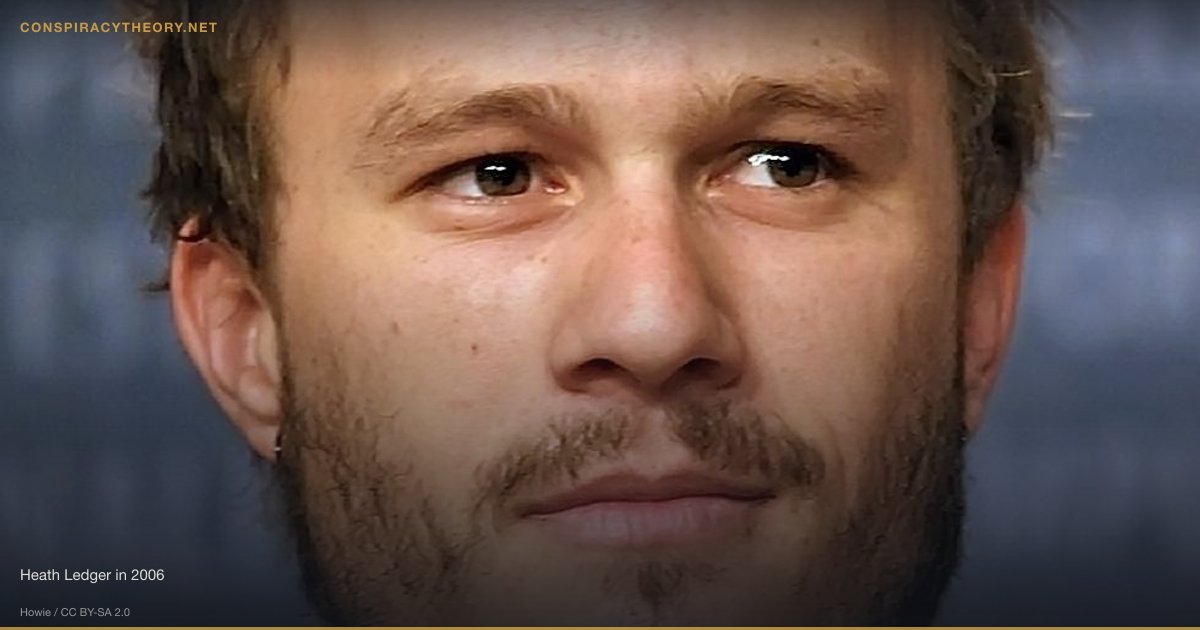
Heath Ledger died alone in a rented loft apartment in SoHo, Manhattan, on the afternoon of January 22, 2008. He was 28 years old, in the middle of filming Terry Gilliam’s The Imaginarium of Doctor Parnassus, and had recently completed what would become one of the most celebrated performances in cinema history — The Joker in Christopher Nolan’s The Dark Knight. The New York City Medical Examiner determined his death was an accidental overdose from a toxic combination of six prescription medications. Case closed, in a medical and legal sense.
But nothing about Heath Ledger’s death felt closed. The strange phone calls to Mary-Kate Olsen. The masseuse who found his body and called a celebrity before calling 911. The Joker role that Ledger himself had described in vaguely haunted terms. The fact that a vibrantly talented young actor — not a known addict, not a party animal, not someone the public had filed in the tragic-celebrity-death-waiting-to-happen category — was suddenly gone. The conspiracy theories that erupted in the days after Ledger’s death ranged from the mundane (someone supplied him with the drugs deliberately) to the baroque (the Illuminati sacrificed him as a ritual offering). None have held up to scrutiny. But the questions they raised — about celebrity, pharmaceutical culture, and the cost of artistic immersion — continue to resonate.
Origins & History
Ledger’s Final Months
Heath Andrew Ledger was born in Perth, Australia, in 1979 and rose to international fame with 10 Things I Hate About You (1999) and A Knight’s Tale (2001) before establishing himself as a serious dramatic actor with Brokeback Mountain (2005), which earned him an Academy Award nomination. By 2007, he was widely regarded as one of his generation’s most talented actors.
But 2007 was also a year of personal upheaval. Ledger and actress Michelle Williams, with whom he had a daughter, Matilda, separated in September. He relocated from Brooklyn to a rented loft at 421 Broome Street in SoHo. Friends and colleagues described him as affected by the split but professionally focused. He threw himself into work, completing principal photography on The Dark Knight and beginning production on The Imaginarium of Doctor Parnassus.
Ledger had spoken openly about his struggles with insomnia and restlessness. In a November 2007 interview with the New York Times, he discussed sleeping only two hours a night during the filming of The Dark Knight and I’m Not There (in which he played one of several incarnations of Bob Dylan). “Last week I probably slept an average of two hours a night,” he told the paper. “I couldn’t stop thinking. My body was exhausted, and my mind was still going.” He mentioned taking Ambien sleeping pills, which he said helped only briefly.
This interview would later be seized upon by conspiracy theorists as evidence that the Joker role had psychologically damaged Ledger. But insomnia is a common condition, particularly among people working irregular film production schedules, and Ledger’s history of sleep difficulties predated The Dark Knight.
The Day of His Death
On January 22, 2008, Ledger had a 3:00 p.m. appointment with Diana Wolozin, a massage therapist who visited him regularly at his apartment. Wolozin arrived to find Ledger lying face down on his bed, unresponsive. She attempted to rouse him, shook him, and rolled him over. He was not breathing.
What happened next became the cornerstone of the conspiracy theories. Wolozin did not immediately call 911. Instead, she called Mary-Kate Olsen, the actress and fashion designer, who was a friend of Ledger’s. According to published accounts, Wolozin called Olsen at 3:26 p.m. and then called her again at 3:32 p.m. She called 911 at 3:36 p.m. In the intervening minutes, Olsen — who was in California — dispatched a private security team to the apartment. The bodyguards arrived before the paramedics, reportedly at approximately 3:33 p.m.
Paramedics arrived at 3:42 p.m. and pronounced Ledger dead at 3:36 p.m. (or shortly thereafter — reports vary). The NYPD was notified, and an investigation was opened.
The Autopsy and Ruling
The New York City Office of Chief Medical Examiner performed an autopsy on January 23. The initial results were inconclusive, and a final report was not issued until February 6. The cause of death was determined to be “acute intoxication by the combined effects of oxycodone, hydrocodone, diazepam, temazepam, alprazolam, and doxylamine.” The manner of death was ruled accidental.
In plain language: Ledger had taken a cocktail of two opioid painkillers, three benzodiazepine anti-anxiety medications, and an antihistamine used as a sleep aid. Each of these drugs individually depresses the central nervous system. In combination, they can suppress breathing to the point of death. There was no evidence that Ledger had taken any of the medications in amounts far exceeding prescribed doses — the danger was in the combination, not any single drug.
The Drug Enforcement Administration (DEA) investigated the source of the prescriptions. It was determined that the medications had been prescribed by multiple doctors — a practice sometimes called “doctor shopping,” though in Ledger’s case, some of the prescriptions may have been obtained in different countries (he frequently traveled between the U.S., the UK, and Australia). No charges were filed against any physician, and the investigation was closed.
Key Claims
The Mary-Kate Olsen Cover-Up
The most persistent conspiracy claim centers on Mary-Kate Olsen and the sequence of phone calls on January 22. Theorists ask: Why did the masseuse call Olsen before calling 911? What was Olsen’s relationship with Ledger? Why did Olsen send private bodyguards to the apartment? And why did Olsen later refuse to cooperate with investigators without a guarantee of immunity?
The implication, in various conspiracy formulations, is that Olsen either supplied Ledger with the drugs that killed him, was present when he took them, or had some other knowledge that she was concealing. Her refusal to talk to investigators without immunity was interpreted as consciousness of guilt.
The more prosaic explanation: Wolozin panicked and called someone she knew was close to Ledger — Olsen — before she called emergency services. This is not unusual behavior in a crisis; studies show that people in emergencies frequently call family members or friends before calling 911. Olsen’s dispatching of bodyguards was a protective instinct — a famous person’s apartment with a potential emergency is a situation that attracts paparazzi and chaos. And Olsen’s request for immunity was standard legal counsel advice; any competent attorney would advise a high-profile client against voluntary participation in a DEA investigation.
The Joker Curse
The most culturally resonant conspiracy theory holds that playing The Joker — one of fiction’s most psychopathic characters — drove Ledger into a psychological spiral that led to his death. Theorists point to Ledger’s comments about insomnia during filming, to accounts of his intense preparation for the role (including locking himself in a hotel room for weeks to develop the character), and to the generally disturbing quality of his performance.
This theory is more psychological mythology than conspiracy. While Ledger was clearly committed to the role, there is no evidence that playing a fictional character caused a clinical psychological deterioration. His insomnia predated the role. His prescription medication use was not unusual for someone with chronic sleep difficulties. And his colleagues, including director Christopher Nolan, have described his behavior on set as focused and professional, not destabilized.
The theory gained cultural traction partly because it makes for a compelling narrative — the artist consumed by his art — and partly because Ledger’s Joker performance was so extraordinarily vivid that it seemed plausible that such darkness must have exacted a personal cost. But correlation is not causation, and creating a great performance is not evidence of psychological collapse.
Illuminati Sacrifice
The most extreme theories frame Ledger’s death as a ritualistic sacrifice by the Illuminati or other elite secret societies that allegedly control Hollywood. Proponents point to supposed occult symbolism in The Dark Knight, the timing of Ledger’s death, and the general framework of celebrity-sacrifice conspiracy theories that posit famous people are killed as offerings to maintain the power structures of the entertainment industry.
These claims rely entirely on pattern-matching and symbolic interpretation, with no material evidence whatsoever. They are a subset of broader Illuminati entertainment industry theories that apply the same framework to virtually every unexpected celebrity death.
Evidence & Analysis
Facts Supporting the Official Explanation
- The autopsy found a specific, identifiable cause of death: combined drug intoxication from six prescription medications
- Each medication was individually prescribed; there was no evidence of illicit drug use
- Ledger had a documented history of insomnia and anxiety, conditions for which these medications are commonly prescribed
- The danger of combining multiple CNS-depressant drugs is well established medically and accounts for thousands of accidental deaths annually in the United States
- The NYPD investigated and found no evidence of foul play
- The DEA investigated the prescription sources and found no evidence of criminal conduct
- No person present at the apartment had any apparent motive for harming Ledger
Facts That Fueled Conspiracy Theories
- The delay in calling 911 and the calls to Mary-Kate Olsen
- Olsen’s refusal to cooperate with investigators without immunity
- Olsen’s bodyguards arriving before paramedics
- Ledger’s public comments about insomnia and the psychological demands of the Joker role
- The medications were prescribed by multiple doctors, suggesting a gap in medical oversight
- Ledger’s death at age 28, near the “27 Club” threshold that conspiracy theorists associate with mysterious celebrity deaths
Cultural Impact
Heath Ledger’s death had an immediate and lasting impact on both the entertainment industry and the broader cultural conversation about prescription drug abuse. His posthumous performance as The Joker in The Dark Knight — released six months after his death — became one of the most acclaimed screen performances of the twenty-first century, earning Ledger a posthumous Academy Award for Best Supporting Actor.
The tragic circumstances amplified the cultural reception of the performance. Audiences could not watch Ledger’s Joker without awareness of his death, and the character’s anarchic nihilism took on an additional layer of poignancy. Whether this constituted a conspiracy or simply the inescapable human tendency to find meaning in coincidence, the merging of performer and role in the public imagination was total and permanent.
Ledger’s death also contributed to growing awareness of the dangers of prescription drug combinations. The fact that each of his six medications had been individually prescribed — none in illegal quantities — highlighted the systemic failures in pharmaceutical oversight that would later be recognized as central to the opioid crisis. His death was one of several high-profile prescription drug fatalities (alongside Michael Jackson in 2009 and Prince in 2016) that drew attention to the ease with which dangerous combinations could be accumulated through multiple prescriptions.
The Mary-Kate Olsen angle ensured that the conspiracy theories persisted in tabloid culture for years. Olsen’s silence, while legally prudent, allowed the narrative vacuum to be filled with speculation that ranged from plausible (she knew who supplied the drugs) to absurd (she was part of a Hollywood occult circle). The episode illustrated how celebrity culture and conspiracy theorizing had become functionally inseparable — every famous death now generates its own alternative mythology, regardless of the evidence.
Timeline
| Date | Event |
|---|---|
| April 4, 1979 | Heath Andrew Ledger born in Perth, Western Australia |
| 1999 | Rises to fame with 10 Things I Hate About You |
| 2005 | Stars in Brokeback Mountain; receives Academy Award nomination |
| 2006 | Daughter Matilda born to Ledger and Michelle Williams |
| Early 2007 | Begins preparation for The Joker role in The Dark Knight |
| September 2007 | Ledger and Williams separate; Ledger moves to SoHo, Manhattan |
| November 2007 | Completes principal photography on The Dark Knight |
| November 4, 2007 | New York Times interview in which Ledger discusses insomnia and sleeping two hours a night |
| January 2008 | Begins filming The Imaginarium of Doctor Parnassus |
| January 22, 2008 | Ledger found unresponsive in his apartment by masseuse Diana Wolozin; pronounced dead |
| January 22, 2008 | Wolozin calls Mary-Kate Olsen before calling 911; Olsen’s bodyguards arrive at apartment |
| January 23, 2008 | Autopsy performed; initial results inconclusive |
| February 6, 2008 | Medical examiner rules death accidental due to combined drug intoxication |
| July 18, 2008 | The Dark Knight released; Ledger’s Joker performance receives universal acclaim |
| August 2008 | DEA closes investigation into prescription drug sources; no charges filed |
| February 22, 2009 | Ledger posthumously awarded Academy Award for Best Supporting Actor for The Dark Knight |
Sources & Further Reading
- New York City Office of Chief Medical Examiner. Autopsy Report, Heath Andrew Ledger, February 6, 2008
- Shoard, Catherine. “Heath Ledger’s Death: How It Unfolded.” The Guardian, February 6, 2008
- Lyall, Sarah. “Heath Ledger, Actor, Is Found Dead at 28.” The New York Times, January 23, 2008
- Friedman, Roger. “Heath Ledger: Why Mary-Kate Got the Call.” Fox News, January 24, 2008
- Nolan, Christopher. “Remembering Heath.” The Dark Knight Special Features, Warner Bros., 2008
- Hornaday, Ann. “The Method and Madness of Heath Ledger.” Washington Post, February 2009
- Trebay, Guy. “The Outsider.” The New York Times, November 4, 2007
- DEA Investigation Summary, Heath Ledger Case, 2008
Related Theories
- Illuminati Music Industry Symbolism — Broader theories about secret society control of the entertainment industry, often invoked in celebrity death conspiracies
- 27 Club — The pattern of famous musicians and artists dying at age 27, sometimes extended to include Ledger’s death at 28

Frequently Asked Questions
Was Heath Ledger murdered?
Why did Mary-Kate Olsen's bodyguard arrive before paramedics?
Did playing The Joker cause Heath Ledger's death?
Why did Mary-Kate Olsen refuse to cooperate with the investigation?

Infographic
Share this visual summary. Right-click to save.
