Hydrogen Fuel Cell Technology Suppression
Overview
In 1966, General Motors built a van that ran on hydrogen fuel cells. It was called the Electrovan, it cost millions to develop, it weighed 3,400 kilograms more than a standard van, it carried enough liquid hydrogen and liquid oxygen to fill a small swimming pool, and it worked. Thirty-two miles of range, no emissions but water vapor, proof that the fundamental concept was sound.
That was sixty years ago. Today, as of 2026, fewer than 20,000 hydrogen fuel cell vehicles are on American roads. There are approximately 60 hydrogen fueling stations in the entire country, almost all in California. Global automakers have collectively invested tens of billions of dollars in hydrogen research, produced impressive prototypes, made sweeping promises about hydrogen futures — and delivered almost nothing to the consumer market.
Why? The conspiracy theory version is simple: the oil industry killed it. Every time hydrogen technology gets close to viability, the story goes, oil companies buy up patents, defund research, lobby against infrastructure investment, and ensure that the world remains dependent on petroleum. It is a clean narrative, and it has enough supporting evidence to be dangerous — because it contains a kernel of truth wrapped in a carapace of oversimplification.
The reality is messier and more interesting. Hydrogen fuel cells face genuine technical and economic barriers that no amount of conspiracy is needed to explain. But the oil industry has also engaged in documented behavior — lobbying, patent acquisition, strategic misdirection — that has slowed the development of competing energy technologies. The question is not whether the oil industry has ever acted against hydrogen’s interests, but whether its actions are sufficient to explain hydrogen’s failure to achieve commercial scale.
This theory is classified as unresolved because while the pure suppression narrative oversimplifies the situation, the documented behavior of fossil fuel interests in undermining clean energy technologies — including but not limited to hydrogen — represents a legitimate area of concern that has not been fully accounted for.
Origins & History
Early Fuel Cell Development
The hydrogen fuel cell was invented in 1839 by Welsh physicist William Grove, who demonstrated that combining hydrogen and oxygen could produce electricity. For over a century, the technology remained a scientific curiosity. It was NASA that made fuel cells practical: in the 1960s, both the Gemini and Apollo space programs used fuel cells to generate electricity and drinking water for astronauts. The technology worked beautifully in space, where cost was no object and the alternative was heavy batteries.
General Motors, sensing a potential automotive application, developed the Electrovan in 1966, the first fuel cell vehicle. The Union Carbide fuel cell system was large, dangerous (it used cryogenic hydrogen and oxygen), and impractical for consumer use, but it demonstrated that the concept worked. GM shelved the project, citing cost and infrastructure barriers.
Through the 1970s and 1980s, fuel cell development continued at a low level in academic and government laboratories. The oil crises of 1973 and 1979 temporarily increased interest in alternative fuels, including hydrogen, but each crisis was followed by a return to cheap oil and a corresponding decline in alternative energy investment.
The 1990s Hydrogen Boom
The modern hydrogen vehicle story begins in the 1990s, when two developments converged: advances in proton exchange membrane (PEM) fuel cells — led by companies like Ballard Power Systems in Canada — dramatically reduced the size and cost of fuel cells, and California’s Zero Emission Vehicle (ZEV) mandate threatened to force automakers to produce non-gasoline vehicles.
Ballard Power Systems, founded in 1979 in Vancouver, made critical breakthroughs in PEM fuel cell technology in the late 1980s and early 1990s, demonstrating fuel cells that were small enough, light enough, and powerful enough to potentially power a vehicle. Daimler-Benz invested heavily in Ballard and began developing fuel cell prototypes. By the late 1990s, virtually every major automaker had a hydrogen fuel cell vehicle program.
The promise was intoxicating: a car with no emissions but water vapor, comparable range to gasoline vehicles, refueling times of minutes rather than hours (a key advantage over battery electrics), and a fuel that could be produced from renewable sources. The “hydrogen economy” — a vision of hydrogen replacing fossil fuels across transportation, heating, and industry — became a mainstream policy concept.
The Bush Hydrogen Initiative
The hydrogen economy reached its political peak in January 2003, when President George W. Bush announced a $1.2 billion Hydrogen Fuel Initiative in his State of the Union address. “The first car driven by a child born today could be powered by hydrogen,” Bush declared.
The initiative funded research into fuel cell technology, hydrogen production, and hydrogen storage. It was presented as a bold commitment to clean energy. But critics — including many environmentalists and clean energy advocates — smelled something else: a strategic maneuver to delay the deployment of technologies that were already available.
The argument went like this: by 2003, hybrid vehicles (the Toyota Prius had launched in the US in 2000), battery electrics, and increased fuel efficiency standards were all available, proven technologies that could reduce oil consumption immediately. Hydrogen, by contrast, required decades of additional research, massive infrastructure investment, and fundamental breakthroughs in hydrogen storage and production. By focusing on hydrogen, the Bush administration could appear pro-environment while delaying any actual reduction in oil consumption — a convenient outcome for an administration with well-documented ties to the petroleum industry.
Joseph Romm, a former Department of Energy official, published a scathing critique titled “The Hype About Hydrogen” (2004), arguing that the hydrogen initiative was “the perfect strategy to kill clean cars” because it “encourages the notion that we don’t need to do anything now.”
The Pivot to Electric
By the late 2000s, the landscape shifted decisively. Battery electric vehicle technology improved faster than almost anyone predicted. Tesla’s Roadster (2008) and Model S (2012) demonstrated that electric cars could be desirable consumer products, not just compliance vehicles. Battery costs fell by approximately 90% between 2010 and 2020. Charging infrastructure, while imperfect, proved far cheaper and easier to build than hydrogen fueling stations.
Most major automakers quietly reduced or eliminated their hydrogen programs, redirecting investment to battery electrics. GM, which had been one of hydrogen’s most vocal advocates, shifted to the Chevy Bolt and later the Ultium platform. Honda discontinued its Clarity Fuel Cell in 2021. Only Toyota and Hyundai maintained significant hydrogen vehicle programs for passenger cars, and even Toyota began hedging with increased battery electric investment.
The shift was not necessarily conspiratorial — battery electrics genuinely proved to be the more practical near-term technology. But the pattern of abandoned hydrogen programs, broken promises, and pivoting narratives fed the suppression theory.
Key Claims
-
Oil companies deliberately undermined hydrogen development. ExxonMobil, Shell, and other majors lobbied against hydrogen infrastructure funding, acquired hydrogen-related patents, and funded research designed to produce pessimistic conclusions about hydrogen viability.
-
The Bush Hydrogen Initiative was a deliberate distraction. The $1.2 billion program was designed to redirect clean energy investment away from immediately deployable technologies (hybrids, electrics) toward a technology that would not be ready for decades, buying time for the oil industry.
-
Automakers developed hydrogen prototypes as compliance theater. Major automakers built impressive fuel cell prototypes to satisfy regulators and public expectations, with no genuine intention of bringing them to market.
-
Stanley Ovshinsky’s hydrogen patents were suppressed. Stanford Ovshinsky, inventor of the nickel-metal hydride battery and holder of critical hydrogen storage patents, saw his company (Energy Conversion Devices) driven into bankruptcy, with his patents acquired by entities with interests in maintaining the fossil fuel status quo.
-
California’s hydrogen fueling station program was sabotaged. The state’s planned hydrogen infrastructure buildout has been repeatedly delayed and underfunded, keeping hydrogen vehicles impractical by ensuring drivers have nowhere to refuel.
-
The “hydrogen is too expensive” narrative is manufactured. Proponents argue that hydrogen production costs are artificially inflated by the failure to invest in green hydrogen infrastructure at scale, and that with proper investment, hydrogen could be cost-competitive with gasoline.
Evidence
Documented Oil Industry Opposition
The petroleum industry’s opposition to clean energy technologies is well-documented, though much of it has been directed at electric vehicles and renewables generally rather than hydrogen specifically.
ExxonMobil, Chevron, and other oil majors have spent hundreds of millions of dollars lobbying against climate legislation, fuel efficiency standards, and clean energy mandates. Industry-funded think tanks have produced reports questioning the viability of hydrogen and other alternatives. In some cases, oil companies have joined hydrogen industry associations and advocacy groups, which proponents argue is a way to control the narrative and slow the technology’s development from within.
Shell and other oil companies have positioned themselves as hydrogen producers — recognizing that if hydrogen does succeed, they want to control the production chain. Whether this represents genuine commitment or strategic co-optation is a matter of interpretation.
The Ovshinsky Case
Stanford Ovshinsky (1922-2012) was a prolific American inventor who held over 400 patents, including critical technologies for nickel-metal hydride batteries (used in hybrid vehicles) and hydrogen storage systems. His company, Energy Conversion Devices (ECD), developed metal hydride hydrogen storage tanks that were lighter and safer than compressed gas tanks.
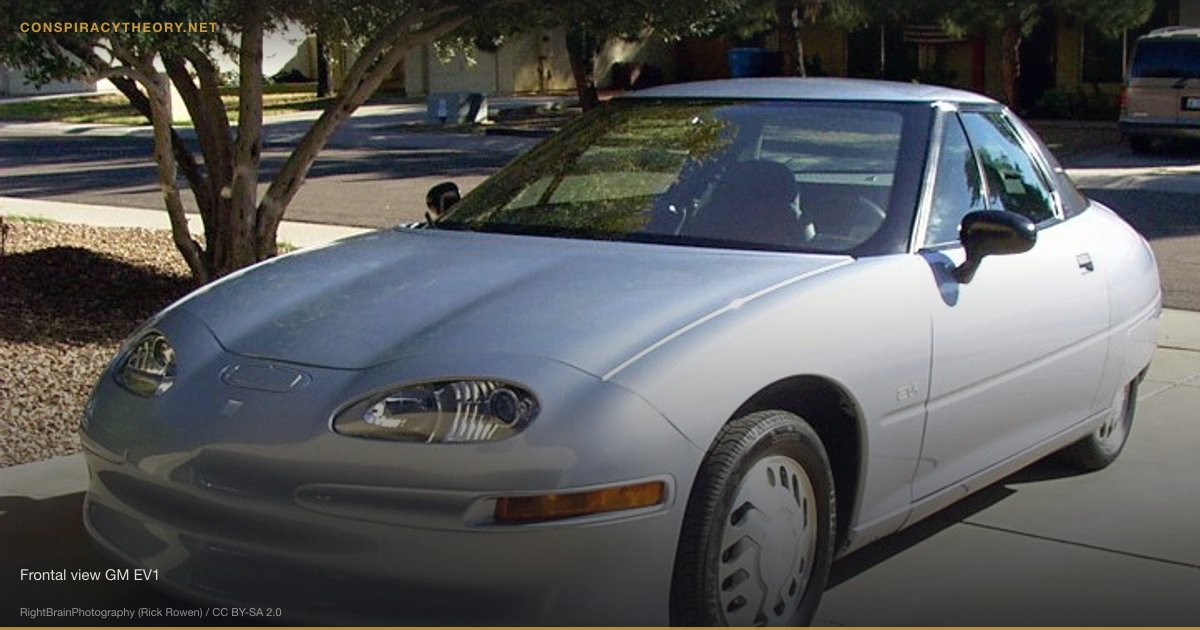
In 1994, General Motors licensed Ovshinsky’s NiMH battery technology for the EV1 electric vehicle. When GM subsequently crushed the EV1 fleet and abandoned electric vehicles, Ovshinsky’s battery technology went with it. The NiMH battery patents eventually ended up with Cobasys, a joint venture between Chevron (through its subsidiary Chevron Technology Ventures, which had acquired Texaco, which had acquired GM’s stake in the battery technology) and ECD. Critics allege that Chevron used its control over the patents to prevent NiMH batteries from being used in fully electric vehicles, restricting licensing to hybrid applications where the batteries supplemented rather than replaced gasoline engines.
ECD filed for bankruptcy in 2012. The disposition of Ovshinsky’s hydrogen storage patents remains a point of contention for suppression theorists.
California’s Hydrogen Station Failures
California has been the primary testing ground for hydrogen vehicles in the United States, but its infrastructure buildout has been plagued by delays, cost overruns, and station closures. As of 2025, the state had approximately 60 operational hydrogen stations — far fewer than the 200 originally planned for by this date. Several station operators have gone bankrupt. Station reliability has been poor, with frequent outages leaving hydrogen vehicle owners stranded.
Suppression theorists point to the infrastructure failures as evidence of deliberate sabotage. Skeptics counter that the failures reflect the genuine economic challenges of building a hydrogen distribution network from scratch — challenges that exist independent of any conspiracy.
What the Oil Industry Actually Did
The oil industry’s documented behavior toward clean energy technologies includes:
- Funding climate change denial for decades while internal scientists confirmed the reality of anthropogenic warming
- Lobbying against fuel efficiency standards, zero-emission vehicle mandates, and clean energy subsidies
- Acquiring patents related to battery and hydrogen technologies through subsidiaries
- Making and breaking public commitments to alternative energy investment
- Funding research designed to highlight the difficulties of clean energy transitions
These activities are documented through corporate records, congressional testimony, litigation discovery, and investigative journalism. They demonstrate a pattern of opposition to clean energy transitions that, while falling short of a coordinated conspiracy to suppress a specific technology, represents systematic efforts to delay the shift away from fossil fuels.
Counterarguments
Hydrogen’s Genuine Technical Challenges
Hydrogen faces real technical and economic barriers that do not require a conspiracy to explain.
The production problem. Approximately 95% of hydrogen produced today comes from steam methane reforming — splitting natural gas with steam. This process produces CO2 emissions, meaning that “gray hydrogen” is not actually clean. Green hydrogen — produced by electrolysis using renewable electricity — is currently 2-3 times more expensive than gray hydrogen. Without cheap green hydrogen, fuel cell vehicles offer limited environmental benefit over conventional vehicles.
The infrastructure problem. Building hydrogen fueling infrastructure is enormously expensive. A single hydrogen fueling station costs $1-2 million, compared to $50,000-100,000 for a fast EV charging station. Hydrogen must be transported via specialized trucks or pipelines (it is the smallest molecule, making it extremely difficult to contain and transport). This chicken-and-egg problem — no cars without stations, no stations without cars — is a genuine barrier that has stymied every attempt at hydrogen vehicle commercialization.
The efficiency problem. The well-to-wheel efficiency of hydrogen fuel cell vehicles is roughly 25-35%, compared to 70-80% for battery electric vehicles. Producing hydrogen from electricity, compressing and transporting it, and converting it back to electricity in a fuel cell involves energy losses at every step. Battery electrics simply store and release electricity, avoiding most of these conversion losses.
Battery electric competition. The rapid improvement in battery technology and the dramatic cost reductions in lithium-ion batteries have made battery electrics the dominant alternative to gasoline vehicles for passenger car applications. This competitive dynamic — rather than suppression — is the primary reason most automakers have deprioritized hydrogen for passenger vehicles.
Hydrogen’s Remaining Niche
Even critics of the hydrogen suppression theory acknowledge that hydrogen may have a legitimate future in applications where batteries are impractical: long-haul trucking, shipping, aviation, steel production, and chemical manufacturing. These applications require energy density that current batteries cannot provide, making hydrogen a potential complement to rather than competitor with battery electrics.
Cultural Impact
The hydrogen suppression theory operates at the intersection of technology policy, environmental politics, and populist distrust of corporate power. It has been amplified by documentaries like Who Killed the Electric Car? (2006), which documented GM’s crushing of the EV1 and suggested a broader pattern of automaker sabotage of clean vehicles. While that film focused on battery electrics rather than hydrogen, its narrative of corporate and oil industry collusion against clean transportation directly feeds hydrogen suppression claims.
The theory has influenced clean energy policy debates, with advocates using it to argue for public (rather than corporate-led) investment in hydrogen infrastructure. It has also created tensions within the environmental movement, where some view hydrogen advocacy as a genuine clean energy strategy and others see it as an oil industry distraction from battery electrics and renewables.
The “hydrogen economy” concept continues to have currency in policy circles, particularly in countries like Japan, South Korea, and Germany that have made significant national commitments to hydrogen. Whether these commitments represent genuine energy transitions or new forms of delay remains contested.
Key Figures
- William Grove (1811-1896) — Welsh physicist who invented the hydrogen fuel cell in 1839
- Stanley Ovshinsky (1922-2012) — American inventor of NiMH batteries and hydrogen storage systems whose patents became entangled in corporate acquisitions
- Ballard Power Systems — Canadian company that pioneered practical PEM fuel cells in the late 1980s
- George W. Bush — US President who announced the $1.2 billion Hydrogen Fuel Initiative in 2003
- Joseph Romm — Former DOE official who critiqued the hydrogen initiative as “the hype about hydrogen”
- Toyota — Japanese automaker that has maintained the strongest commitment to hydrogen vehicles (Mirai)
- Chris Paine — Director of Who Killed the Electric Car? (2006)
Timeline
| Date | Event |
|---|---|
| 1839 | William Grove invents the hydrogen fuel cell |
| 1960s | NASA uses fuel cells in Gemini and Apollo programs |
| 1966 | General Motors builds the Electrovan, first fuel cell vehicle |
| 1973-1979 | Oil crises spur interest in hydrogen and alternative fuels |
| Late 1980s | Ballard Power Systems achieves breakthroughs in PEM fuel cells |
| 1990 | California adopts Zero Emission Vehicle mandate |
| 1994 | GM licenses Ovshinsky’s NiMH battery for EV1 |
| 1996-1999 | GM produces and leases EV1 electric vehicles |
| 2001-2003 | GM crushes EV1 fleet; redirects to hydrogen fuel cell program |
| January 2003 | George W. Bush announces $1.2 billion Hydrogen Fuel Initiative |
| 2004 | Joseph Romm publishes “The Hype About Hydrogen” |
| 2006 | Who Killed the Electric Car? documentary released |
| 2008 | Tesla Roadster launches, beginning the modern EV era |
| 2012 | Energy Conversion Devices (Ovshinsky’s company) files for bankruptcy |
| 2014 | Toyota launches Mirai hydrogen fuel cell vehicle in Japan |
| 2018 | Hyundai launches Nexo fuel cell SUV |
| 2020s | Most automakers pivot to battery electric vehicles; hydrogen refocused on industrial applications |
| 2024-2025 | Multiple California hydrogen station operators face financial difficulties |
Sources & Further Reading
- Romm, Joseph J. “The Hype About Hydrogen.” Issues in Science and Technology 20, no. 3 (2004)
- Paine, Chris, dir. Who Killed the Electric Car? Sony Pictures Classics, 2006
- Sperling, Daniel, and James S. Cannon. The Hydrogen Energy Transition. Academic Press, 2004
- Rifkin, Jeremy. The Hydrogen Economy. Tarcher/Penguin, 2002
- National Research Council. The Hydrogen Economy: Opportunities, Costs, Barriers, and R&D Needs. National Academies Press, 2004
- Cowan, Robin, and Staffan Hulten. “Escaping Lock-In: The Case of the Electric Vehicle.” Technological Forecasting and Social Change 53 (1996): 61-80
- Oreskes, Naomi, and Erik M. Conway. Merchants of Doubt. Bloomsbury Press, 2010
- Lovins, Amory B. “Twenty Hydrogen Myths.” Rocky Mountain Institute, 2005
- Fletcher, Seth. Bottled Lightning: Superbatteries, Electric Cars, and the New Lithium Economy. Hill and Wang, 2011
Related Theories
- Water-Powered Car — Stanley Meyer’s claimed water fuel cell and the conspiracy around his death
- Free Energy Suppression — The broader claim that revolutionary energy technologies are systematically suppressed
- Big Oil Conspiracy — Broader claims about oil industry manipulation of markets and technology
- Cold Fusion Cover-Up — Claims that cold fusion was suppressed by the scientific and energy establishment

Frequently Asked Questions
Have hydrogen fuel cell vehicles been suppressed by the oil industry?
Why don't we have more hydrogen cars on the road?
Did GM suppress hydrogen fuel cell technology?
What happened to George W. Bush's hydrogen economy initiative?
Infographic
Share this visual summary. Right-click to save.