Illuminati in the Music Industry — All-Seeing Eye
Overview
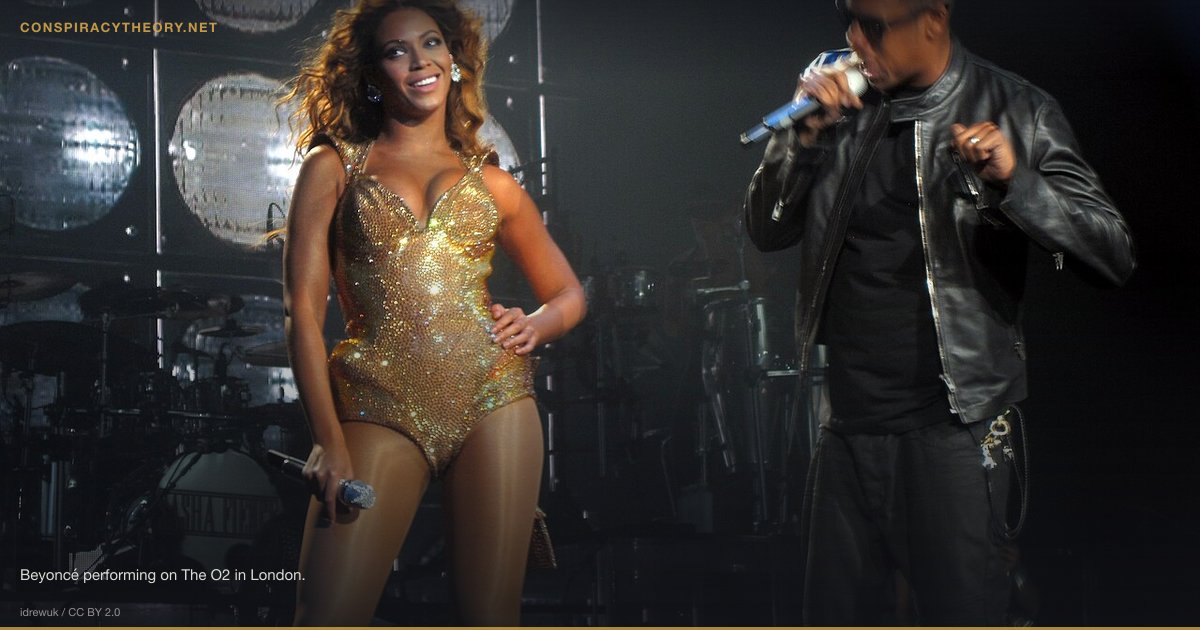
The theory that the global music industry is controlled by the Illuminati — a secret society that uses pop stars as vehicles for occult symbolism and social manipulation — is one of the most widely circulated conspiracy theories in contemporary popular culture. According to this theory, major recording artists including Jay-Z, Beyonce, Rihanna, Madonna, Katy Perry, Lady Gaga, and many others are either members of the Illuminati or puppets controlled by the organization, and their music, performances, and public appearances are saturated with hidden symbols — pyramids, the All-Seeing Eye, inverted crosses, pentagrams, and specific hand gestures — that serve as public declarations of Illuminati allegiance and vehicles for mass mind control.
The theory emerged primarily in the 1990s and early 2000s, drawing on earlier “Satanic Panic” narratives about hidden occult messages in rock and heavy metal music, and received an enormous boost from the visual capabilities of the internet age, particularly YouTube, where videos analyzing alleged Illuminati symbolism in music videos have accumulated billions of collective views. The theory’s appeal lies in its accessibility — anyone can watch a music video and identify triangular shapes, eye imagery, or hand gestures — and in its promise to decode the hidden meaning behind the overwhelming spectacle of modern pop culture.
The theory is classified as debunked because it rests on a series of demonstrably false premises: the conflation of common visual motifs with secret society symbolism, the misidentification of standard photography and performance techniques as coded messages, and the attribution of coordinated conspiratorial purpose to what is better explained by artistic convention, commercial branding, and confirmation bias. The historical Bavarian Illuminati was a small 18th-century intellectual society that was effectively destroyed in the 1780s and has no documented connection to the modern entertainment industry.
Origins & History
The theory that the music industry serves as a vehicle for occult influence has deep roots in American culture, extending back well before the specific Illuminati narrative. The “Satanic Panic” of the 1980s, in which evangelical Christian groups alleged that rock and heavy metal music contained hidden satanic messages embedded through “backmasking” (recording messages in reverse), established the template for finding hidden meaning in popular music. Groups including Led Zeppelin, the Eagles, and Judas Priest were subjected to intense scrutiny, and albums were played backward in search of satanic commands. While backmasking claims were largely debunked, they established the cultural framework that hidden forces were using popular music to subvert listeners.
The specific Illuminati narrative in the music industry developed gradually through the 1990s and early 2000s, drawing on several streams. The rise of hip-hop as the dominant commercial music genre brought new attention to the relationship between artists, record labels, and corporate power. The dramatic trajectories of hip-hop artists — from poverty and marginalization to extraordinary wealth and fame — invited speculation about what forces enabled such transformations.
The theory gained critical mass through the internet, particularly through YouTube, which launched in 2005 and quickly became a platform for conspiracy content. Early YouTube channels devoted to analyzing Illuminati symbolism in music videos found massive audiences. Videos deconstructing the imagery in Rihanna’s “Umbrella” (2007), Lady Gaga’s “Bad Romance” (2009), and Beyonce’s Super Bowl performances attracted millions of views and spawned an entire genre of analysis content.
Jay-Z became the primary focus of Illuminati theories in hip-hop, owing to several converging factors. His Roc-A-Fella Records label name referenced the Rockefeller family — frequently cited in conspiracy literature as Illuminati members. His signature diamond hand sign was interpreted as a pyramid or All-Seeing Eye gesture. His song “Lucifer” (from The Black Album, 2003) was cited as evidence of Satanic allegiance, despite its lyrics actually addressing inner-city violence. And his marriage to Beyonce created a “power couple” narrative that conspiracy theorists interpreted as an Illuminati alliance.
The theory expanded throughout the 2010s to encompass virtually every major pop star. Lady Gaga’s deliberately provocative, symbol-heavy visual aesthetic was interpreted as Illuminati programming rather than artistic strategy. Katy Perry’s music videos, particularly “Dark Horse” (2014) with its Egyptian imagery, were analyzed for hidden Illuminati references. Kanye West’s public mental health struggles were attributed to resistance against or breakdown from Illuminati mind control. And the deaths of artists including Michael Jackson, Prince, and XXXTentacion were explained as Illuminati “blood sacrifices” — ritual killings required by the organization.
The theory intersects with other conspiracy narratives, particularly the “Project Monarch” variant of MKUltra mind control theory, which alleges that the CIA’s documented mind control experiments were refined and deployed in the entertainment industry to create obedient performers. According to this overlay, pop stars are “Monarch slaves” programmed through trauma-based mind control, and their performances and breakdowns (such as Britney Spears’s 2007 public meltdown) are evidence of programming glitches or rebellion against handlers.
Key Claims
- Industry control: The global music industry is controlled by the Illuminati, who determine which artists achieve success and use them as vehicles for mass social engineering
- Symbolic signaling: Music videos, album covers, and live performances are saturated with Illuminati symbols — pyramids, the All-Seeing Eye, checkerboard patterns, butterflies, owls, and inverted crosses — that serve as public declarations of allegiance
- Hand sign identification: Specific hand gestures used by performers, particularly the triangle/diamond shape and the “666” hand sign (OK gesture near the eye), are coded signals of Illuminati membership
- Blood sacrifice: The Illuminati requires “blood sacrifices” — the death of loved ones or associates — as the price of fame and success, explaining mysterious celebrity deaths
- Mind control: Performers are subjected to MKUltra-derived mind control programming, with their public breakdowns, identity changes, and altered personas serving as evidence of programming or deprogramming
- Ritualistic performances: Major events such as the Super Bowl halftime show, the Grammy Awards, and the MTV Video Music Awards are Illuminati rituals disguised as entertainment, performing occult ceremonies before an unsuspecting mass audience
- Satanic agenda: The ultimate purpose of Illuminati control of the music industry is to promote a Satanic or anti-Christian agenda, desensitizing the public to occult symbolism and undermining traditional moral values
Evidence
Evidence cited by proponents:
The theory’s evidence consists primarily of visual analysis of music videos, live performances, and celebrity photographs. Proponents point to recurring visual elements including:
Triangular shapes and pyramid motifs in music videos by Rihanna, Beyonce, Jay-Z, Katy Perry, and others. One-eye poses in promotional photographs and magazine covers, interpreted as references to the All-Seeing Eye. Jay-Z’s diamond hand sign, interpreted as a pyramid or All-Seeing Eye gesture. The use of Egyptian, Masonic, and Christian iconography in music videos and stage designs.
Lyrics referencing devils, darkness, supernatural power, or secret knowledge are cited as admissions of Illuminati involvement. Celebrity statements about “selling their soul” — often used metaphorically to describe artistic compromises — are interpreted literally.
The timing of certain celebrity deaths, particularly when they occur near the rise of other celebrities, is presented as evidence of blood sacrifice. The deaths of Aaliyah, Left Eye (Lisa Lopes), Kanye West’s mother Donda West, and Jennifer Hudson’s family members have all been incorporated into this narrative.
Celebrity behavioral changes, public breakdowns, and persona shifts — Britney Spears’s head shaving, Kanye West’s hospitalization, Amanda Bynes’s public erratic behavior — are interpreted as evidence of mind control programming malfunctions.
Evidence against the theory:
The visual elements cited as Illuminati symbolism have straightforward artistic and commercial explanations. Pyramids, eyes, and geometric patterns are among the most common motifs in graphic design and have been used in advertising, fashion, and art for centuries without any connection to the Illuminati. The All-Seeing Eye (Eye of Providence) is a Christian symbol that appears in churches worldwide and predates the historical Illuminati.
The one-eye pose is a standard technique in professional photography used to create visual interest and has been employed since the medium’s earliest days. Fashion photography books and courses routinely teach this pose.
Jay-Z’s diamond hand sign is a documented brand logo for his company, created as a visual representation of “Roc” — a deliberate business decision, not a coded signal. Jay-Z has publicly addressed the conspiracy theories multiple times, denying any Illuminati affiliation and expressing that the theories misinterpret commercial branding as occult messaging.
The concept of “blood sacrifice” has no mechanism and is contradicted by the many celebrities who achieved success without associated deaths, as well as by the many non-celebrities who experience similar losses without any resulting fame or success.
Celebrity mental health crises, persona changes, and behavioral incidents are explained by the well-documented pressures of fame, substance abuse, mental illness, and the intense public scrutiny that accompanies celebrity in the modern media environment. The phenomenon of public celebrity breakdown predates Illuminati theories by decades.
Confirmation bias is the most significant factor in the theory’s apparent evidence. When looking for triangles, eyes, and geometric patterns, one finds them everywhere — because they are among the most basic and common shapes in visual design. The vast majority of music videos, photographs, and performances that do not contain such elements are simply ignored.
Debunking / Verification
This theory is debunked. The Illuminati music industry conspiracy rests entirely on misidentification of common visual elements as coded symbolism, confirmation bias in evidence selection, and attribution of coordinated conspiratorial purpose to phenomena better explained by artistic convention, commercial strategy, and basic psychology.
The historical Bavarian Illuminati was dissolved in the 1780s and has no documented connection to the modern entertainment industry. No insider testimony, leaked documents, or whistleblower accounts from the music industry support the existence of Illuminati control. The theory’s “evidence” consists entirely of subjective visual interpretation that can find its alleged symbols in virtually any visual media.
Several artists cited in the theory have directly addressed it. Jay-Z addressed Illuminati rumors in lyrics (“I said I was amazing, not that I’m a Mason”), interviews, and public appearances. Beyonce has dismissed the theories. Rihanna has expressed that the conspiracy theorists’ obsessive analysis of her work is bizarre. Rather than silencing these denials as expected of a genuine secret society, the supposed “Illuminati” has allowed its alleged members to repeatedly and publicly deny its existence.
Some artists have deliberately played into the conspiracy narrative for commercial benefit. Lady Gaga’s deliberate use of provocative religious and occult imagery is a calculated artistic strategy that generates controversy and media attention. This is not evidence of Illuminati membership — it is evidence of effective marketing in an attention economy.
Cultural Impact
The Illuminati music industry theory has had significant cultural effects despite its debunked status, influencing how millions of people interpret popular culture, the relationship between artists and audiences, and broader patterns of conspiratorial thinking.
The theory has become so pervasive that it has generated its own genre of online content. YouTube channels, Instagram accounts, TikTok creators, and podcasts devoted to analyzing Illuminati symbolism in music attract millions of followers. This content ranges from earnest belief to ironic memefication — “Illuminati confirmed” became one of the most widely recognized internet memes of the 2010s.
The theory has had measurable effects on music industry economics and artist behavior. Some artists have altered their visual presentation to avoid triggering conspiracy theories, while others have leaned into the controversy for its publicity value. The theory has also affected how music videos are received — directors and art directors are aware that their visual choices will be analyzed for alleged Illuminati content and sometimes address this preemptively.
Within Black communities, the theory intersects with legitimate histories of institutional conspiracy, creating a complex dynamic. The documented reality of programs like COINTELPRO, which targeted Black political organizations, and the Tuskegee syphilis experiment, which experimented on Black men, creates a cultural context in which institutional conspiracy is understood as a historical fact rather than paranoid fantasy. Illuminati theories in hip-hop can be understood partly as an expression of this historically justified skepticism toward powerful institutions, though the specific claims of the theory are not supported by evidence.
The theory has also contributed to broader patterns of conspiratorial thinking, particularly among young people. Research in media literacy has found that exposure to Illuminati music conspiracy content is correlated with increased susceptibility to other conspiracy theories, suggesting that the accessible, entertainment-focused nature of music industry conspiracy analysis may serve as a gateway to more consequential conspiratorial beliefs.
Timeline
- 1966 — John Lennon’s “more popular than Jesus” controversy establishes template for rock music/occult moral panics
- 1980s — “Satanic Panic” and backmasking allegations target rock and heavy metal artists
- 1996 — Jay-Z founds Roc-A-Fella Records; the Rockefeller name association becomes a later conspiracy focal point
- 2003 — Jay-Z releases The Black Album containing “Lucifer,” which becomes cited as evidence of Satanic allegiance
- 2005 — YouTube launches, providing a platform for conspiracy analysis content
- 2007 — Rihanna’s “Umbrella” video analyzed for alleged Illuminati symbolism; conspiracy YouTube genre emerges
- 2009 — Lady Gaga’s rise to fame, with deliberately provocative occult-influenced imagery, intensifies Illuminati theories
- 2009 — Kanye West’s interruption of Taylor Swift at the VMAs is interpreted as an Illuminati ritual
- 2013 — Beyonce’s Super Bowl halftime performance generates widespread Illuminati analysis
- 2014 — Katy Perry’s “Dark Horse” video analyzed for Egyptian/Illuminati symbolism
- 2015-2016 — “Illuminati confirmed” becomes a mainstream internet meme, simultaneously spreading and satirizing the theory
- 2016 — Beyonce’s Lemonade album and visual film interpreted through Illuminati lens
- 2018 — Travis Scott’s Astroworld Festival (2021 tragedy anticipated in imagery analysis)
- 2020s — Theory persists across social media platforms, with new artists continuously incorporated into the narrative
Sources & Further Reading
- Barkun, Michael. A Culture of Conspiracy: Apocalyptic Visions in Contemporary America. Berkeley: University of California Press, 2003.
- Partridge, Christopher. “Occulture Is Ordinary.” In Contemporary Esotericism, edited by Egil Asprem and Kennet Granholm. Sheffield: Equinox, 2013.
- Dyson, Michael Eric. Jay-Z: Made in America. New York: St. Martin’s Press, 2019.
- Harkness, Geoff. “Gangs, Symbols, and the Illuminati: Hip-Hop Conspiracy Theories and the Cultural Politics of Knowledge.” Popular Music and Society 42, no. 5 (2019): 556-573.
- Knight, Peter. Conspiracy Culture: From Kennedy to the X-Files. London: Routledge, 2000.
- Thompson, Damian. Counterknowledge: How We Surrendered to Conspiracy Theories, Quack Medicine, Bogus Science, and Fake History. New York: W.W. Norton, 2008.
- Fenster, Mark. Conspiracy Theories: Secrecy and Power in American Culture. Minneapolis: University of Minnesota Press, 2008.

Frequently Asked Questions
Why do so many celebrities cover one eye in photos?
Is Jay-Z's Roc-A-Fella diamond hand sign an Illuminati symbol?
Why are Illuminati conspiracy theories so popular in hip-hop culture specifically?
Infographic
Share this visual summary. Right-click to save.