Jim Morrison Faked His Death
Overview
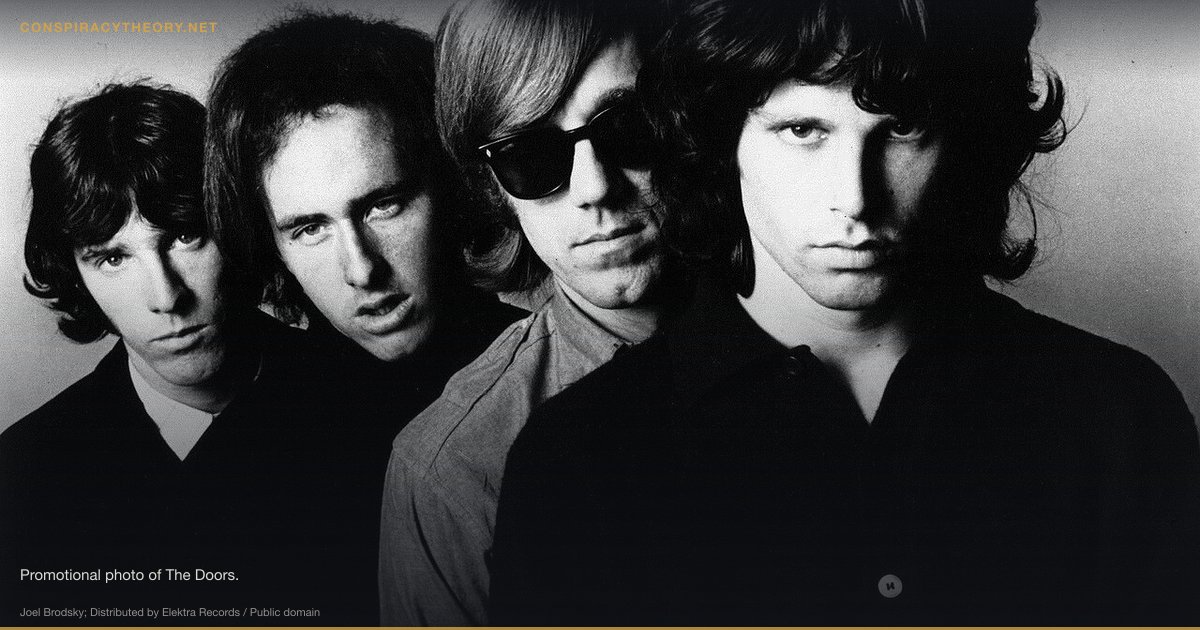
On July 3, 1971, James Douglas Morrison, the twenty-seven-year-old lead singer of The Doors, was found dead in the bathtub of his apartment at 17 Rue Beautreillis in the Marais district of Paris. His common-law wife, Pamela Courson, reported discovering his body in the early morning hours. A French physician examined the body and attributed the death to heart failure. No autopsy was performed. Morrison was buried at the famed Pere Lachaise Cemetery on July 7, in a small ceremony attended by only five people. None of his bandmates were present.
These unusual circumstances — the absence of an autopsy, the tiny funeral, the sealed coffin that no members of The Doors or Morrison’s family ever saw opened, and the three-day delay before the death was even announced publicly — gave rise to one of rock music’s most enduring conspiracy theories: that Jim Morrison faked his own death. According to this theory, Morrison, who had grown weary of fame, was facing potential prison time for an indecent exposure conviction in Miami, and was reportedly fascinated by the poet Arthur Rimbaud’s early retirement from public life, staged his death to disappear from the spotlight and live in anonymity.
The theory was sustained for decades by ambiguous statements from Doors keyboardist Ray Manzarek, who periodically suggested in interviews that Morrison could be alive. It was amplified by a steady stream of alleged sightings and by the broader cultural mythology surrounding the 27 Club — the pattern of rock musicians dying at that age. While the theory has been debunked by the preponderance of available evidence, the mystery of Morrison’s actual cause of death and the suspicious circumstances of his burial have kept the speculation alive for more than five decades.
Origins & History
Jim Morrison’s final months were chaotic. By early 1971, The Doors had effectively ceased functioning as a touring band, largely due to Morrison’s erratic behavior and escalating substance abuse. Morrison had been convicted of indecent exposure and profanity in connection with a 1969 concert in Miami and was free on bail pending appeal, facing a potential prison sentence. He was drinking heavily, had gained significant weight, and had expressed repeated disenchantment with his role as a rock star.
In March 1971, Morrison left Los Angeles for Paris, where Pamela Courson had been living. He told associates he was going to focus on poetry, his first artistic love. Morrison spent his final months in Paris largely out of the public eye, writing, visiting cafes, and watching movies. By most accounts, he continued to drink excessively, though some friends noted that he seemed more at peace than he had been in years.
The circumstances of his death on July 3, 1971, have never been fully clarified, in part because the accounts of those present are contradictory and because Courson — the primary witness — died of a heroin overdose herself in 1974, taking whatever she knew to the grave.
The most widely accepted reconstruction is that Morrison died in his bathtub sometime in the early morning hours of July 3. Courson told different stories to different people about what happened. In some accounts, Morrison complained of feeling ill and took a bath, where she later found him dead. In other versions, she found him dead in bed and he was moved to the bathtub. Some associates later reported that Courson told them Morrison had snorted heroin, thinking it was cocaine.
A more detailed alternative account emerged years later from Sam Bernett, who managed the Rock ‘n’ Roll Circus, a nightclub in the Les Halles district. Bernett claimed in his 2007 book that Morrison overdosed on heroin in the club’s bathroom and was carried back to his apartment by drug dealers who wanted to avoid police attention. This account, if true, would explain the confusion around the timeline of Morrison’s death.
The French authorities accepted the attending physician’s determination of heart failure and did not order an autopsy. Under French law at the time, an autopsy was only mandatory in cases of suspected foul play, and the doctor’s finding of natural causes was sufficient. Morrison was buried quickly, in a plain coffin, at Pere Lachaise — the cemetery where many of his literary heroes, including Oscar Wilde and Honore de Balzac, are interred.
The faked-death theory began circulating almost immediately. The delay in announcing the death, the closed-casket funeral, the absence of Morrison’s bandmates and family, and the lack of an autopsy all seemed suspicious. Morrison’s known fascination with the French poet Arthur Rimbaud, who abandoned poetry at age nineteen and disappeared into East Africa, provided a literary template for the theory. Morrison had reportedly discussed Rimbaud’s retirement from public life and expressed admiration for the concept of disappearing at the height of one’s powers.
Key Claims
-
No autopsy was performed. The absence of an autopsy is the cornerstone of the theory. Without a post-mortem examination, there is no definitive medical evidence that Morrison is actually dead, theorists argue.
-
The coffin was sealed and only a handful of people saw the body. None of Morrison’s bandmates, family members, or close American friends saw his body. The coffin was sealed before the funeral, and only Courson and a few Paris associates identified the deceased.
-
Morrison had motivation to fake his death. He was facing prison time, was disillusioned with fame, and had expressed interest in disappearing from public life. He was also reported to have a life insurance policy that Courson would have collected.
-
Ray Manzarek fueled the theory for decades. Manzarek’s ambiguous public statements — including suggestions that Morrison might be “on the beach” somewhere — were interpreted as coded confirmations that Morrison was alive.
-
Sightings have been reported. Over the years, people have claimed to have seen Morrison in various locations, from banks in San Francisco to bars in the Pacific Northwest. None of these sightings have been verified.
-
Morrison knew how to disappear. Theorists argue that Morrison, who had studied film at UCLA and was skilled at creating personas, had the intellectual and practical capabilities to orchestrate a convincing disappearance.
-
The death certificate may have been falsified. Some theorists argue that French death certificates in the early 1970s were relatively easy to forge or obtain fraudulently, and that Morrison or his associates could have bribed a doctor to produce one.
Evidence
Supporting the Conspiracy Theory
The absence of an autopsy is a documented fact, not speculation. While this was legal under French law, it means there is no independent medical verification of Morrison’s death or cause of death.
The extremely limited number of people who saw Morrison’s body is also factual. Doors manager Bill Siddons, who flew to Paris after being notified of the death, later said he saw a sealed coffin and signed papers but never saw Morrison’s body. Drummer John Densmore and guitarist Robby Krieger were never given the opportunity to view the remains.
Morrison’s documented disillusionment with fame is well established through his letters, interviews, and the testimony of friends. He spoke frequently about wanting to abandon rock music and devote himself to poetry. His fascination with Rimbaud’s disappearance is documented in his writings and conversations.
Manzarek’s statements, while ambiguous, did sustain the theory for decades. In a 2009 interview, he said: “I don’t know, I never saw the body. There was no autopsy, it was a sealed coffin, so who knows.” While Manzarek may have been engaging in deliberate myth-making for commercial reasons, his words carried weight as those of someone who knew Morrison intimately.
The three-day delay between Morrison’s death on July 3 and the public announcement on July 9 has never been fully explained and is unusual for a figure of Morrison’s prominence.
Against the Conspiracy Theory
Multiple people did see Morrison’s body, including Courson, Alain Ronay, Agnes Varda, and the attending physician. While the number of witnesses was small, the claim that “nobody saw the body” is an exaggeration.
Morrison’s physical condition in his final months was consistent with a person whose health was deteriorating. He had gained considerable weight, was drinking heavily, and showed signs of the kind of physical decline that would make heart failure or an overdose-related death plausible in a twenty-seven-year-old.
The heroin overdose explanation, supported by accounts from Bernett and others, provides a convincing reconstruction of events that explains the secrecy and hasty burial. If Morrison died of a heroin overdose, Courson and others would have had strong motivation to conceal the actual cause of death — not because Morrison was alive, but because a drug death would have created legal problems and been a source of shame.
Manzarek’s statements were recognized by other members of The Doors as showmanship. Drummer John Densmore has stated unequivocally that he believes Morrison is dead. Guitarist Robby Krieger has expressed the same view. Manzarek was known for his ability to generate publicity and may have kept the mystery alive deliberately to maintain public interest in The Doors.
Pamela Courson’s behavior after Morrison’s death is not consistent with that of someone whose partner was alive. She was devastated, turned increasingly to heroin, and died of an overdose three years later at the age of twenty-seven. If Morrison had faked his death, it is difficult to explain why Courson would not have joined him or at least shown awareness of his continued existence.
Morrison would have been in his eighties if still alive in the 2020s. The complete absence of any credible evidence of his existence over more than five decades — no confirmed photographs, no authenticated communications, no financial records — makes the theory increasingly implausible with each passing year.
Debunking / Verification
The theory is classified as “debunked” based on the totality of available evidence, though the absence of an autopsy means absolute certainty is impossible. The preponderance of evidence — witness testimony, medical examination, Courson’s behavior, and the complete absence of evidence of Morrison’s continued existence — supports the conclusion that Morrison died in Paris on July 3, 1971.
The most likely actual cause of death is a heroin overdose, whether accidental or otherwise, which was covered up by those present to avoid legal consequences. The official cause of “heart failure” may be technically accurate in the sense that all deaths ultimately involve cardiac cessation, while obscuring the underlying cause.
The theory’s persistence owes more to the cultural mythology of Jim Morrison — the self-styled “Lizard King” who cultivated an aura of mystery throughout his life — than to the strength of the evidence supporting it.
Cultural Impact
The Jim Morrison faked-death theory has become one of the defining narratives of rock mythology. It is inseparable from the broader cult of Morrison that has grown since his death, transforming him from a talented but troubled rock singer into an almost mythological figure — the poet-shaman who transcended the limitations of fame and mortality.
Morrison’s grave at Pere Lachaise has become one of the most visited sites in Paris, attracting hundreds of thousands of visitors annually. The grave has been repeatedly vandalized, graffitied, and adorned with tributes, and it has become a pilgrimage site for fans who view Morrison as a countercultural saint.
The theory has contributed to the broader pattern of faked-death conspiracy theories in popular music, alongside similar claims about Elvis Presley, Tupac Shakur, and others. These theories share common elements: the death of a young, charismatic figure; unusual circumstances surrounding the death or funeral; and a fan base reluctant to accept the loss of their idol.
The Morrison theory has also influenced how the music industry handles the deaths of major artists. The transparency demanded by the public in the wake of subsequent celebrity deaths — including autopsies, public statements, and family acknowledgments — can be seen in part as a response to the kind of secrecy that surrounded Morrison’s death and the conspiracy theories it spawned.
In Popular Culture
Oliver Stone’s 1991 film The Doors, starring Val Kilmer, dramatized Morrison’s life and death, ending with the bathtub death scene. The film contributed to a massive revival of interest in Morrison and The Doors and introduced the conspiracy theory to a new generation.
The faked-death theory has been explored in numerous books, including Jerry Hopkins and Danny Sugerman’s No One Here Gets Out Alive (1980), which explicitly leaves open the possibility that Morrison survived. Hopkins, who co-authored the book, later said he believed Morrison was dead but that the ambiguity was commercially useful.
Frank Lisciandro’s An Hour for Magic (1994) and Jim Morrison: Friends Gathered Together (2014) present firsthand accounts from Morrison’s close friends, most of whom believe he is dead but acknowledge the unresolved questions.
Sam Bernett’s The End: Jim Morrison (2007) provided the most detailed account of the heroin overdose theory, which has become the leading alternative explanation to both the official heart failure diagnosis and the faked death claim.
The Doors’ music has continued to sell well, and the mystery of Morrison’s death has arguably contributed to the band’s enduring commercial appeal. The posthumous releases, compilations, and biographical materials have generated substantial revenue, making the Morrison mythology a significant commercial enterprise.
Key Figures
-
Jim Morrison (1943-1971?): Lead singer of The Doors, poet, and filmmaker whose death in a Paris bathtub at age 27 is at the center of the conspiracy. His cultivated mystique, literary interests, and expressed desire to escape fame provide the motivation cited by theorists.
-
Pamela Courson (1946-1974): Morrison’s common-law wife and the primary witness to his death. Her conflicting accounts of the night Morrison died, combined with her own heroin use and death from an overdose three years later, have complicated efforts to establish the truth.
-
Ray Manzarek (1939-2013): Doors keyboardist who sustained the faked-death theory through decades of ambiguous public statements. His motivations — whether genuine belief, showmanship, or commercial calculation — remain debated.
-
John Densmore (born 1944): Doors drummer who has consistently stated that he believes Morrison is dead, providing a counterpoint to Manzarek’s ambiguity.
-
Alain Ronay: A friend of Morrison and Courson in Paris who saw Morrison’s body and has provided one of the few firsthand accounts of the circumstances surrounding the death.
-
Sam Bernett: Former manager of the Rock ‘n’ Roll Circus nightclub in Paris who claimed Morrison overdosed in his club and was carried back to his apartment by drug dealers.
-
Jean de Breteuil: A French aristocrat and heroin dealer who was part of Courson’s social circle in Paris. Some accounts suggest he supplied the heroin that may have killed Morrison. De Breteuil himself died of a heroin overdose shortly after Morrison’s death.
Timeline
- December 8, 1943: James Douglas Morrison born in Melbourne, Florida.
- 1965: The Doors formed in Los Angeles.
- January 1967: The Doors release debut album; “Light My Fire” becomes a number-one hit.
- March 1, 1969: Morrison allegedly exposes himself at a concert in Miami; later charged and convicted.
- October 1970: Morrison records final Doors album, L.A. Woman.
- March 1971: Morrison moves to Paris to focus on poetry; tells associates he may not return.
- July 3, 1971: Morrison found dead in his bathtub at 17 Rue Beautreillis, Paris. No autopsy performed.
- July 7, 1971: Morrison buried at Pere Lachaise Cemetery; only five people attend.
- July 9, 1971: Morrison’s death announced publicly, six days after his death.
- 1974: Pamela Courson dies of heroin overdose at age 27.
- 1980: No One Here Gets Out Alive published, fueling both interest in Morrison and the faked-death theory.
- 1991: Oliver Stone’s film The Doors released, introducing the conspiracy to a mainstream audience.
- 2007: Sam Bernett publishes The End, claiming Morrison overdosed in a Paris nightclub.
- 2013: Ray Manzarek dies; his ambiguous statements about Morrison’s death remain a key element of the conspiracy.
Sources & Further Reading
- Hopkins, Jerry, and Danny Sugerman. No One Here Gets Out Alive. Warner Books, 1980.
- Riordan, James, and Jerry Prochnicky. Break On Through: The Life and Death of Jim Morrison. William Morrow, 1991.
- Bernett, Sam. The End: Jim Morrison. Editions Privat, 2007.
- Lisciandro, Frank. Jim Morrison: Friends Gathered Together. Backbeat Books, 2014.
- Davis, Stephen. Jim Morrison: Life, Death, Legend. Gotham Books, 2004.
- Manzarek, Ray. Light My Fire: My Life with The Doors. G.P. Putnam’s Sons, 1998.
- Densmore, John. Riders on the Storm. Delacorte Press, 1990.
Related Theories
- The 27 Club — The pattern of musicians dying at age 27, of which Morrison is a founding member.
- Elvis Is Alive — A parallel faked-death theory about another iconic musician.
- Tupac Is Alive — Similar faked-death claims about the rapper Tupac Shakur.
- Jimi Hendrix Was Murdered — Conspiracy theories about the death of another 27 Club member.
- Faked Death Theories — The broader category of celebrity faked-death conspiracies.

Frequently Asked Questions
Was an autopsy performed on Jim Morrison's body?
Did Ray Manzarek really say Morrison faked his death?
Who saw Jim Morrison's body?
What is the most likely actual cause of Jim Morrison's death?
Infographic
Share this visual summary. Right-click to save.
