Marilyn Monroe, JFK & State Secrets

Overview
The death of Marilyn Monroe on August 4-5, 1962, at her home in Brentwood, Los Angeles, is one of the most investigated, debated, and mythologized events in American cultural history. The official ruling of probable suicide by barbiturate overdose has been challenged by numerous researchers, journalists, and investigators who argue that Monroe was murdered — and that her affairs with President John F. Kennedy and Attorney General Robert F. Kennedy placed her at the dangerous intersection of political power, organized crime, national security, and intelligence operations.
The conspiracy theories posit that Monroe, through her intimate relationships with both Kennedy brothers, became privy to sensitive information about topics including planned operations against Cuba, the Kennedy family’s connections to Mafia figures such as Sam Giancana, and possibly other classified matters. When the relationships ended and Monroe allegedly threatened to go public — either about the affairs themselves or about what she had learned — she became a liability that powerful interests could not afford. Depending on the version of the theory, her death was orchestrated by the CIA, the FBI, the Mob, the Kennedys’ inner circle, or some combination thereof.
The case is classified as unresolved. While no conclusive evidence of murder has been produced, legitimate questions remain about the forensic evidence, the conflicting witness timelines, the documented surveillance of Monroe by multiple parties, and the behavior of key figures in the hours before and after her death. The case exists at the intersection of documented historical facts — Monroe’s affairs with the Kennedys are widely accepted by mainstream historians — and speculative theories about what those relationships meant and what consequences they carried.
Origins & History
Monroe and the Kennedys
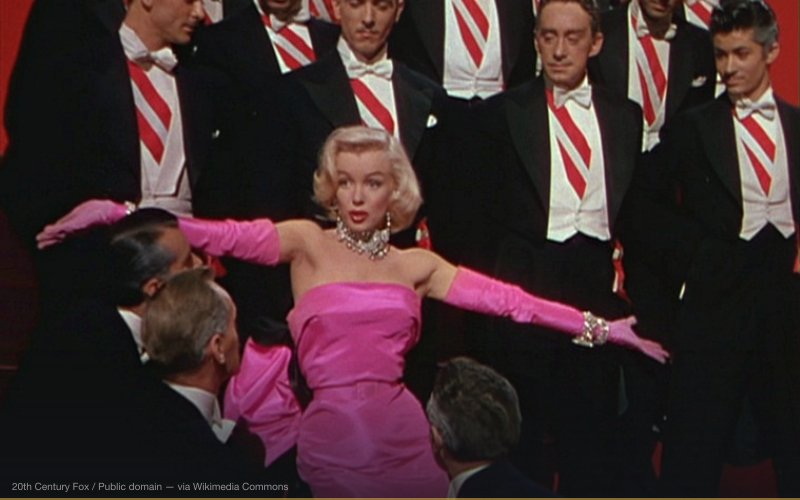
Marilyn Monroe’s relationship with John F. Kennedy is well-established in the historical record. The two were introduced in the 1950s through Peter Lawford, an actor and member of the “Rat Pack” who was married to JFK’s sister Patricia Kennedy. Monroe and JFK are believed to have had an intermittent affair during the late 1950s and into his presidency. The most publicly visible moment of this connection was Monroe’s iconic performance of “Happy Birthday, Mr. President” at a Democratic Party fundraiser at Madison Square Garden on May 19, 1962, less than three months before her death.
Monroe’s relationship with Robert F. Kennedy is more contested. Some biographers and witnesses have asserted that Monroe and RFK had an affair, possibly beginning as JFK distanced himself from Monroe in mid-1962. Others maintain that RFK’s contact with Monroe was limited to a friendship or that he was dispatched by the Kennedy family to manage the situation as JFK ended the relationship. The nature and extent of the RFK-Monroe relationship remains disputed, but most historians acknowledge at minimum a close personal connection.
The Night of August 4-5, 1962
The events of Monroe’s final hours are the subject of extensive and often contradictory accounts. The following represents the generally accepted timeline, with significant points of dispute noted:
Monroe spent the afternoon and evening of August 4 at her Brentwood home at 12305 Fifth Helena Drive. Her housekeeper, Eunice Murray, was present. Monroe’s psychiatrist, Dr. Ralph Greenson, visited during the afternoon and left in the early evening. Monroe reportedly spoke by telephone with Peter Lawford and others during the evening.
According to Murray’s initial account, she became concerned about Monroe at approximately 3:00 AM on August 5 when she noticed a light on under Monroe’s locked bedroom door. Unable to get a response, Murray called Dr. Greenson, who arrived and broke a window to enter the bedroom. He found Monroe dead in bed, lying face down, with an empty bottle of Nembutal (pentobarbital) and several other prescription medication bottles on the bedside table. Police were called and arrived at approximately 4:25 AM.
This timeline has been challenged on multiple fronts. Murray changed her account several times over the years, eventually stating in a 1985 BBC interview that she had “told the truth” about finding Monroe’s body much earlier in the evening — possibly around midnight — and that the delay in calling police was due to calls being made to “the studio” and other parties before authorities were notified. The gap between the alleged discovery of the body and the notification of police has been a focal point for conspiracy theorists, who argue that the intervening hours were used to remove evidence, including a suicide note or diary, and to ensure that Robert Kennedy (who some witnesses place in Los Angeles that evening) had left the area.
The Autopsy and Forensic Questions
The autopsy was performed by Dr. Thomas Noguchi, then a deputy medical examiner for Los Angeles County (and later the county’s chief medical examiner, earning the nickname “Coroner to the Stars”). Noguchi’s findings included:
- Lethal blood levels of pentobarbital (Nembutal) and chloral hydrate.
- No pill residue in Monroe’s stomach, despite the blood levels suggesting ingestion of a large number of capsules.
- No evidence of injection marks.
- A discoloration of the colon consistent with the administration of an enema or suppository.
The absence of pill residue in the stomach has been the most frequently cited forensic anomaly. If Monroe swallowed enough Nembutal capsules to produce the lethal blood concentration found at autopsy, some residue would normally be expected in the stomach. The colonic discoloration has been interpreted by some investigators as evidence that the drugs were administered rectally, either as a suppository or an enema — a method of delivery that could indicate either self-administration or administration by another person.
Noguchi himself, in his 1983 memoir Coroner, described the case as a “probable suicide” while acknowledging that the forensic evidence was not definitive and that a thorough investigation should have been conducted at the time.
The Wiretapping Network
One of the most substantiated elements of the conspiracy narrative is the extent to which Monroe was being surveilled. Multiple sources have confirmed or claimed to have participated in electronic monitoring of Monroe’s communications:
FBI surveillance. Documents released under the Freedom of Information Act confirm that the FBI maintained a file on Monroe, primarily due to her associations with individuals considered politically suspect and her connections to the Kennedy brothers. The extent of active wiretapping is disputed, but the Bureau’s interest in Monroe is documented.
Bernard Spindel. A professional wiretapper who worked for Teamsters leader Jimmy Hoffa, Spindel claimed to have recorded Monroe’s phone conversations. Hoffa was engaged in a bitter conflict with Robert Kennedy, who as Attorney General was aggressively pursuing the prosecution of Hoffa and the Teamsters. Wiretaps of Monroe’s phone could have provided leverage against the Kennedys. Spindel’s recordings were seized by the Manhattan District Attorney’s Office in a 1966 raid and are reported to have been destroyed.
Fred Otash. A private investigator and former LAPD detective, Otash claimed before his death in 1992 to have conducted surveillance of Monroe’s Brentwood home and to have overheard dramatic conversations on the night of her death, including an alleged argument with Robert Kennedy. Otash’s claims have been difficult to verify independently.
Alleged CIA interest. Some researchers have cited a purported CIA document, sometimes called the “Angleton memo” (after CIA counterintelligence chief James Jesus Angleton), which allegedly references concerns about Monroe’s knowledge of classified matters. The authenticity of this document has never been established.
Key Claims
The various conspiracy theories about Monroe’s death share several core claims, though they differ in identifying the specific perpetrators:
- Monroe’s affairs with the Kennedys gave her access to sensitive information. During intimate conversations, the Kennedy brothers allegedly discussed classified matters including planned operations against Cuba, connections to organized crime, and other state secrets.
- Monroe threatened to go public. Feeling abandoned after the Kennedys distanced themselves from her, Monroe allegedly planned a press conference at which she would reveal details of the affairs and possibly the information she had learned.
- Multiple parties had motive to silence her. The Kennedys (to protect the presidency), the CIA (to protect classified operations), the Mafia (to prevent exposure of their connections to the Kennedys or to retaliate against the Kennedys through Monroe), and J. Edgar Hoover (to protect his political leverage or to damage the Kennedys) all had theoretical motives.
- The death scene was staged. The forensic anomalies, the delay in calling police, the contradictory witness accounts, and the alleged removal of evidence from the scene indicate that Monroe’s death was not a simple suicide but was staged to appear as one.
- Robert Kennedy was present in Los Angeles that evening. Some witnesses and investigators have placed RFK in the Los Angeles area on August 4, 1962, a claim disputed by Kennedy family representatives who assert he was at a ranch in Northern California.
- Monroe’s diary or “red book” was taken from the scene. Several sources have referenced a diary or notebook in which Monroe allegedly recorded details of her conversations with the Kennedys, including sensitive information. This document has never surfaced.
Evidence
Evidence Supporting Suspicion
- Forensic anomalies. The absence of pill residue in Monroe’s stomach, despite lethal barbiturate blood levels, remains unexplained under the standard suicide scenario. The colonic discoloration suggests an alternative route of drug administration.
- Conflicting timelines. Eunice Murray’s changing accounts of when she discovered the body, and the multi-hour delay between the alleged discovery and the notification of police, suggest a period in which the scene may have been altered.
- Documented surveillance. The confirmed existence of FBI files on Monroe, combined with the claims of Spindel and Otash, establishes that multiple parties were actively monitoring her communications, indicating that her relationships with the Kennedys were considered a matter of serious interest to powerful organizations.
- Motive. The Kennedy affairs placed Monroe at the intersection of the presidency, the Department of Justice, the Mafia, the FBI, and potentially the CIA. Each of these entities had independently documented reasons to be concerned about Monroe’s knowledge and stability.
- The 1982 re-investigation’s limitations. The DA’s re-investigation concluded that evidence was insufficient to establish murder, but it did not rule out the possibility. It also noted that key evidence had been lost or destroyed in the intervening two decades.
Evidence Against Murder
- Monroe’s documented mental health struggles. Monroe had a well-documented history of depression, anxiety, insomnia, and prescription medication dependency. She had been hospitalized for psychiatric issues and had reportedly made previous suicide attempts or gestures. The suicide explanation is consistent with her known psychological vulnerabilities.
- No murder weapon. No evidence of forced entry, physical violence, injection marks, or a specific mechanism of murder (beyond the theoretical rectal administration of barbiturates) has ever been identified.
- The complexity of the alleged conspiracy. A murder involving the parties described in the theories would require coordination among individuals and organizations (the CIA, the Mafia, the Kennedy inner circle) that were, in many cases, adversaries rather than allies.
- Noguchi’s assessment. Dr. Noguchi, who performed the autopsy and is considered a highly competent forensic pathologist, concluded “probable suicide” while acknowledging forensic ambiguities. He did not conclude murder.
Debunking / Verification
The case is classified as unresolved because, while the murder theories have not been proven, legitimate forensic and circumstantial questions have never been adequately answered. The 1982 DA re-investigation acknowledged these gaps but concluded that the available evidence could not sustain a murder finding. The passage of time, the death of key witnesses, and the destruction of potential evidence (including the Spindel recordings) have made a definitive resolution increasingly unlikely.
The most controversial claims — particularly the UFO element, which alleges Monroe had knowledge of extraterrestrial technology recovered by the government — are considered unfounded by mainstream historians and are based on documents of unverified authenticity.
The core of the case rests on documented realities: Monroe did have relationships with the Kennedys; she was under surveillance; key witnesses did provide contradictory accounts; and legitimate forensic questions about the cause of death remain unanswered. Whether these facts support a murder conclusion or simply reflect the chaos, cover-ups of embarrassment, and institutional failures that surrounded the death of an iconic figure remains a matter of interpretation.
Cultural Impact
The conspiracy theories surrounding Monroe’s death have had a transformative effect on American culture, shaping public perceptions of political power, celebrity, and the relationship between the two.
The Monroe-Kennedy mythology. The theories have become inseparable from the popular understanding of both Marilyn Monroe and the Kennedy family. Monroe is viewed not merely as a tragic Hollywood figure but as someone whose proximity to political power made her dangerous and expendable. The Kennedys, in turn, are associated with a pattern of secrecy, scandal, and the exercise of power beyond accountability.
Investigative journalism and true crime. Monroe’s death has been the subject of dozens of books, documentaries, and investigative reports. Works such as Anthony Summers’ Goddess: The Secret Lives of Marilyn Monroe (1985) and Donald Wolfe’s The Last Days of Marilyn Monroe (1998) have set standards for investigative approaches to celebrity death cases. The case has influenced the development of the true crime genre.
Feminist reinterpretation. In more recent decades, the Monroe conspiracy theories have been reframed through feminist lenses, with some scholars and commentators viewing Monroe as a woman victimized by powerful men — exploited sexually, psychologically, and ultimately (if the murder theories are correct) physically. This reading positions Monroe’s death as emblematic of the dangers women face when they threaten male power structures.
Political conspiracy culture. The Monroe case is frequently cited alongside the JFK assassination, Watergate, and other events as evidence of a pattern of government and elite malfeasance in American political life. It has contributed to the broader erosion of public trust in official narratives.
In Popular Culture
- The Marilyn Files (1991), a television film exploring the conspiracy theories surrounding Monroe’s death.
- Marilyn: The Last Word (1993), a BBC documentary featuring Eunice Murray’s revised account of the night of Monroe’s death.
- Blonde (2022), a Netflix film based on Joyce Carol Oates’ novel, depicting Monroe’s relationships with the Kennedys and her psychological deterioration.
- The Mystery of Marilyn Monroe: The Unheard Tapes (2022), a Netflix documentary featuring previously unreleased audio interviews with key figures in the case.
- Norman Mailer’s Marilyn: A Biography (1973), which was among the first mainstream works to explore the murder theories.
- The television series The Kennedys (2011) and The Kennedys: After Camelot (2017) both depicted aspects of the Monroe-Kennedy relationship.
- Andy Warhol’s iconic silk-screen portraits of Monroe, created shortly after her death, became symbols of both celebrity culture and the commodification of tragedy.
- Monroe’s death has been referenced in songs by artists including Elton John (“Candle in the Wind”), Lana Del Rey, and numerous others.
Key Figures
- Marilyn Monroe (1926-1962) — Actress, model, and cultural icon whose death is the subject of the conspiracy theories.
- John F. Kennedy (1917-1963) — 35th President of the United States. Monroe’s documented relationship with JFK is central to the theories.
- Robert F. Kennedy (1925-1968) — U.S. Attorney General and JFK’s brother. Alleged to have had a separate relationship with Monroe and to have been in Los Angeles on the night of her death.
- Peter Lawford (1923-1984) — Actor and Kennedy in-law who introduced Monroe to the Kennedys and was among the last people to speak with her by phone.
- Eunice Murray (1902-1994) — Monroe’s housekeeper, present on the night of her death. Her accounts changed significantly over the years.
- Dr. Ralph Greenson (1911-1979) — Monroe’s psychiatrist, who was the first to enter her locked bedroom and find her body.
- Dr. Thomas Noguchi (b. 1927) — Deputy medical examiner who performed Monroe’s autopsy and later described the case as unsatisfactorily resolved.
- J. Edgar Hoover (1895-1972) — FBI Director whose agency maintained surveillance files on Monroe.
- Sam Giancana (1908-1975) — Chicago Mafia boss connected to both the Kennedys (through shared political and intelligence interests) and allegedly to Monroe.
- Jimmy Hoffa (1913-disappeared 1975) — Teamsters leader at war with RFK who reportedly commissioned wiretaps of Monroe’s phone.
- Bernard Spindel (1926-1971) — Wiretapper who claimed to have recorded Monroe’s conversations on behalf of Hoffa.
- Fred Otash (1922-1992) — Private investigator who claimed to have conducted surveillance of Monroe’s home.
Timeline
- 1926, June 1 — Norma Jeane Mortenson (later Marilyn Monroe) is born in Los Angeles.
- Late 1950s — Monroe is introduced to John F. Kennedy through Peter Lawford. An intermittent affair begins.
- 1961, January 20 — JFK is inaugurated as President. Monroe attends inaugural events.
- 1962, February — Monroe purchases her Brentwood home at 12305 Fifth Helena Drive, the first home she has owned.
- 1962, March — Monroe reportedly begins seeing Robert Kennedy, or RFK begins managing the end of her relationship with JFK. Accounts differ.
- 1962, May 19 — Monroe performs “Happy Birthday, Mr. President” at a Democratic fundraiser at Madison Square Garden, wearing the famous flesh-colored, rhinestone-studded dress. It is one of her last major public appearances.
- 1962, June-July — The Kennedy brothers reportedly distance themselves from Monroe. Monroe is fired from and rehired for the film Something’s Got to Give. Her emotional state deteriorates.
- 1962, August 4 — Monroe spends the day at her Brentwood home. Dr. Greenson visits in the afternoon. Monroe speaks with Peter Lawford by phone in the evening.
- 1962, August 5, approximately 3:00 AM (disputed) — Eunice Murray discovers Monroe unresponsive in her locked bedroom. Dr. Greenson is called and breaks in through a window.
- 1962, August 5, 4:25 AM — Police arrive at the scene. Monroe is confirmed dead.
- 1962, August 5 — Dr. Thomas Noguchi performs the autopsy, finding lethal barbiturate levels but no pill residue in the stomach.
- 1962, August 17 — The death is officially ruled “probable suicide” by the Los Angeles County Coroner’s Office.
- 1966 — Bernard Spindel’s alleged recordings of Monroe’s phone conversations are seized by the Manhattan DA and reportedly destroyed.
- 1973 — Norman Mailer’s biography raises the possibility of murder, bringing conspiracy theories to mainstream literary attention.
- 1982 — The Los Angeles District Attorney’s Office conducts a re-investigation. It concludes there is insufficient evidence to support murder charges but acknowledges unresolved questions.
- 1985 — Eunice Murray, in a BBC interview, revises her account of the timeline of events on the night of Monroe’s death, stating she found the body earlier than originally reported.
- 2022 — Netflix releases The Mystery of Marilyn Monroe: The Unheard Tapes and Blonde, bringing renewed attention to the case.
Sources & Further Reading
- Summers, Anthony. Goddess: The Secret Lives of Marilyn Monroe. Macmillan, 1985.
- Wolfe, Donald H. The Last Days of Marilyn Monroe. William Morrow, 1998.
- Noguchi, Thomas T., with Joseph DiMona. Coroner. Simon & Schuster, 1983.
- Spoto, Donald. Marilyn Monroe: The Biography. HarperCollins, 1993.
- Mailer, Norman. Marilyn: A Biography. Grosset & Dunlap, 1973.
- Margolis, Jay. Marilyn Monroe: A Case for Murder. iUniverse, 2011.
- Brown, Peter Harry, and Patte B. Barham. Marilyn: The Last Take. Dutton, 1992.
- “The Mystery of Marilyn Monroe: The Unheard Tapes.” Directed by Emma Cooper. Netflix, 2022.
- FBI Freedom of Information Act files on Marilyn Monroe.
- Los Angeles District Attorney’s Office. “Report on the Re-Investigation of the Death of Marilyn Monroe.” 1982.
- Taraborrelli, J. Randy. The Secret Life of Marilyn Monroe. Grand Central Publishing, 2009.
Related Theories
- JFK Assassination — The assassination of President Kennedy, whose own death became the subject of conspiracy theories barely a year after Monroe’s.
- CIA Cover-Ups — Broader theories about CIA involvement in domestic events and political operations.
- Mafia-Government Connections — The documented relationships between organized crime and political power that provide context for the Monroe theories.
- FBI COINTELPRO — The FBI’s documented domestic surveillance and disruption programs.
Frequently Asked Questions
Was Marilyn Monroe murdered because of her relationship with JFK?
Did the FBI wiretap Marilyn Monroe?
What state secrets did Marilyn Monroe allegedly know about?
Why was Marilyn Monroe's death re-investigated?
Infographic
Share this visual summary. Right-click to save.
