Oklahoma City Bombing Conspiracy
Overview
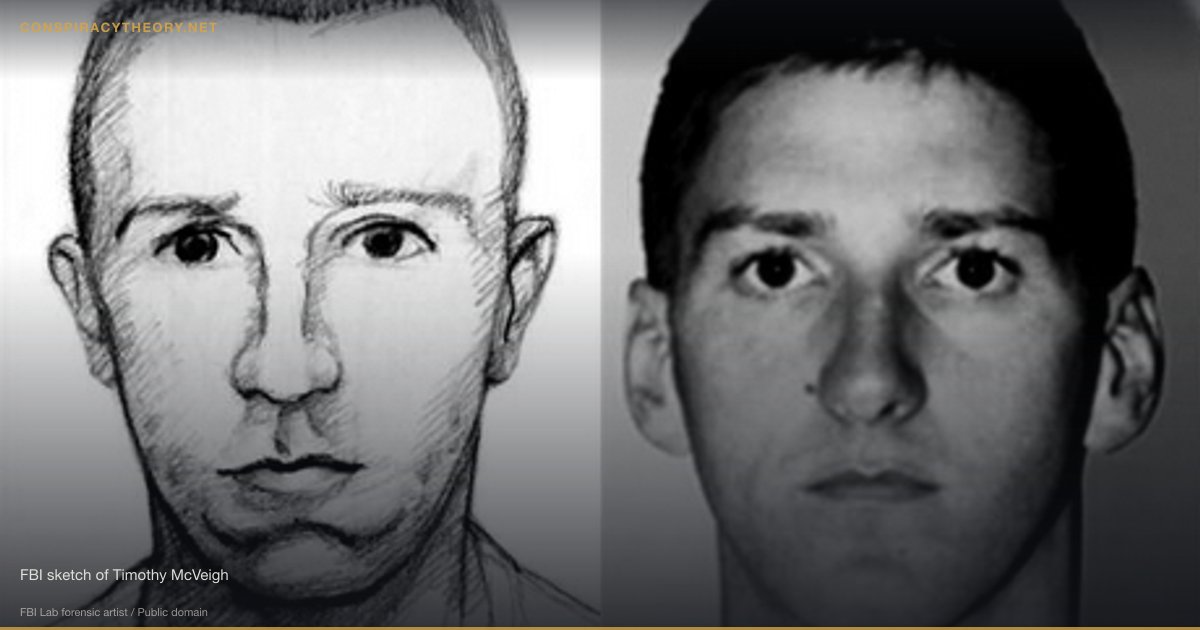
The 1995 Oklahoma City bombing — killing 168 people — officially blamed on McVeigh and Nichols; conspiracy theories focus on the never-identified ‘John Doe #2,’ government informants embedded in militia movements, and the suspicious prison death of Kenneth Trentadue in circumstances mirroring McVeigh.
Origins & History
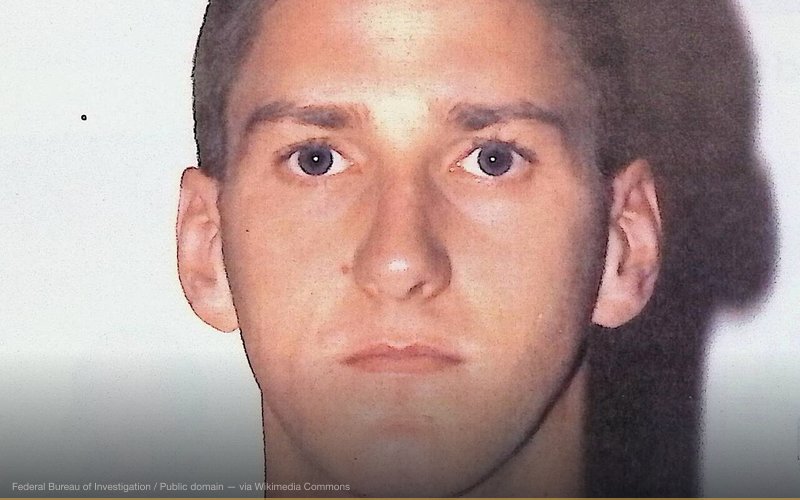
At 9:02 AM on April 19, 1995, a massive truck bomb detonated outside the Alfred P. Murrah Federal Building in Oklahoma City, killing 168 people — including 19 children in a second-floor daycare center — and injuring more than 680 others. It was the deadliest domestic terrorist attack in American history until September 11, 2001. Timothy McVeigh, a decorated Gulf War veteran radicalized by anti-government ideology, was arrested ninety minutes after the blast during a routine traffic stop. His co-conspirator Terry Nichols was apprehended shortly thereafter. McVeigh was convicted and executed in 2001; Nichols received a life sentence.
Conspiracy theories emerged almost immediately. Within hours of the bombing, the FBI issued sketches of two suspects: McVeigh and an unidentified man designated “John Doe #2.” Multiple witnesses at Elliott’s Body Shop in Junction City, Kansas — where McVeigh rented the Ryder truck used in the attack — reported seeing him accompanied by a second man who did not match Terry Nichols. The FBI eventually dropped the search for John Doe #2, stating that witnesses had confused encounters from different days. This explanation failed to satisfy skeptics, and the phantom accomplice became a central pillar of alternative narratives.
The conspiracy theories intensified through the late 1990s and 2000s, fueled by several developments. Jesse Trentadue, a Salt Lake City attorney, spent years investigating the 1995 prison death of his brother Kenneth Trentadue, who died in federal custody under circumstances officially ruled a suicide but which Jesse argued bore signs of severe beating. Kenneth reportedly bore a physical resemblance to a militia figure authorities were seeking, leading Jesse to theorize his brother was killed during a botched interrogation connected to the bombing investigation.
In 2005, a congressional investigation and reporting by the Los Angeles Times revealed that the FBI had informants in far-right groups connected to McVeigh’s network, including the Aryan Republican Army (ARA), a gang of white supremacist bank robbers operating in the Midwest. Questions about what federal agencies knew before April 19 — and whether the attack could have been prevented — moved from the conspiratorial fringe toward legitimate investigative journalism.
Former FBI whistleblower Frederic Whitehurst raised additional concerns about the integrity of the FBI Crime Lab’s forensic analysis of the bombing evidence, alleging that Lab protocols were compromised and results were tailored to support the prosecution narrative. A 1997 Inspector General report substantiated many of Whitehurst’s complaints about the Lab generally, though it stopped short of finding that the OKC investigation specifically was corrupted.
Key Claims
- An unidentified “John Doe #2” was involved in the bombing and was never apprehended; the FBI’s retraction of the search was a cover-up
- Federal agencies had informants inside militia and white supremacist groups connected to McVeigh and possessed advance intelligence that could have prevented the attack
- Additional unexploded ordinance was found inside the Murrah Building after the blast, suggesting planted charges beyond the truck bomb — a claim based on early news reports that were later retracted
- Kenneth Trentadue was murdered in federal prison because he was mistaken for a bombing conspirator, and his death was covered up as suicide
- The ATF office in the Murrah Building was suspiciously empty on the morning of the bombing, and ATF employees had been warned not to come to work
- Seismographic data from the University of Oklahoma recorded multiple distinct events, suggesting secondary explosions inside the building
- McVeigh had connections to far-right networks broader than the official narrative acknowledged, including possible ties to the Aryan Republican Army and the white supremacist compound at Elohim City, Oklahoma
- The rapid demolition of the Murrah Building’s remains destroyed evidence that could have revealed additional explosives
Evidence
The Oklahoma City bombing conspiracy theories occupy an unusual position: some claims rest on genuine evidentiary loose ends, while others have been thoroughly addressed by forensic analysis.
The “additional explosives” claim originated from early television news reports on April 19, 1995, in which reporters relayed that bomb squad personnel had found unexploded devices inside the building. These reports were later corrected — the objects were identified as training devices stored in the ATF office, not additional bombs. However, the initial broadcasts were recorded and have circulated on conspiracy websites ever since as evidence of a cover-up. Brigadier General Benton K. Partin, a retired Air Force explosives expert, submitted an analysis to Congress arguing that the column failures in the Murrah Building were inconsistent with a single external blast and suggested demolition charges. Mainstream structural engineers, including those commissioned by the Federal Emergency Management Agency, rejected Partin’s analysis, noting that the building’s transfer beam design created specific vulnerabilities that amplified the blast effect asymmetrically (FEMA Report 277, 1996).
The seismographic argument, promoted by geophysicist Raymond Brown and others, claimed that University of Oklahoma seismographs recorded two distinct events separated by approximately eight seconds. Seismologist Thomas Holzer of the U.S. Geological Survey reviewed the data and concluded that the two signals represented the air blast and the subsequent ground-coupled wave, consistent with a single detonation — a pattern observed in other large surface explosions.
The informant question carries more weight. Journalist J.D. Cash of the McCurtain Daily Gazette and later investigative reporter Andrew Gumbel documented extensive federal law enforcement infiltration of the far-right milieu around McVeigh, particularly at Elohim City, a white supremacist compound in eastern Oklahoma. ATF informant Carol Howe had provided warnings about individuals at Elohim City discussing attacks on federal buildings. The 2005 congressional investigation confirmed that the FBI had assets in the Aryan Republican Army but found the intelligence had not been connected to McVeigh’s specific plot before April 19.
Jesse Trentadue’s FOIA litigation, which reached the Tenth Circuit Court of Appeals multiple times, forced the release of previously classified FBI surveillance videos from the area around the Murrah Building. The released footage, however, did not conclusively show what Trentadue sought — an unidentified accomplice with McVeigh.
Cultural Impact
The Oklahoma City bombing conspiracy theories shaped the landscape of domestic terrorism discourse in ways that persist decades later. The case became a fault line between two narratives: the official account of a small conspiracy by two disaffected veterans, and a broader story of government foreknowledge, intelligence failures, and potential entrapment that raised uncomfortable questions about the relationship between federal law enforcement and the radical right.
The bombing and its aftermath became reference points for the growing militia and patriot movements, which viewed the government’s response — including the swift prosecution and execution of McVeigh — as evidence of a predetermined narrative. Conversely, the case became a cautionary tale for law enforcement about the dangers of underestimating domestic extremism.
Jesse Trentadue’s FOIA lawsuits, which continued for over twenty years, became one of the most sustained individual efforts to pry information from federal agencies in American legal history. His persistence forced the release of thousands of pages of previously classified documents and earned him a measure of mainstream credibility — federal judge Clark Waddoups openly criticized the FBI’s handling of records requests related to the case.
The OKC conspiracy theories also influenced the architecture of subsequent false-flag theories, particularly around 9/11 and the Boston Marathon bombing, establishing templates for questioning official forensic conclusions, pointing to intelligence agency foreknowledge, and interpreting early news reports as more truthful than later corrected accounts.
Sources & Further Reading
- FEMA. The Oklahoma City Bombing: Improving Building Performance Through Multi-Hazard Mitigation. FEMA Report 277, 1996.
- Gumbel, Andrew, and Roger G. Charles. Oklahoma City: What the Investigation Missed — and Why It Still Matters. William Morrow, 2012.
- Michel, Lou, and Dan Herbeck. American Terrorist: Timothy McVeigh and the Oklahoma City Bombing. HarperCollins, 2001.
- Wright, Stuart A. Patriots, Politics, and the Oklahoma City Bombing. Cambridge University Press, 2007.
- Trentadue, Jesse. FOIA litigation records, U.S. Court of Appeals for the Tenth Circuit (multiple filings, 2001-2015).
- U.S. Department of Justice, Office of the Inspector General. The FBI Laboratory: An Investigation into Laboratory Practices and Alleged Misconduct in Explosives-Related and Other Cases. 1997.
- Hamm, Mark S. In Bad Company: America’s Terrorist Underground. Northeastern University Press, 2002.
Frequently Asked Questions
Was there a John Doe #2 in the Oklahoma City bombing?
Did the government have advance warning of the Oklahoma City bombing?
Could a single truck bomb have caused the damage to the Murrah Building?

Infographic
Share this visual summary. Right-click to save.
