Robert Hanssen -- FBI Agent Spying for KGB/SVR
Overview
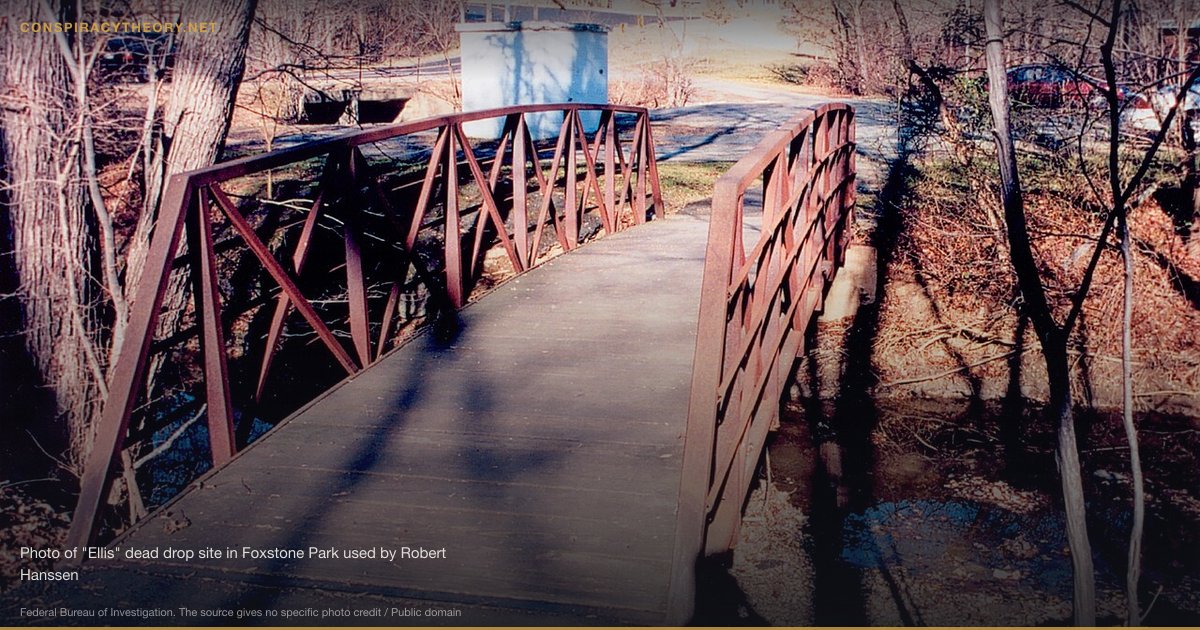
On the morning of February 18, 2001, a 56-year-old FBI supervisory special agent named Robert Philip Hanssen drove to Foxstone Park in Vienna, Virginia, a suburb of Washington, D.C. He walked to a wooden footbridge, placed a garbage bag beneath it, and returned to his car. The bag contained classified documents intended for his handlers in the SVR, Russia’s foreign intelligence service. Before he could drive away, FBI agents swarmed the parking lot. “What took you so long?” Hanssen reportedly said as they handcuffed him.
It was a reasonable question. Hanssen had been selling America’s most sensitive intelligence secrets to Soviet and then Russian intelligence for twenty-two years. He had compromised virtually the entire US intelligence community’s understanding of Russian operations. He had revealed the identities of agents working for the United States inside Soviet intelligence, at least two of whom were executed as a direct result. He had handed over details of billions of dollars’ worth of technical intelligence programs. And he had done all of this from inside the one organization specifically tasked with catching people like him: the FBI’s own counterintelligence division.
The Hanssen case is not a conspiracy theory. It is a confirmed, adjudicated, documented conspiracy — one of the most damaging intelligence failures in American history. What makes it relevant to the study of conspiracy theories is what it reveals about how genuine conspiracies actually work, how institutions can fail catastrophically to detect betrayal within their own ranks, and how the real world sometimes produces stories more extraordinary than anything fiction could devise.
Origins & History
The Unlikely Spy
Robert Hanssen was, on the surface, an unremarkable G-man. Born in Chicago in 1944, the son of a police officer, he earned an MBA and briefly worked as an accountant and a Chicago police officer before joining the FBI in 1976. He was a devout Roman Catholic, an Opus Dei member, the father of six children, and by all outward appearances a conservative, churchgoing family man.
Hanssen was also deeply strange. Colleagues found him arrogant, socially awkward, and contemptuous of FBI management. He dressed in dark suits regardless of the weather and drove the same aging car for years. He had few friends in the Bureau. He was, by most accounts, the kind of agent who inspired neither warmth nor suspicion — he was simply ignored.
In 1979, just three years after joining the FBI, Hanssen made his first approach to Soviet intelligence. He contacted the GRU (Soviet military intelligence) in New York and volunteered classified information. His first offering was the identity of Dmitri Polyakov, a GRU general who had been spying for the United States since the early 1960s. Polyakov — codenamed TOPHAT by the FBI — was considered one of the most valuable intelligence assets the US had ever recruited within the Soviet military establishment. Hanssen’s betrayal set in motion the chain of events that would ultimately lead to Polyakov’s arrest and execution in 1988.
First Period: GRU (1979-1981)
Hanssen’s initial espionage was directed to the GRU rather than the KGB, an unusual choice that reflected his strategic thinking. He calculated that the rivalry between Soviet intelligence agencies meant the KGB would be less likely to detect a GRU source. He communicated through dead drops in New York and received approximately $30,000.
In 1981, his wife Bonnie Hanssen discovered him working on classified documents at home and confronted him. Hanssen told her he was feeding disinformation to the Soviets (a lie) and that he would stop. He confessed to an Opus Dei priest, who advised him to break off contact and donate the money to charity. Hanssen stopped spying — temporarily.
Second Period: KGB (1985-1991)
In October 1985, Hanssen sent an anonymous letter to the KGB residency in Washington, D.C. This time, he bypassed the GRU entirely and went straight to the KGB’s First Chief Directorate. His letter, addressed to KGB officer Viktor Cherkashin, contained an extraordinary opening: he identified three KGB officers who were secretly working for the FBI.
This was the beginning of Hanssen’s most damaging period. Over the next six years, he provided the KGB with:
- The identities of dozens of human intelligence sources working for the US inside Soviet intelligence and government institutions
- Details of the FBI’s most sensitive counterintelligence operations, including double agent programs
- Information about US technical intelligence collection capabilities, including details of a tunnel the NSA had dug under the Soviet Embassy in Washington to intercept communications (the program cost hundreds of millions of dollars and was rendered useless)
- The National Intelligence Program budget and other strategic planning documents
- Details of US continuity-of-government plans in the event of nuclear war
In return, Hanssen received approximately $600,000 in cash and diamonds, plus a $800,000 deposit in a Moscow bank he never accessed.
The Ames Misdirection
One of the most remarkable aspects of the Hanssen case is how long he went undetected — partly because the CIA’s own mole, Aldrich Ames, served as an inadvertent shield. Ames was arrested in 1994 for spying for the KGB, and the intelligence community initially attributed many of the compromised operations to him. Because Hanssen and Ames had independently betrayed some of the same sources, Ames’ arrest seemed to account for the damage.
But it didn’t account for all of it. Anomalies persisted. Sources that Ames could not have known about had still been compromised. Technical programs that Ames had no access to had been blown. A few persistent investigators within the FBI and CIA began to suspect there was a second mole — but the investigation moved glacially, hampered by institutional resistance to the idea that the FBI itself might harbor a traitor.
Third Period: SVR (1999-2001)
After an eight-year hiatus following the dissolution of the Soviet Union, Hanssen reestablished contact with Russian intelligence (now the SVR) in 1999. He resumed dead drops in northern Virginia parks, providing classified materials in exchange for cash. This final phase was his undoing.
The FBI obtained, reportedly for $7 million, a file from a former Russian intelligence officer that contained materials from the KGB’s case file on their American mole. The file included a recording of Hanssen’s voice from a telephone call with his handler, fingerprints on a garbage bag used for a dead drop, and other identifying details — though apparently not his name. FBI analysts compared the voice to Bureau personnel and identified Hanssen.
Rather than arrest him immediately, the FBI placed Hanssen under surveillance and assigned a young agent, Eric O’Neill, as his new assistant, with secret orders to monitor his activities and help build an airtight case. O’Neill’s undercover work provided the final evidence needed to arrest Hanssen in the act of making a dead drop at Foxstone Park on February 18, 2001.
Key Claims
This is a confirmed case, so the “claims” are established facts:
- Hanssen spied for Soviet/Russian intelligence for 22 years (1979-2001), with two breaks (1981-1985 and 1992-1999).
- He compromised at least 50 human intelligence sources, of whom at least three were executed by the Soviet/Russian government.
- He revealed billions of dollars’ worth of technical intelligence programs, including the NSA tunnel under the Soviet Embassy.
- He was never detected through FBI counterintelligence — his capture required purchasing a Russian intelligence file.
- He received approximately $1.4 million in cash and diamonds (plus an untouched $800,000 Moscow bank deposit).
- The FBI’s own institutional culture — its insular focus on criminal cases rather than counterintelligence, its lack of internal security protocols, and its resistance to self-scrutiny — enabled Hanssen’s espionage to continue for two decades.
Evidence
The evidence in this case is overwhelming and publicly documented:
- Hanssen’s guilty plea and allocution: He pleaded guilty to 15 counts of espionage and conspiracy in July 2002.
- Physical evidence: Dead drop materials, classified documents in his possession, recordings, and fingerprints.
- The Russian file: Materials from the KGB/SVR case file, including voice recordings and correspondence.
- The DOJ Inspector General’s report (2003): A devastating 700+ page internal review of the FBI’s failure to detect Hanssen, documenting systemic counterintelligence failures.
- Damage assessment: A classified damage assessment conducted over several years concluded that Hanssen’s espionage was among the most damaging in US history.
Debunking / Verification
Status: Confirmed. There is nothing to debunk. Robert Hanssen was a traitor who sold American secrets to Soviet and Russian intelligence for over two decades, was caught, confessed, and died in prison. Every significant claim about the case is supported by court records, government reports, and Hanssen’s own admissions.
The only “conspiracy theory” dimension to the case is the lingering question of whether there were additional moles within US intelligence who have never been identified. Some counterintelligence professionals believe that not all compromised operations can be attributed to the combined damage from Hanssen and Ames, suggesting the possibility of at least one more undetected source. This remains speculative.
Cultural Impact
The Hanssen case had profound consequences for US intelligence:
FBI reform: The case exposed catastrophic failures in FBI internal security. Before Hanssen, FBI agents were not subject to polygraphs, had minimal computer monitoring, and operated in a culture that considered espionage by one of its own essentially unthinkable. Post-Hanssen reforms included mandatory polygraph examinations, computer activity monitoring, restricted access to sensitive databases, and the creation of a dedicated Security Division.
Counterintelligence overhaul: The case prompted a government-wide review of counterintelligence practices, leading to the creation of the National Counterintelligence Executive (later the National Counterintelligence and Security Center) to coordinate counterintelligence across agencies.
Trust deficit: The combined impact of Ames and Hanssen created a lasting culture of suspicion within the intelligence community. The two cases demonstrated that even the most trusted insiders could be traitors, fundamentally changing how agencies approach internal security.
Cold War reckoning: Hanssen’s arrest came a decade after the Cold War’s end, serving as a stark reminder that Russian espionage against the United States had never stopped — a lesson that gained fresh relevance in the 2010s and beyond.
In Popular Culture
- Breach (2007) — Feature film directed by Billy Ray, starring Chris Cooper as Hanssen and Ryan Phillippe as Eric O’Neill. Cooper’s performance was widely praised as the definitive portrayal.
- Master Spy: The Robert Hanssen Story (2002) — CBS television film starring William Hurt
- The Spy Next Door (2009) — Documentary featuring extensive interviews
- Spy: The Inside Story of How the FBI’s Robert Hanssen Betrayed America (2002) — Book by David Wise
- The Bureau and the Mole (2002) — Book by David Vise (Washington Post reporter)
- Multiple episodes of documentary series including Spycraft (Netflix) and Declassified (CNN)
Key Figures
| Figure | Role |
|---|---|
| Robert Hanssen | FBI agent who spied for Soviet/Russian intelligence from 1979 to 2001 |
| Bonnie Hanssen | Hanssen’s wife; discovered his espionage in 1981; believed he had stopped |
| Viktor Cherkashin | KGB officer in Washington who handled Hanssen’s initial KGB contact in 1985 |
| Aldrich Ames | CIA counterintelligence officer who also spied for the KGB; his arrest initially masked Hanssen’s damage |
| Eric O’Neill | FBI agent assigned undercover as Hanssen’s assistant to build the case for his arrest |
| Louis Freeh | FBI Director (1993-2001); oversaw the final investigation leading to Hanssen’s arrest |
| Dmitri Polyakov | GRU general spying for the US; betrayed by Hanssen in 1979; executed 1988 |
Timeline
| Date | Event |
|---|---|
| 1976 | Robert Hanssen joins the FBI |
| 1979 | Hanssen volunteers to the GRU; betrays Dmitri Polyakov and other sources |
| 1981 | Wife Bonnie discovers his espionage; Hanssen temporarily stops |
| Oct 1985 | Hanssen sends anonymous letter to the KGB’s Viktor Cherkashin, beginning his most damaging period |
| 1985-1991 | Hanssen provides KGB with identities of human sources, technical program details, and strategic documents |
| 1988 | Dmitri Polyakov executed by the Soviet Union |
| 1992 | Hanssen pauses espionage activity after the dissolution of the Soviet Union |
| 1994 | Aldrich Ames arrested; intelligence community initially attributes compromises to Ames alone |
| 1999 | Hanssen resumes contact with the SVR (Russian foreign intelligence) |
| 2000 | FBI obtains Russian intelligence file identifying an unknown FBI mole through voice recording and other materials |
| Late 2000 | Eric O’Neill assigned as Hanssen’s assistant to monitor him |
| Feb 18, 2001 | Hanssen arrested at Foxstone Park, Virginia, while making a dead drop |
| Jul 2002 | Hanssen pleads guilty to 15 counts of espionage; sentenced to 15 consecutive life terms |
| Aug 2003 | DOJ Inspector General releases devastating report on FBI counterintelligence failures |
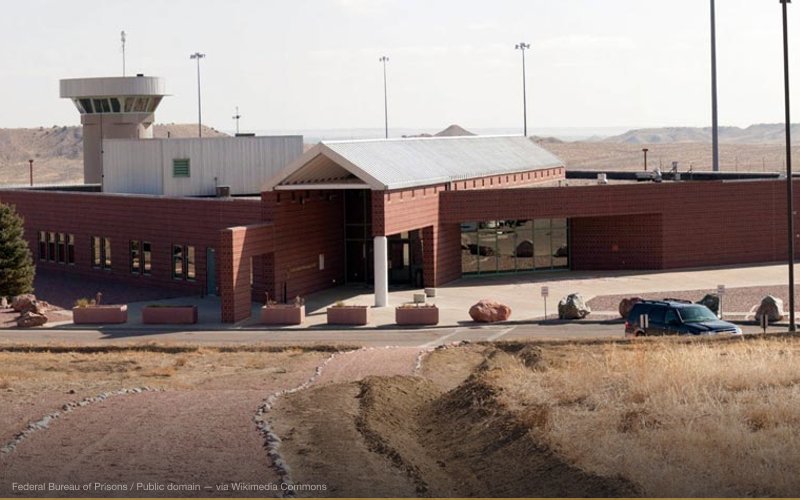
| Jun 5, 2023 | Robert Hanssen dies in federal prison (ADX Florence, Colorado) at age 79 |
Sources & Further Reading
- Wise, David. Spy: The Inside Story of How the FBI’s Robert Hanssen Betrayed America. Random House, 2002.
- Vise, David A. The Bureau and the Mole. Atlantic Monthly Press, 2002.
- US Department of Justice, Office of the Inspector General. “A Review of the FBI’s Performance in Deterring, Detecting, and Investigating the Espionage Activities of Robert Philip Hanssen.” August 2003.
- Cherkashin, Victor. Spy Handler: Memoir of a KGB Officer. Basic Books, 2005.
- Shannon, Elaine, and Ann Blackman. The Spy Next Door: The Extraordinary Secret Life of Robert Philip Hanssen. Little, Brown, 2002.
- O’Neill, Eric. Gray Day: My Undercover Mission to Expose America’s First Cyber Spy. Crown, 2019.
Related Theories
- Aldrich Ames — The CIA mole whose arrest initially masked Hanssen’s espionage
- Cambridge Five — The earlier British espionage ring that demonstrated the same pattern of institutional betrayal
- Deep State — The Hanssen case is sometimes cited as evidence that the intelligence community is fundamentally compromised
Frequently Asked Questions
How long did Robert Hanssen spy for Russia?
How many people died because of Hanssen's espionage?
How was Robert Hanssen finally caught?
What was Hanssen's sentence?

Infographic
Share this visual summary. Right-click to save.
