Russia Collusion as Deep State Hoax

Overview
The claim that the investigation into connections between the 2016 Trump campaign and Russia was a fabricated “hoax” or “witch hunt” orchestrated by the “deep state” became one of the most politically consequential conspiracy narratives of the twenty-first century. The theory, promoted most prominently by President Donald Trump himself, alleged that the FBI, CIA, Department of Justice, and Democratic Party officials conspired to manufacture the appearance of Trump-Russia collusion in order to undermine and eventually remove a duly elected president.
This theory is classified as mixed because subsequent investigations revealed that the truth contains elements that both support and undermine the narrative. The Mueller investigation (2017-2019) confirmed extensive Russian interference in the 2016 election but did not establish criminal conspiracy between the Trump campaign and Russia. The Durham investigation (2019-2023) found significant procedural failures in how the FBI opened and conducted its investigation and identified problems with the Steele dossier, but did not prove that the investigation was a coordinated political conspiracy. Meanwhile, the Inspector General found that while the investigation’s initiation met minimal legal thresholds, the subsequent FISA warrant applications contained significant errors and omissions.
The reality, as revealed by years of investigation, is more complicated than either “Trump colluded with Russia” or “the investigation was a deep state hoax” — but the complexity has not prevented either simplified narrative from dominating political discourse.
Origins & History
The origins of the Russia investigation lie in multiple convergent intelligence streams during the spring and summer of 2016. In April 2016, George Papadopoulos, a foreign policy adviser to the Trump campaign, was told by Maltese professor Joseph Mifsud that the Russians had “dirt” on Hillary Clinton in the form of thousands of emails. Papadopoulos later relayed this information to Australian diplomat Alexander Downer during a meeting at a London bar. When hacked Democratic emails began appearing on WikiLeaks, Australian intelligence informed the FBI of Downer’s conversation with Papadopoulos.
In July 2016, the FBI opened “Crossfire Hurricane,” a counterintelligence investigation into potential coordination between the Trump campaign and Russian interference efforts. The investigation focused initially on four individuals: Papadopoulos, campaign chairman Paul Manafort, adviser Carter Page, and national security adviser Michael Flynn.
Separately, in June 2016, the Democratic National Committee hired the cybersecurity firm CrowdStrike to investigate a breach of its computer systems. CrowdStrike attributed the hack to Russian intelligence (a finding later confirmed by the intelligence community). In April 2016, the Clinton campaign and DNC began funding opposition research on Trump through the law firm Perkins Coie, which hired Fusion GPS, which in turn hired former British intelligence officer Christopher Steele. Steele produced a series of intelligence reports (the “Steele dossier”) alleging extensive Trump-Russia coordination, including sensational claims about compromising material.
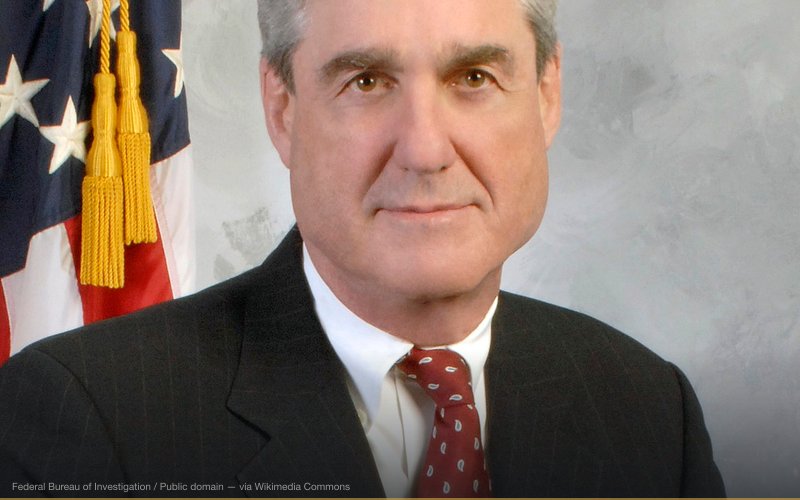
Trump and his allies began characterizing the investigation as a “witch hunt” almost immediately. After FBI Director James Comey was fired in May 2017, Deputy Attorney General Rod Rosenstein appointed Robert Mueller as Special Counsel to oversee the investigation. Trump’s public characterization of the probe as a politically motivated hoax intensified throughout Mueller’s investigation.
Key Claims
The “hoax” narrative claims:
- The FBI opened the Russia investigation without adequate predication, based on a political desire to damage Trump rather than genuine national security concerns
- The Steele dossier was a fabrication funded by the Clinton campaign and used to obtain FISA surveillance warrants against Trump associates
- FBI and DOJ officials, including Comey, Deputy Director Andrew McCabe, and agent Peter Strzok, were politically motivated actors working to undermine the Trump presidency
- The intelligence community assessment that Russia interfered to help Trump was politically influenced
- The Mueller investigation was designed to find collusion where none existed and to damage the Trump presidency
The “collusion” narrative claims:
- The Trump campaign actively coordinated with Russian intelligence to influence the 2016 election
- Trump obstructed justice to conceal this coordination
- The investigation was justified by genuine national security concerns
Evidence
Evidence supporting aspects of the “hoax” narrative:
The DOJ Inspector General (Horowitz Report, 2019) found 17 significant errors and omissions in the FBI’s FISA applications to surveil Carter Page. These included failure to disclose that Page had been a source for the CIA, failure to include exculpatory evidence, and reliance on the Steele dossier without adequate corroboration. An FBI lawyer, Kevin Clinesmith, was convicted of altering a document used in the FISA process.
The Durham investigation (Final Report, 2023) found that the FBI opened Crossfire Hurricane without any “verified intelligence or evidence” of Trump-Russia coordination. Durham concluded that the FBI displayed a “lack of analytical rigor” and exhibited “confirmation bias.” He found that Steele’s primary sub-source had provided information that was “rumor and speculation” but was treated by the FBI as reliable intelligence.
Text messages between FBI agent Peter Strzok and FBI lawyer Lisa Page, revealed in 2017, showed strong anti-Trump sentiments, including Strzok’s reference to an “insurance policy” in case Trump won. While the Inspector General found that these biases did not alter specific investigative decisions, they damaged the investigation’s credibility.
Evidence undermining the “hoax” narrative:
The Mueller investigation resulted in 34 indictments, seven guilty pleas, and one trial conviction. While none established criminal conspiracy between the Trump campaign and Russia, the investigation documented extensive contacts between Trump associates and Russian nationals, including the Trump Tower meeting in June 2016 and Manafort’s sharing of internal polling data with Konstantin Kilimnik (assessed by the Senate Intelligence Committee as a Russian intelligence officer).
The bipartisan Senate Intelligence Committee’s report (2020) confirmed extensive Russian interference in the 2016 election and documented contacts between the Trump campaign and Russian-linked individuals. The committee, chaired by Republican Marco Rubio, stated that Russia “engaged in an aggressive, multifaceted effort to influence, or attempt to influence, the outcome of the 2016 presidential election.”
Mueller documented ten episodes of potential obstruction of justice by Trump but declined to reach a prosecutorial conclusion, citing DOJ policy against indicting a sitting president. The episodes included Trump’s firing of Comey, his attempts to fire Mueller, his efforts to limit the investigation’s scope, and his encouragement of witnesses not to cooperate.
Debunking / Verification
This theory is classified as mixed because:
-
The Steele dossier was unreliable: Durham and Horowitz both found that the dossier’s claims were inadequately vetted and that its sourcing was far weaker than represented. This supports the “hoax” narrative’s critique of the investigation’s foundation.
-
FBI procedural failures were real: The 17 FISA errors, the Clinesmith document alteration, and the inadequate predication identified by Durham represent genuine problems with how the investigation was conducted.
-
Russian interference was real: Both the Mueller investigation and the bipartisan Senate Intelligence Committee confirmed extensive Russian interference, undermining the claim that the entire Russia narrative was fabricated.
-
The “deep state conspiracy” was not proven: Durham’s investigation, despite lasting four years, secured only one conviction (Clinesmith’s guilty plea) and two acquittals at trial. He did not prove that the investigation was a coordinated political conspiracy rather than a product of institutional failures and confirmation bias.
-
Extensive Trump-Russia contacts were documented: While criminal conspiracy was not established, the volume of contacts between Trump associates and Russian nationals was factual, not fabricated.
Cultural Impact
The Russia investigation and the competing narratives around it profoundly shaped American political culture. The episode deepened partisan divisions to a degree that many observers described as unprecedented in modern American history. Supporters and opponents of Trump effectively inhabited different factual realities regarding the investigation.
The “witch hunt” narrative became a central element of Trump’s political identity and messaging, used to frame all investigations and legal proceedings against him as politically motivated persecution. This framing proved remarkably durable, extending to subsequent investigations including the January 6 Committee, the Manhattan district attorney’s prosecution, and the federal classified documents case.
The episode also damaged institutional credibility. The FBI’s reputation suffered regardless of which narrative one accepted — either for conducting a politically motivated investigation or for the procedural failures documented by the Inspector General and Durham. Public trust in the intelligence community and Department of Justice declined across the political spectrum.
The Russia investigation contributed to the mainstreaming of conspiracy thinking in American politics, normalizing the idea that major government institutions operate as political weapons against elected officials. Whether this concern is justified or paranoid depends on one’s interpretation of the evidence — which is precisely why the theory is classified as mixed.
Timeline
- April 2016 — Papadopoulos told by Joseph Mifsud that Russians have Clinton emails
- June 2016 — CrowdStrike attributes DNC hack to Russian intelligence; Trump Tower meeting occurs
- July 2016 — FBI opens Crossfire Hurricane investigation
- October 2016 — FISA warrant issued for surveillance of Carter Page
- January 2017 — Intelligence community publishes assessment of Russian election interference
- February 2017 — Michael Flynn resigns as National Security Advisor after misleading Vice President about contacts with Russian ambassador
- May 2017 — Trump fires FBI Director James Comey; Robert Mueller appointed Special Counsel
- 2017-2019 — Mueller investigation produces 34 indictments and multiple guilty pleas
- April 2019 — Mueller Report released; no criminal conspiracy found; ten episodes of potential obstruction documented
- December 2019 — DOJ Inspector General Horowitz Report identifies 17 FISA errors
- 2019-2023 — Durham Special Counsel investigation
- August 2020 — Kevin Clinesmith pleads guilty to altering document in FISA process
- May 2023 — Durham Report released; finds FBI lacked adequate basis for opening investigation
- 2020 — Bipartisan Senate Intelligence Committee report confirms Russian interference and extensive Trump-Russia contacts
Sources & Further Reading
- Mueller, Robert S. III. Report on the Investigation into Russian Interference in the 2016 Presidential Election (Mueller Report). U.S. Department of Justice, 2019.
- Durham, John H. Report on Matters Related to Intelligence Activities and Investigations Arising Out of the 2016 Presidential Campaigns. U.S. Department of Justice, 2023.
- Horowitz, Michael E. Review of Four FISA Applications and Other Aspects of the FBI’s Crossfire Hurricane Investigation. DOJ Office of the Inspector General, 2019.
- U.S. Senate Select Committee on Intelligence. Report on Russian Active Measures Campaigns and Interference in the 2016 U.S. Election, Volumes 1-5, 2020.
- Harding, Luke. Collusion: Secret Meetings, Dirty Money, and How Russia Helped Donald Trump Win. Vintage, 2017.
- Lee Smith. The Plot Against the President. Center Street, 2019. [Advocates the “hoax” interpretation]
Frequently Asked Questions
Was the Russia investigation a hoax?
What did the Steele dossier claim and was it accurate?
What did the Durham investigation conclude?
Infographic
Share this visual summary. Right-click to save.
