Soviet KGB Active Measures in the West
Overview
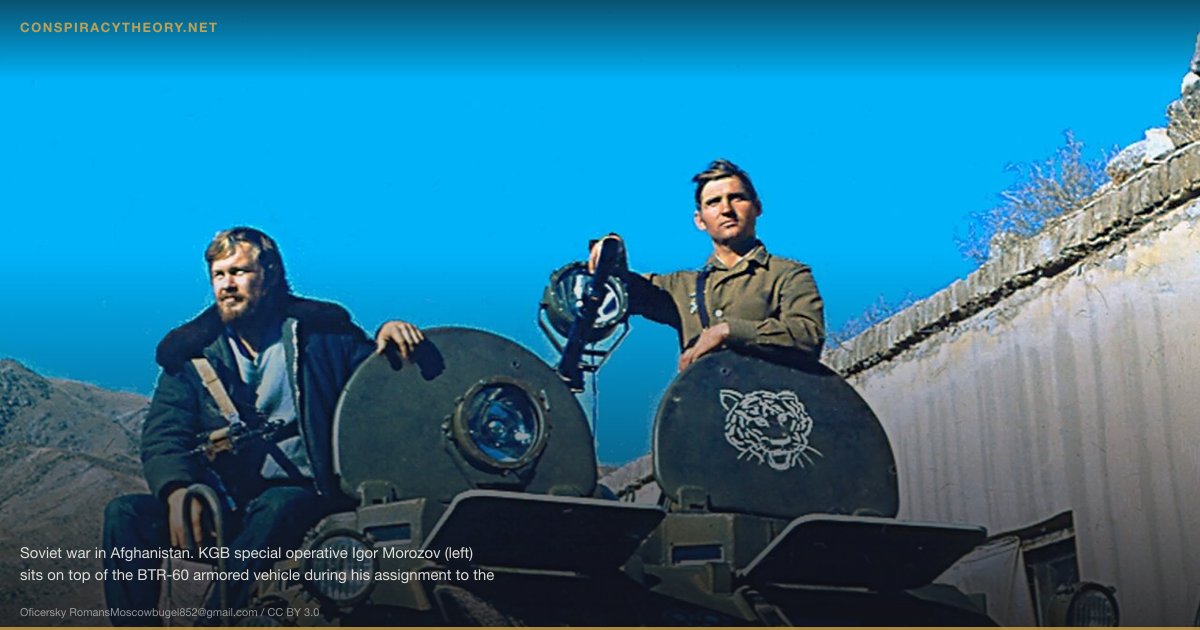
During the Cold War, a good portion of what Americans feared about Soviet espionage was real — and some of it was considerably worse than they imagined. The KGB did not merely steal secrets. It ran a vast, systematic, and remarkably creative apparatus for manipulating Western societies from the inside: planting forged documents in newspapers, funding political parties and activist groups, recruiting journalists and academics as agents of influence, and manufacturing conspiracy theories that persist to this day.
These operations had a name: aktivnye meropriyatiya — active measures. The term encompassed everything the KGB did to influence foreign societies short of armed conflict. At its peak, the active measures apparatus involved thousands of officers, consumed a significant portion of the KGB’s budget, and operated on every continent. Its crowning achievements included convincing much of the developing world that the AIDS virus was an American bioweapon, forging documents that strained NATO alliances, and cultivating networks of sympathetic Westerners who unknowingly amplified Soviet narratives in their own societies.
This is not a conspiracy theory. It is a confirmed, documented program, validated by defectors, archival evidence, and the Soviet/Russian government’s own admissions. Understanding it is essential not only as Cold War history but as context for modern information warfare.
Origins & History
The Cheka and Early Soviet Disinformation
Soviet active measures did not begin with the KGB. They began with the revolution itself. The Cheka (the original Soviet secret police, established in 1917) and its successors — the GPU, OGPU, NKVD, and finally the KGB — all conducted influence operations as a core function.
One of the earliest and most sophisticated was the “Trust” operation of the 1920s. Soviet intelligence created a fictitious monarchist organization that attracted genuine anti-Bolshevik Russian emigres and their Western intelligence contacts. For years, the Trust fed disinformation to Western agencies and lured anti-Soviet operatives into traps. The operation demonstrated a principle that would define Soviet active measures for decades: the most effective disinformation does not create something from nothing but infiltrates and redirects existing networks and beliefs.
The KGB’s Service A
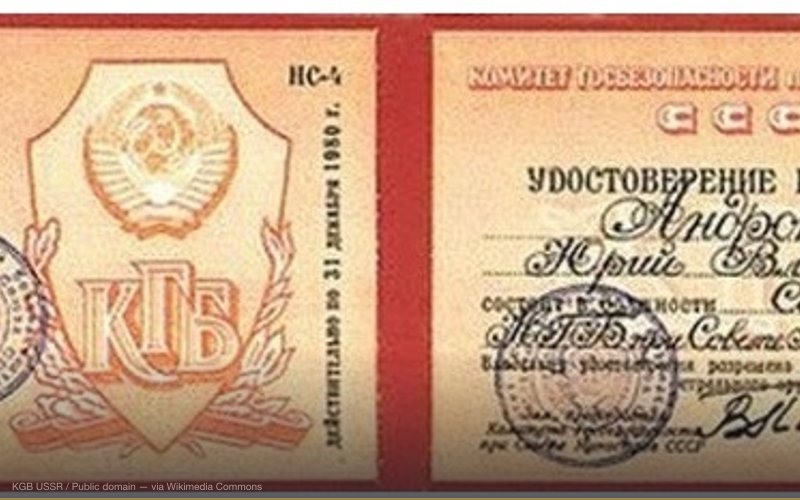
When the KGB was established in 1954, active measures became institutionalized on an industrial scale. Service A (the “A” stood for aktivnye) was the KGB’s dedicated disinformation department, housed within the First Chief Directorate (foreign intelligence). Service A employed officers who specialized in forgery, media manipulation, and the creation and management of front organizations.
At its peak, Service A reportedly ran several thousand operations simultaneously across dozens of countries. Yuri Andropov, who led the KGB from 1967 to 1982 (before becoming Soviet premier), was a particular enthusiast of active measures and significantly expanded the program’s scope and resources.
The Scale of Operations
Former KGB Major General Oleg Kalugin, who defected to the United States, described active measures as “the heart and soul of Soviet intelligence.” He estimated that active measures consumed more KGB resources than traditional espionage (the stealing of secrets) and conventional counterintelligence combined.
The operations took many forms:
Forgeries: Service A produced forged documents — fake CIA cables, fabricated U.S. government memoranda, spurious military plans — and planted them with journalists, politicians, and foreign intelligence services. The goal was to create specific diplomatic incidents or broader distrust.
Front organizations: The KGB established or co-opted hundreds of organizations worldwide that appeared to be independent civic groups but were secretly directed and funded by Moscow. These included peace movements, anti-nuclear groups, academic associations, and cultural organizations. The World Peace Council, founded in 1950, was the most prominent Soviet front organization, operating in dozens of countries while presenting itself as an independent peace movement.
Agent of influence recruitment: The KGB cultivated relationships with Western politicians, journalists, academics, and businesspeople who could be induced — through ideology, financial incentives, blackmail, or simple flattery — to promote narratives favorable to the Soviet Union. These individuals were distinct from traditional spies; they did not steal secrets but rather shaped public discourse.
Amplification networks: Planted stories would follow a carefully designed route: first appearing in an obscure, often developing-world publication, then being picked up by Soviet media, then cited by Western journalists unaware of the original plant. This “circular reporting” gave fabricated stories the appearance of independent confirmation.
Key Claims
While the program itself is confirmed, specific active measures operations include:
- Operation INFEKTION (1983-1987): The KGB planted the story that the AIDS virus was created by the U.S. military at Fort Detrick, Maryland. The story first appeared in the Indian newspaper Patriot in July 1983, was amplified through Soviet media, and by 1987 had been published in major newspapers in over 80 countries
- Forgery campaigns targeting NATO: The KGB produced forged U.S. military documents suggesting American plans for nuclear first strikes against Soviet allies, designed to weaken European support for NATO
- Funding of Western peace movements: The KGB funneled millions of dollars to anti-nuclear and peace organizations in Western Europe, particularly during the debates over Pershing II and cruise missile deployment in the early 1980s
- Recruitment of agents of influence in Western media, academia, and government, including journalists at major newspapers who published stories favorable to Soviet positions without disclosing their relationships
- Anti-American propaganda in the developing world: Campaigns to portray the United States as a racist, imperialist power, often by amplifying real American failures (segregation, Vietnam) while fabricating additional atrocities
- Exploitation of the JFK assassination: The KGB promoted theories that the CIA or far-right groups killed Kennedy, amplifying existing American distrust of institutions
Evidence
The Mitrokhin Archive
The single most important source on KGB active measures is the Mitrokhin Archive. Vassili Mitrokhin served as a senior archivist in the KGB’s First Chief Directorate from 1972 to 1984, during which time he had access to operational files spanning the entire history of Soviet foreign intelligence. Over the course of his career, Mitrokhin secretly copied thousands of documents by hand, smuggling his notes home and hiding them beneath the floor of his dacha.
When the Soviet Union collapsed, Mitrokhin approached British intelligence and defected to the United Kingdom in 1992, bringing his archive with him. The material was analyzed by Cambridge historian Christopher Andrew and published in two volumes: The Sword and the Shield (1999) and The World Was Going Our Way (2005).
The Mitrokhin Archive provided specific operational details for hundreds of active measures campaigns, including the names of agents, the content of forged documents, the funding of front organizations, and the mechanisms by which disinformation was planted and amplified. Its authenticity has been validated by cross-referencing with other intelligence sources and by the arrests and exposures that followed its publication.
Defector Testimony
Multiple KGB defectors have provided corroborating accounts:
- Oleg Kalugin (KGB Major General, defected 1995) described active measures operations in detail and estimated their scale and budget
- Stanislav Levchenko (KGB officer in Japan, defected 1979) provided specific details about active measures operations in Japanese media, including the identification of agents of influence in major Japanese newspapers
- Ladislav Bittman (Czech StB officer, defected 1968) described the satellite intelligence services’ active measures operations, which were coordinated with and directed by the KGB
- Ion Mihai Pacepa (Romanian intelligence chief, defected 1978) described Eastern Bloc disinformation operations in extensive detail
Soviet/Russian Admissions
Under Gorbachev’s glasnost policy, Soviet officials acknowledged several active measures operations. The AIDS disinformation campaign (Operation INFEKTION) was specifically repudiated by Soviet officials in 1987, following pressure from the U.S. government. Izvestia published a story acknowledging that the AIDS bioweapon claim was a fabrication.
Academic Research
Historians and intelligence scholars have produced a substantial body of peer-reviewed research documenting Soviet active measures. Thomas Boghardt’s research on Operation INFEKTION, Christopher Andrew’s multi-volume history of the KGB, and the CIA’s own declassified assessments of Soviet active measures provide extensive documentation.
Cultural Impact
The legacy of Soviet active measures extends far beyond the Cold War. Several impacts are particularly significant:
AIDS conspiracy theories: Operation INFEKTION was so successful that the conspiracy theory it created — that AIDS was developed as an American bioweapon — persists decades after the Soviet Union’s collapse. Surveys consistently find significant percentages of populations in Africa and other developing regions who believe this claim. The theory has contributed to AIDS denialism and resistance to treatment programs, with real public health consequences.
Template for modern information warfare: Russia’s contemporary information operations — the troll factories, bot networks, and social media manipulation documented in the 2016 U.S. election and elsewhere — are direct descendants of Soviet active measures, adapted for digital platforms. Former KGB officers have explicitly described the continuity. The Internet Research Agency in St. Petersburg employed techniques that would have been instantly recognizable to Service A veterans.
The “whataboutism” legacy: Soviet active measures heavily relied on “whataboutism” — responding to criticism of Soviet behavior by pointing to (real or fabricated) American misdeeds. This rhetorical technique has persisted in Russian state media and has been adopted more broadly in global political discourse.
Distrust of institutions: By spending decades amplifying real Western failures and fabricating additional ones, Soviet active measures contributed to a generalized distrust of institutions in Western societies. The irony is that many Americans who distrust their own government are, in part, responding to narratives that were deliberately planted by a foreign government.
Intelligence community awareness: The Cold War active measures experience has heavily influenced how Western intelligence agencies assess and respond to modern disinformation campaigns. The U.S. State Department’s Global Engagement Center and similar organizations in allied countries were established specifically to counter state-sponsored disinformation.
In Popular Culture
- “The Sword and the Shield” by Christopher Andrew and Vassili Mitrokhin (1999) — The foundational work on Soviet intelligence operations based on the Mitrokhin Archive
- “The Americans” (FX, 2013-2018) — Television series about KGB illegals operating in the United States; while focused on espionage rather than active measures, it accurately depicts the broader KGB operational culture
- “Active Measures” (2018) — Documentary examining the continuity between Soviet-era KGB operations and modern Russian information warfare
- “Disinformation” by Ion Mihai Pacepa and Ronald Rychlak (2013) — Former Romanian intelligence chief’s account of Eastern Bloc disinformation campaigns
- “The Chekist” (1992) — Russian film depicting the brutality of early Soviet intelligence operations
- Tom Clancy novels — While focused on espionage and military scenarios, several Clancy novels incorporate active measures operations
Key Figures
- Yuri Andropov — KGB Chairman (1967-1982) who dramatically expanded the active measures program; later General Secretary of the Communist Party
- Vassili Mitrokhin — KGB archivist whose smuggled notes provided unprecedented insight into Soviet operations; died in 2004
- Christopher Andrew — Cambridge University historian who co-authored the Mitrokhin Archive publications and wrote the authorized history of MI5
- Oleg Kalugin — KGB Major General and highest-ranking KGB officer to defect; provided detailed public accounts of active measures
- Stanislav Levchenko — KGB officer who exposed active measures operations in Japan
- Ladislav Bittman — Czech intelligence officer whose defection revealed Eastern Bloc disinformation techniques
- Yevgeny Primakov — Head of Service A in the 1970s; later became Russian Foreign Minister and Prime Minister
Timeline
| Date | Event |
|---|---|
| 1917 | Cheka established; Soviet intelligence begins influence operations |
| 1921-1926 | ”Trust” operation deceives Western intelligence and Russian emigres |
| 1947 | Cominform established to coordinate international Communist propaganda |
| 1950 | World Peace Council created as primary Soviet front organization |
| 1954 | KGB established; Service A formalized within First Chief Directorate |
| 1967 | Yuri Andropov becomes KGB Chairman; active measures expand dramatically |
| 1971 | KGB launches campaign to undermine NATO’s credibility in Western Europe |
| 1983 | Operation INFEKTION begins: AIDS bioweapon story planted in Indian newspaper |
| 1984 | Vassili Mitrokhin completes his decades-long copying of KGB files |
| 1985 | U.S. State Department publishes first “Active Measures” report documenting Soviet operations |
| 1987 | Soviet government acknowledges AIDS story was fabricated; repudiates under Gorbachev |
| 1991 | Soviet Union dissolves |
| 1992 | Vassili Mitrokhin defects to the United Kingdom with his archive |
| 1999 | The Sword and the Shield published, revealing Mitrokhin Archive contents |
| 2016 | Russian interference in U.S. election demonstrates continuity of active measures techniques |
| 2018 | Mueller investigation documents modern Russian information operations |
Sources & Further Reading
- Andrew, Christopher and Vassili Mitrokhin. The Sword and the Shield: The Mitrokhin Archive and the Secret History of the KGB. Basic Books, 1999.
- Andrew, Christopher and Vassili Mitrokhin. The World Was Going Our Way: The KGB and the Battle for the Third World. Basic Books, 2005.
- Boghardt, Thomas. “Soviet Bloc Intelligence and Its AIDS Disinformation Campaign.” Studies in Intelligence 53:4 (2009).
- Kalugin, Oleg. The First Directorate. St. Martin’s Press, 1994.
- Levchenko, Stanislav. On the Wrong Side: My Life in the KGB. Pergamon-Brassey’s, 1988.
- Pacepa, Ion Mihai and Ronald Rychlak. Disinformation. WND Books, 2013.
- U.S. Department of State. “Soviet Influence Activities: A Report on Active Measures and Propaganda.” 1987.
- Rid, Thomas. Active Measures: The Secret History of Disinformation and Political Warfare. Farrar, Straus and Giroux, 2020.
Related Theories
- Operation Mockingbird — The alleged CIA counterpart to Soviet media manipulation
- Russian Disinformation — The modern continuation of Soviet-era active measures
- CIA Drug Trafficking — The KGB actively amplified claims about CIA involvement in drug trade as part of anti-American active measures
Frequently Asked Questions
What were Soviet 'active measures'?
What is the Mitrokhin Archive?
Did the KGB really create the conspiracy theory that AIDS was a US bioweapon?
How do Soviet active measures relate to modern Russian disinformation?
Infographic
Share this visual summary. Right-click to save.