Tax Protester Conspiracy Theories
Overview
Every year, a small but persistent number of Americans convince themselves they’ve found the secret loophole — the one weird trick the IRS doesn’t want you to know. The income tax is actually voluntary. Wages aren’t legally “income.” The 16th Amendment was never properly ratified. You’re not a “taxpayer” because you never consented to be one. If you just file the right form, write the right magic words, cite the right obscure statute, the entire federal tax system will crumble and you’ll get all your money back.
Every single one of these arguments is wrong. Not “debatable,” not “legally gray,” not “technically correct but practically unenforceable.” Wrong. Rejected by every federal court that has considered them, in decisions that range from patient explanation to open mockery. The IRS maintains a formal list of these arguments and classifies them all as “frivolous” — a designation that comes with a $5,000 penalty for anyone who files a tax return based on them.
And yet people keep trying. Some lose their homes. Some go to prison. A few have died. The tax protester movement is one of the most thoroughly debunked conspiracy theories in American life, and also one of the most durable, because it promises something that no amount of legal reality can extinguish: the dream of not paying taxes.
Origins & History
The Roots: Taxation and American Identity
Americans have had a complicated relationship with taxation since before there was an America. The Revolution was, in significant part, a tax revolt — “no taxation without representation” remains one of the country’s foundational slogans. This cultural DNA means that anti-tax sentiment in the United States carries a patriotic valence that it doesn’t in most other democracies. Opposing taxes doesn’t just save you money; it makes you a freedom fighter.
The modern federal income tax was established by the Revenue Act of 1913, following the ratification of the 16th Amendment. Before that, the government had imposed a temporary income tax during the Civil War (1861-1872) and attempted a permanent one in 1894, which the Supreme Court struck down in Pollock v. Farmers’ Loan & Trust Co. (1895) on the grounds that it was a “direct tax” that had to be apportioned among the states by population. The 16th Amendment was specifically designed to overrule Pollock and settle the constitutional question.
For decades, the income tax was accepted, if not beloved. It funded two world wars, the New Deal, and the postwar boom. The anti-tax movement as a legal-conspiratorial phenomenon didn’t really emerge until the late 1950s and early 1960s.
The Pioneers
Vivien Kellems (1913-1975) was one of the earliest prominent tax resisters. A Connecticut industrialist, she refused to withhold taxes from her employees’ wages in 1948, arguing that the withholding requirement was unconstitutional. She lost her legal battles but wrote a book, Toil, Taxes, and Trouble (1952), that became a foundational text of the anti-tax movement. Kellems was not a conspiracy theorist in the modern sense — she was a businesswoman with a political objection to tax policy. But her arguments provided rhetorical raw material for later, more extreme movements.
Irwin Schiff (1928-2015) is the central figure in tax protester history. A former accountant and Army veteran, Schiff began arguing in the 1970s that the income tax was voluntary, based on his reading of the Internal Revenue Code’s language. He wrote multiple books — The Federal Mafia: How the Government Illegally Imposes and Unlawfully Collects Income Taxes (1992) was the most influential — and appeared on talk shows, including multiple segments on Fox News and CNN.
Schiff’s core argument was deceptively simple: the Internal Revenue Code uses the word “voluntary” in describing the tax system (specifically, the IRS uses “voluntary compliance” to mean that taxpayers calculate and report their own taxes, as opposed to the government calculating them). Schiff interpreted “voluntary” literally — as in, you can choose not to participate. This is a textbook example of equivocation: using the same word in two different senses to reach a desired conclusion.
Schiff was convicted of tax evasion three times — in 1985, 1991, and 2005. His final sentence was 13 years and 7 months. He died in federal prison in 2015, still maintaining that the income tax was illegal. His son, Peter Schiff, a financial commentator, has publicly distanced himself from his father’s tax positions while describing his treatment by the justice system as excessive.
William Benson produced the most elaborate version of the ratification argument. His two-volume book, The Law That Never Was (1985), claimed that the 16th Amendment was never legally ratified because various state legislatures made minor errors — typos, capitalization differences, punctuation changes — in their ratification documents. Benson traveled to all 48 states that existed in 1913 and examined their records, compiling a list of discrepancies.
Federal courts dismantled this argument comprehensively. In United States v. Thomas (1986), the Seventh Circuit held that the 16th Amendment had been properly ratified, noting that minor textual variations are legally inconsequential when the substance is clear. The court pointed out that if Benson’s standard were applied consistently, virtually no constitutional amendment — including the Bill of Rights — would have been validly ratified, since similar minor discrepancies exist throughout the ratification records. Benson was permanently enjoined from selling his book in 2008 and sentenced to prison for tax-related crimes.
Escalation and Violence
The tax protester movement took a darker turn in the 1970s and 1980s with its intersection with the Posse Comitatus movement and early sovereign citizen ideology. These movements combined anti-tax arguments with broader anti-government conspiracy theories, including claims about secret government debt slavery, hidden bank accounts, and the illegitimacy of the federal government since the 14th Amendment or the establishment of the Federal Reserve.
Gordon Kahl became the movement’s martyr. A North Dakota farmer and Posse Comitatus member, Kahl stopped filing tax returns in 1973 and was convicted of tax evasion in 1977. He violated his probation, and in February 1983, when U.S. Marshals attempted to arrest him at a roadblock, a shootout erupted. Kahl killed two marshals and wounded three others. He fled and was killed in a standoff in Arkansas four months later.
The Kahl case illustrated something that the more academic tax protesters preferred not to acknowledge: when you convince people that the government is illegitimate and that its agents are criminals, some of those people will act on that belief with violence.
Key Claims
The IRS maintains a comprehensive list of frivolous tax arguments. The major categories include:
Constitutional Arguments
- The 16th Amendment was never properly ratified (the Benson argument)
- The income tax violates the 5th Amendment right against self-incrimination (rejected; filing a return does not compel testimony about criminal activity)
- The income tax violates the 13th Amendment prohibition on involuntary servitude (rejected; paying taxes is not slavery)
- The income tax is a “direct tax” that must be apportioned by population, even after the 16th Amendment (rejected; the entire purpose of the 16th Amendment was to eliminate this requirement)
Definitional Arguments
- Wages and salaries are not “income” because they are an equal exchange of labor for compensation, resulting in no net gain (rejected; the IRC explicitly includes compensation for services in gross income)
- Only corporate profits, not individual earnings, are subject to income tax (rejected; the 16th Amendment says “incomes, from whatever source derived”)
- “Income” must be defined according to its meaning in 1913, which excludes wages (rejected; courts have found no support for this interpretation in any historical source)
- Federal Reserve Notes are not legal tender or are worthless, so income denominated in them is zero (rejected; this is not how currency works)
Jurisdictional Arguments
- The income tax applies only in Washington, D.C., and U.S. territories, not within the 50 states (rejected; 26 U.S.C. Section 7701 explicitly defines “United States” to include the 50 states)
- Individual citizens are not “taxpayers” or “persons” within the meaning of the IRC unless they voluntarily consent (rejected; the IRC defines these terms to include all individuals)
- The IRS has no legal authority to collect taxes because it was never formally created by an act of Congress (rejected; the IRS was created by the Revenue Reorganization Plan No. 1 of 1952, authorized by Congress)
Sovereign Citizen / UCC Arguments
- Filing a “UCC-1 Financing Statement” exempts you from taxation (rejected; the Uniform Commercial Code has nothing to do with federal taxation)
- The United States is a corporation, not a sovereign nation, and citizens are not bound by its “corporate policies” (rejected; this is not how any of this works)
- Capitalizing your name on a legal document creates a separate legal entity, a “straw man,” and only the straw man owes taxes (rejected; courts have described this argument as “gibberish” and “utterly without merit”)
Evidence
The Legal Record
The evidence on tax protester arguments is not ambiguous. It is perhaps the most one-sided legal record in American jurisprudence. Not a single tax protester argument has ever prevailed in any federal court. The track record includes:
Supreme Court: In Cheek v. United States (1991), the Court acknowledged that some people genuinely believe the income tax is unconstitutional, but held that a good-faith belief in the illegality of the tax — no matter how sincere — is not a defense against willful failure to file if the taxpayer has been informed that the arguments are frivolous. The Court explicitly declined to validate any tax protester argument.
Federal Courts of Appeals: Every circuit has rejected tax protester arguments multiple times, often with increasingly frustrated language. The Seventh Circuit’s Judge Frank Easterbrook wrote: “We tax all combatants in the war against the United States; the plaintiffs should not feel singled out.” The Ninth Circuit has published opinions containing phrases like “we perceive no need to refute these arguments with somber reasoning and copious citation of precedent.”
Tax Court: The U.S. Tax Court hears more tax protester arguments than any other forum and has rejected every single one, in thousands of cases spanning decades.
The Body Count
The human cost of tax protester theories is substantial and well-documented:
- Irwin Schiff: Three convictions, died in federal prison (2015)
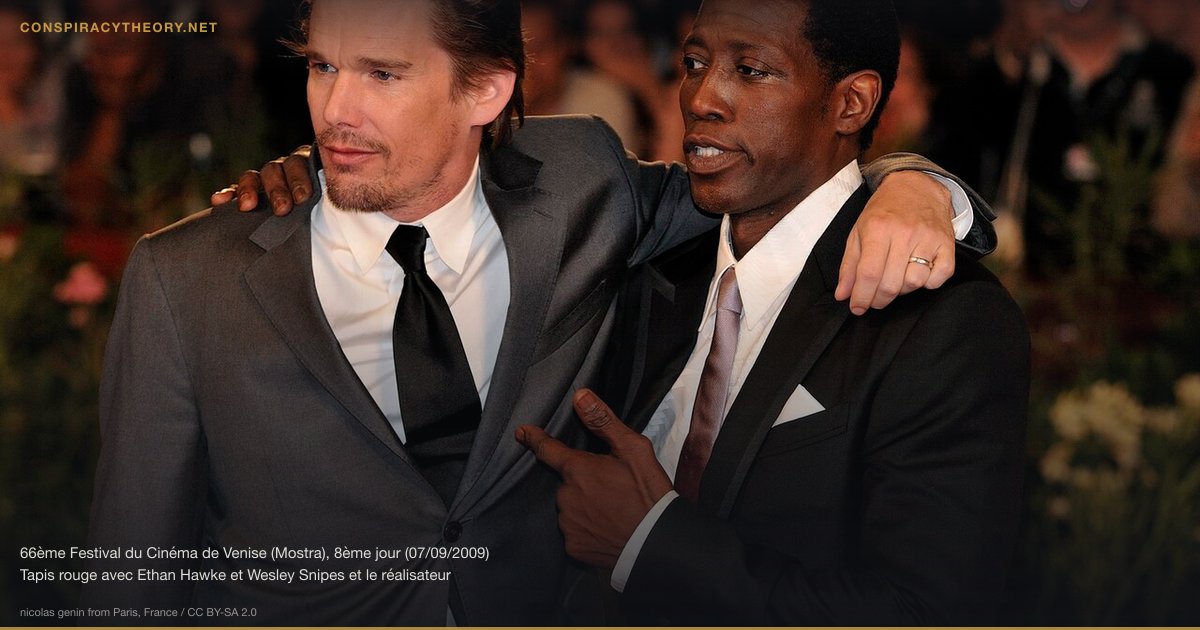
- Wesley Snipes: Three years in federal prison for willful failure to file (2010-2013), influenced by tax advisor Eddie Ray Kahn, who received a ten-year sentence
- Peter Hendrickson: Two federal prison sentences for filing false tax returns based on his “wages aren’t income” theory
- Gordon Kahl: Killed two U.S. Marshals, killed in subsequent standoff (1983)
- William Benson: Federal prison, permanently enjoined from selling his book
- Eddie Ray Kahn (Wesley Snipes’s tax advisor): Ten years in federal prison
- Lindsey Springer: Ten years in federal prison for tax fraud
- Thousands of ordinary people who followed tax protester advice and ended up owing back taxes, penalties, interest, and in some cases serving prison sentences
The IRS estimates that frivolous return penalties — at $5,000 per filing — are assessed against thousands of taxpayers annually.
Why the Arguments Are Wrong (Simply)
At the most fundamental level, tax protester arguments fail because they rest on a misunderstanding of how law works. Legal interpretation is not a treasure hunt where the person who finds the cleverest reading of a particular word wins. Courts interpret statutes based on legislative intent, historical context, precedent, and the overall structure of the law — not on isolated words stripped of context.
When the IRC says the tax system is “voluntary,” it means you calculate your own taxes (as opposed to the government calculating them for you, as some countries do). It does not mean participation is optional. When the 16th Amendment was ratified with minor typographical variations across states, those variations did not change the meaning or invalidate the ratification. When the law says “income,” it means what the word has meant in tax law for over a century, not what a creative reader would like it to mean.
Cultural Impact
The Sovereign Citizen Movement
Tax protester theories are a core component of the broader sovereign citizen movement, which holds that individuals can opt out of government jurisdiction through specific legal declarations. The sovereign citizen movement takes the tax protester framework — the government is illegitimate, its laws are actually contracts you can decline — and extends it to all areas of law, including traffic stops, criminal charges, and property rights.
This connection has had tragic consequences. The FBI classifies sovereign citizens as a domestic terrorism threat. Multiple law enforcement officers have been killed by sovereign citizens during routine traffic stops and tax-related encounters. The 2010 West Memphis shootings, in which sovereign citizens Jerry and Joseph Kane killed two police officers, are among the most notorious incidents.
The Internet Era
The internet transformed the tax protester movement. Before the web, aspiring tax protesters had to buy Irwin Schiff’s books or attend seminars. After the web, free advice on how to avoid paying taxes flooded forums, YouTube channels, and social media. The quality of this advice ranged from the merely wrong to the catastrophically incorrect.
YouTube tax protester videos — promising to reveal the “secret” that the IRS doesn’t want you to know — have racked up millions of views. Many of them are uploaded by people who are currently serving or have already served prison sentences for tax evasion, a fact that rarely accompanies the videos.
The Internet also gave rise to commercial tax protester operations — companies that charge fees (sometimes thousands of dollars) to prepare and file frivolous returns on behalf of clients. These operations make money whether or not the IRS accepts the returns (it doesn’t). Several operators have been convicted of fraud.
Celebrity Cases
Wesley Snipes’s 2008 conviction was the highest-profile tax protester case in modern history. The actor, famous for the Blade franchise, was influenced by tax advisor Eddie Ray Kahn, who convinced Snipes that he did not owe federal income taxes. Snipes failed to file returns for six years and attempted to claim a $7 million refund based on frivolous arguments. He was convicted of three misdemeanor counts of willful failure to file and served three years in federal prison (2010-2013). Kahn received a longer sentence — ten years.
The Snipes case demonstrated that celebrity and wealth offer no protection from the consequences of tax protester theories. If anything, they increase the likelihood of prosecution, because the IRS uses high-profile cases as deterrent examples.
The Psychology of the True Believer
What makes the tax protester movement psychologically fascinating is its resilience in the face of uniform failure. No one has ever successfully used these arguments. Every prominent proponent has been convicted. The legal record is unbroken. And yet new believers emerge every year.
This resilience suggests that tax protester theories serve emotional and identity needs beyond their legal claims. For some adherents, the theory provides a sense of possessing secret knowledge — the same gnostic appeal found in many conspiracy theories. For others, it channels genuine economic anxiety and resentment of a tax system that feels unfair (a feeling that is not entirely unreasonable, even if the proposed solution is entirely wrong). For some, it’s connected to a broader anti-government identity that defines itself through opposition to federal authority.
The parallel to other conspiracy theories is striking: like Flat Earthers who ignore the curvature experiments and sovereign citizens who ignore the courtroom failures, tax protesters demonstrate that belief systems maintained by community identity and emotional investment are largely immune to empirical refutation.
In Popular Culture
- We the People: An All American Tax Comedy — documentary about Irwin Schiff’s movement
- Wesley Snipes’s conviction became a cautionary tale referenced in tax law courses and popular media
- Schitt’s Creek — the premise (a wealthy family loses everything to back taxes) plays on tax anxiety without directly engaging protester theories
- Tax protester arguments are a staple of sovereign citizen videos that circulate on YouTube and TikTok, often in the context of courtroom confrontations
- John Oliver’s Last Week Tonight has covered both tax protester and sovereign citizen movements
- The IRS’s annual “Dirty Dozen” tax scams list regularly includes frivolous tax arguments
Timeline
| Date | Event |
|---|---|
| 1895 | Pollock v. Farmers’ Loan & Trust Co. — Supreme Court strikes down income tax as unapportioned direct tax |
| 1909 | 16th Amendment proposed by Congress |
| 1913 | 16th Amendment ratified; modern federal income tax begins |
| 1948 | Vivien Kellems refuses to withhold employee taxes; loses legal challenge |
| 1952 | Kellems publishes Toil, Taxes, and Trouble |
| 1970s | Irwin Schiff begins promoting “income tax is voluntary” argument |
| 1977 | Gordon Kahl convicted of tax evasion |
| 1983 | Kahl kills two U.S. Marshals; is killed in subsequent standoff |
| 1985 | William Benson publishes The Law That Never Was |
| 1985 | Irwin Schiff’s first tax evasion conviction |
| 1986 | United States v. Thomas — Seventh Circuit rejects 16th Amendment ratification argument |
| 1991 | Cheek v. United States — Supreme Court addresses good-faith tax protester beliefs |
| 1992 | Schiff publishes The Federal Mafia |
| 2005 | Schiff convicted a third time; sentenced to 13+ years |
| 2008 | Wesley Snipes convicted of willful failure to file |
| 2008 | William Benson permanently enjoined from selling The Law That Never Was |
| 2015 | Irwin Schiff dies in federal prison |
| 2020s | Tax protester arguments continue circulating online, especially through sovereign citizen and social media channels |
Sources & Further Reading
- Internal Revenue Service. “The Truth About Frivolous Tax Arguments.” IRS Publication, updated annually. irs.gov
- Caron, Paul L. “Tax Myopia, or Mamas Don’t Let Your Babies Grow Up to Be Tax Lawyers.” Virginia Tax Review 13 (1994): 517.
- Danforth, John C. “The Tax Protester Movement.” Missouri Law Review 45, no. 1 (1980): 1-20.
- Mastracci, Davide. “The Sovereign Citizen Movement in the United States.” Council on Foreign Relations, 2023.
- Cheek v. United States, 498 U.S. 192 (1991).
- United States v. Thomas, 788 F.2d 1250 (7th Cir. 1986).
- Becraft, Larry. “A Compendium of Tax Protester Arguments and Relevant Court Cases.” American Bar Association, Tax Section.
- Grossman, Andrew M. “Joinder: The Tax Protester FAQ.” Tax Notes, updated periodically.
- Levine, Dan. “Tax Protester Irwin Schiff Dies in Federal Prison.” Reuters, October 19, 2015.
- MacNab, J.J. The Seditionists: Inside the Explosive World of Anti-Government Extremism in America. Palgrave Macmillan, 2010.
Related Theories
- Sovereign Citizen Movement — The broader anti-government legal fiction movement that incorporates tax protester arguments
- Deep State — The theory of a hidden government that tax protesters often reference
- Federal Reserve Private Conspiracy — Claims about the illegitimacy of the monetary system, often paired with tax protester theories
- FEMA Camps — Part of the broader anti-government conspiracy ecosystem

Frequently Asked Questions
Is the federal income tax unconstitutional?
Was the 16th Amendment properly ratified?
What happened to famous tax protesters?
Are wages 'income' for tax purposes?
Infographic
Share this visual summary. Right-click to save.
