Vatican Satanic Worship Allegations
Overview
The allegation that the Vatican is secretly a Satanic institution, or that Satanic worship takes place within the halls of Catholic power, represents one of the oldest and most persistent strands of anti-Catholic conspiracy theorizing. The claim has roots stretching back to the Protestant Reformation of the 16th century, when Martin Luther himself identified the Pope as the Antichrist, and has been recycled, adapted, and amplified through every subsequent era of anti-Catholic sentiment, from 19th-century American nativism through the Satanic Panic of the 1980s to contemporary social media conspiracy culture.
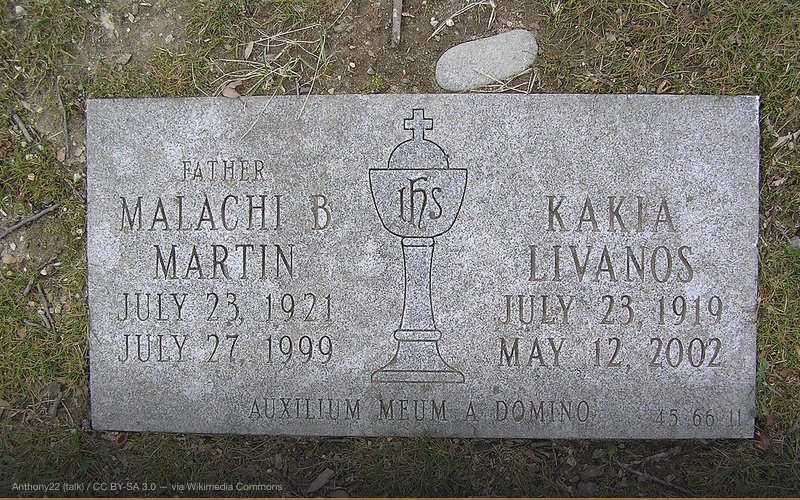
The modern version of the theory draws on a combination of sources: the writings of former priest (and likely fraud) Alberto Rivera, the novels and claimed insider knowledge of former Vatican official Malachi Martin, subjective interpretations of Vatican art and architecture, and the rhetorical technique of treating the Church’s genuine scandals as evidence of supernatural evil rather than institutional corruption. Proponents point to the Paul VI Audience Hall’s supposedly serpentine shape, the Vatican’s possession of allegedly occult artworks, and various elements of Catholic ritual that superficially resemble practices associated with occultism.
The theory is classified as debunked because no credible evidence has ever been produced to substantiate the claim, the key witnesses have been exposed as fraudulent, and the visual and symbolic arguments rely on subjective pattern recognition rather than documented practices.
Origins & History
The identification of the Catholic Church with Satanic evil has deep historical roots in sectarian Christianity. Martin Luther, the initiator of the Protestant Reformation in 1517, explicitly identified the Pope as the Antichrist in his writings, a position subsequently codified in several Protestant confessional documents including the Smalcald Articles (1537) and the Westminster Confession of Faith (1646). This was not conspiracy theorizing in the modern sense but doctrinal conviction based on theological interpretation of the books of Daniel and Revelation.
This theological framework established a durable template that subsequent anti-Catholic movements would adapt. In the 19th-century United States, the Know-Nothing movement and other nativist organizations depicted Catholic immigration as a Papal conspiracy to undermine American Protestant democracy. Anti-Catholic literature of the period frequently portrayed Catholic ritual as quasi-pagan or demonic, with particular focus on the Mass (where bread and wine are believed to become Christ’s body and blood), confession (depicted as priestly surveillance), and the hierarchical priesthood (described as a occult secret society).
The modern conspiracy theory in its recognizable form emerged from several sources in the late 20th century. Alberto Rivera, who claimed to be a former Jesuit priest, began making public appearances in the 1970s alleging that the Catholic Church was a Satanic front organization that had created Islam, orchestrated the Holocaust, controlled the Illuminati and Freemasonry, and was working to destroy Protestant Christianity. His claims were published by Jack Chick, a fundamentalist Protestant whose small-format comic books (known as “Chick tracts”) have been distributed by the hundreds of millions worldwide. Rivera’s allegations were investigated by multiple organizations, including the evangelical magazine Christianity Today, which found no evidence that Rivera had ever been a Catholic priest and documented inconsistencies in his biographical claims.
Malachi Martin, an actual former Jesuit who served in the Vatican during the 1960s before leaving the priesthood, contributed to the narrative through his 1990 novel Windswept House, which depicted Satanic rituals within the Vatican. While the book was presented as fiction, Martin implied in interviews that it was based on insider knowledge of real events. His claims about Satanic “enthronement ceremonies” within the Vatican have never been corroborated by any other source.
In the internet era, the theory has been revitalized through visual analysis of Vatican art and architecture. The Paul VI Audience Hall, designed by Pier Luigi Nervi and completed in 1971, became a central exhibit when photographs and aerial views were circulated on social media with annotations highlighting its supposed resemblance to a serpent’s head. The stage sculpture, Pericle Fazzini’s “The Resurrection” (1977), a massive bronze depicting Christ emerging from a nuclear apocalypse, was reinterpreted as depicting a reptilian or demonic figure rather than the risen Christ.
Additional visual arguments have been made about the Vatican’s obelisk in St. Peter’s Square (Egyptian obelisks are associated with paganism), the pine cone sculpture in the Vatican’s Cortile della Pigna (pine cones as symbols of the pineal gland and allegedly occult enlightenment), and various Renaissance and Baroque artworks in the Vatican Museums that depict mythological or potentially ambiguous religious imagery.
Key Claims
- The Catholic Church is secretly a Satanic organization that conceals devil worship behind Christian symbolism and ritual
- The Paul VI Audience Hall was deliberately designed to resemble a serpent’s head, revealing the Vatican’s true allegiance
- Pericle Fazzini’s “The Resurrection” sculpture actually depicts a demonic or reptilian figure, not the risen Christ
- Satanic enthronement ceremonies have been conducted within the Vatican, as described by Malachi Martin
- Alberto Rivera, a former Jesuit, exposed the Vatican’s Satanic nature before being assassinated for his revelations
- Catholic ritual elements including the Mass, Latin chanting, incense, and hierarchical priesthood are derived from pre-Christian occult practices
- Vatican architecture and artwork contain hidden occult symbols including references to the Egyptian mystery religions, the pineal gland, and serpent worship
- The Vatican’s documented real-world scandals (financial corruption, sexual abuse cover-up) are manifestations of its underlying Satanic character
Evidence
The evidence cited for Vatican Satanism falls into several categories, none of which withstands critical examination.
Visual and architectural arguments rely entirely on subjective pattern recognition. The Paul VI Audience Hall’s shape is a product of structural engineering requirements for a large, column-free interior space; Nervi was one of the 20th century’s most acclaimed structural engineers, and the building’s form follows from its reinforced concrete design. The supposed “serpent eye” windows are standard architectural fenestration. Fazzini’s “The Resurrection” is a recognized masterpiece of modern religious sculpture that has been interpreted by art historians, Catholic theologians, and the Vatican itself as depicting Christ’s triumph over the destruction of nuclear warfare, a theme deeply relevant to its Cold War era of creation.
The testimony of Alberto Rivera has been thoroughly discredited. Investigations by Christianity Today, the Cornerstone Community Church magazine, and other organizations found no documentary evidence of Rivera’s claimed Jesuit background. The Archdiocese of Madrid had no records of him. His claimed ordination documents were not verified. His biographical timeline contained numerous inconsistencies. Multiple individuals who knew Rivera before his anti-Catholic career described him as a confidence man with a history of fraud. Rivera died in 1997, with conspiracy theorists claiming assassination and medical records indicating natural causes.
Malachi Martin’s claims are based on a novel he presented as fiction, supplemented by interview statements that he was never able to substantiate. Martin was a genuine former Vatican insider, which gave his claims credibility in some circles, but his specific allegations about Satanic ceremonies within the Vatican have never been corroborated by any other Vatican insider, journalist, or investigator, despite the thousands of people who have served in Vatican institutions over the relevant decades.
The conflation of Catholic scandal with Satanism involves a logical leap from documented institutional corruption to supernatural evil. The Vatican Bank money laundering scandal and the sexual abuse cover-up are genuine, documented institutional failures, but institutional corruption is a feature of human organizations generally and does not constitute evidence of Satanic worship specifically.
Debunking / Verification
The Vatican Satanic worship theory is classified as debunked based on the following:
No credible firsthand witness has ever provided verifiable evidence of Satanic practices within the Vatican. Rivera was exposed as a fraud. Martin’s claims were presented as fiction. No subsequent whistleblower from the Vatican’s thousands of staff, clergy, and diplomatic corps has alleged Satanic worship.
The visual arguments are based on subjective interpretation of art and architecture that has straightforward conventional explanations documented by the architects, artists, and art historians involved.
The theological basis for identifying Catholicism with Satanism originates in sectarian Protestant polemics rather than evidentiary investigation. While Protestants and Catholics have genuine theological disagreements, the characterization of Catholicism as Satanism reflects religious prejudice rather than documented practice.
The theory employs the classic conspiracy thinking technique of unfalsifiability: any denial is treated as evidence of cover-up, any Catholic practice can be reinterpreted as occult, and any visual element can be decoded as Satanic symbolism through sufficiently creative pattern matching. This interpretive framework can produce Satanic symbolism in any complex institution’s architecture and artwork.
Cultural Impact
The Vatican Satanism narrative has had significant cultural impact, particularly in fundamentalist Protestant communities and in the broader conspiracy theory ecosystem. Jack Chick’s publications, which incorporated Rivera’s claims, have been printed in the hundreds of millions and translated into over 100 languages, making them one of the most widely distributed vehicles for anti-Catholic conspiracy theories in history.
The theory has influenced the broader genre of Vatican conspiracy fiction, from Dan Brown’s Angels & Demons (which features Illuminati infiltration of the Vatican rather than Satanism specifically) to numerous horror films and television series that depict Satanic elements within Catholic institutional settings. The visual aesthetic of Catholic ritual, with its incense, vestments, Latin, and hierarchical ceremony, has been extensively used in horror cinema as a signifier of the uncanny.
Within the conspiracy theory community, the Vatican Satanism narrative connects to broader theories about elite Satanic worship, overlapping with claims about the Illuminati, Bohemian Grove, and more recent theories like QAnon’s allegations about Satanic ritual abuse by political and entertainment elites. These connections create a self-reinforcing web of conspiracy narratives in which evidence for one theory is treated as supporting evidence for all the others.
The theory has contributed to anti-Catholic prejudice and discrimination, particularly in regions where Catholics are minority populations. It has also complicated interfaith dialogue and ecumenical efforts between Catholic and Protestant communities, as the legacy of Reformation-era anti-Catholic rhetoric continues to influence some contemporary evangelical communities.
Timeline
- 1517 — Martin Luther initiates the Protestant Reformation; subsequently identifies the Pope as the Antichrist
- 1537 — The Smalcald Articles formalize the identification of the papacy with the Antichrist
- 1646 — The Westminster Confession of Faith includes the Pope-as-Antichrist identification
- 1830s-1850s — Know-Nothing movement in the US propagates anti-Catholic conspiracy theories
- 1958 — Jack Chick begins publishing fundamentalist Protestant comic tracts
- 1971 — The Paul VI Audience Hall (Aula Paolo VI), designed by Pier Luigi Nervi, is completed
- 1970s — Alberto Rivera begins making public claims about the Vatican as a Satanic organization
- 1977 — Pericle Fazzini’s “The Resurrection” sculpture is installed in the Paul VI Audience Hall
- 1979-1988 — Chick Publications releases the “Alberto” comic series based on Rivera’s claims
- 1981 — Christianity Today and other organizations investigate and discredit Rivera’s claims
- 1990 — Malachi Martin publishes Windswept House, depicting Satanic rituals in the Vatican
- 1997 — Alberto Rivera dies; conspiracy theorists claim assassination
- 1999 — Malachi Martin dies after a fall
- 2010s — Social media amplifies visual arguments about the Paul VI Audience Hall and Vatican symbolism
- 2017-present — QAnon and related movements incorporate Vatican Satanism claims into broader elite-Satanism narratives
Sources & Further Reading
- Chick, Jack. “Alberto” comic series. Chick Publications, 1979-1988.
- Martin, Malachi. Windswept House: A Vatican Novel. Doubleday, 1996.
- Cornerstone Community Church. “The Alberto Story: A Chrislam Production.” Cornerstone Magazine, 1981.
- Christianity Today. Investigation of Alberto Rivera’s claims. Multiple issues, 1981-1982.
- Jenkins, Philip. The New Anti-Catholicism: The Last Acceptable Prejudice. Oxford University Press, 2003.
- Frankfurter, David. Evil Incarnate: Rumors of Demonic Conspiracy and Satanic Abuse in History. Princeton University Press, 2006.
- Hofstadter, Richard. The Paranoid Style in American Politics. Harper’s Magazine, 1964.
Frequently Asked Questions
Does the Vatican's Papal Audience Hall really look like a snake?
Who was Alberto Rivera and why are his claims significant?
Is there any evidence that the Vatican practices Satanism?

Infographic
Share this visual summary. Right-click to save.
